Attack of the Moths
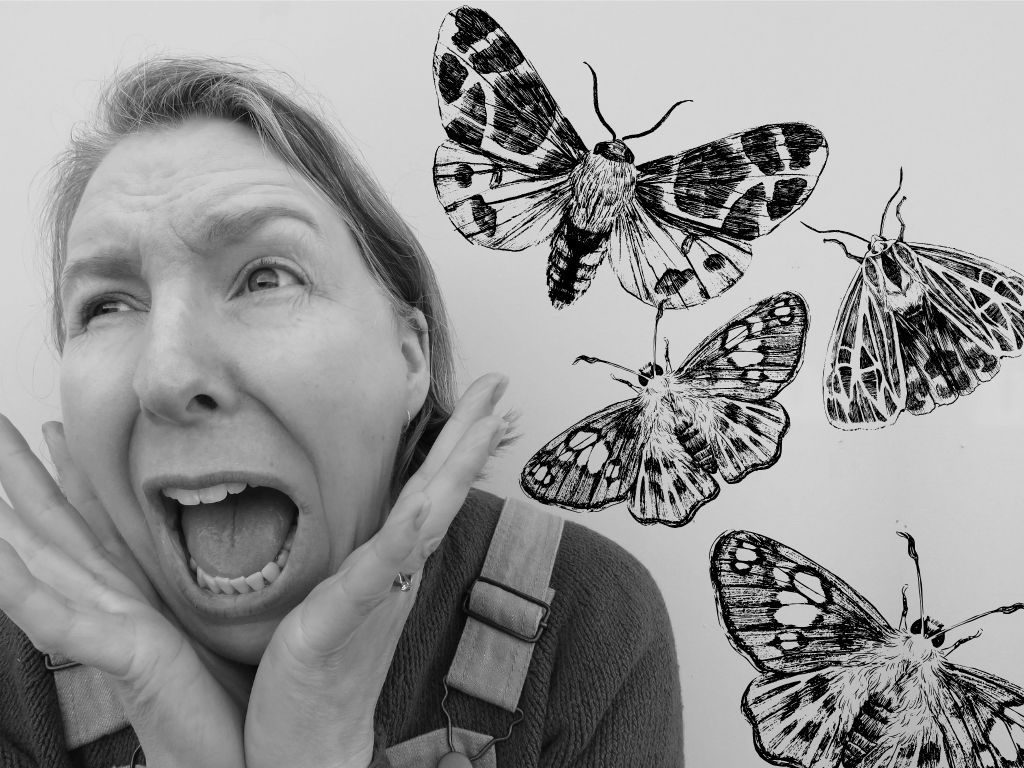
Moths have invaded! Follow Liz Haywood’s heroic fight back against this almost invisible foe…but how will it end?
The backstory
Pre-pandemic, Liz began knitting a vest in some lovely natural brown wool her grandma brought back from a New Zealand holiday. It was nearly finished when Liz got long covid and stopped. It fell down the side of the bed and lay in a dusty heap for some years.
The narrative
Just lately, Liz had a rare clean up and retrieved it. Moths had made a hole under one arm, about 2 x 3 stitches.
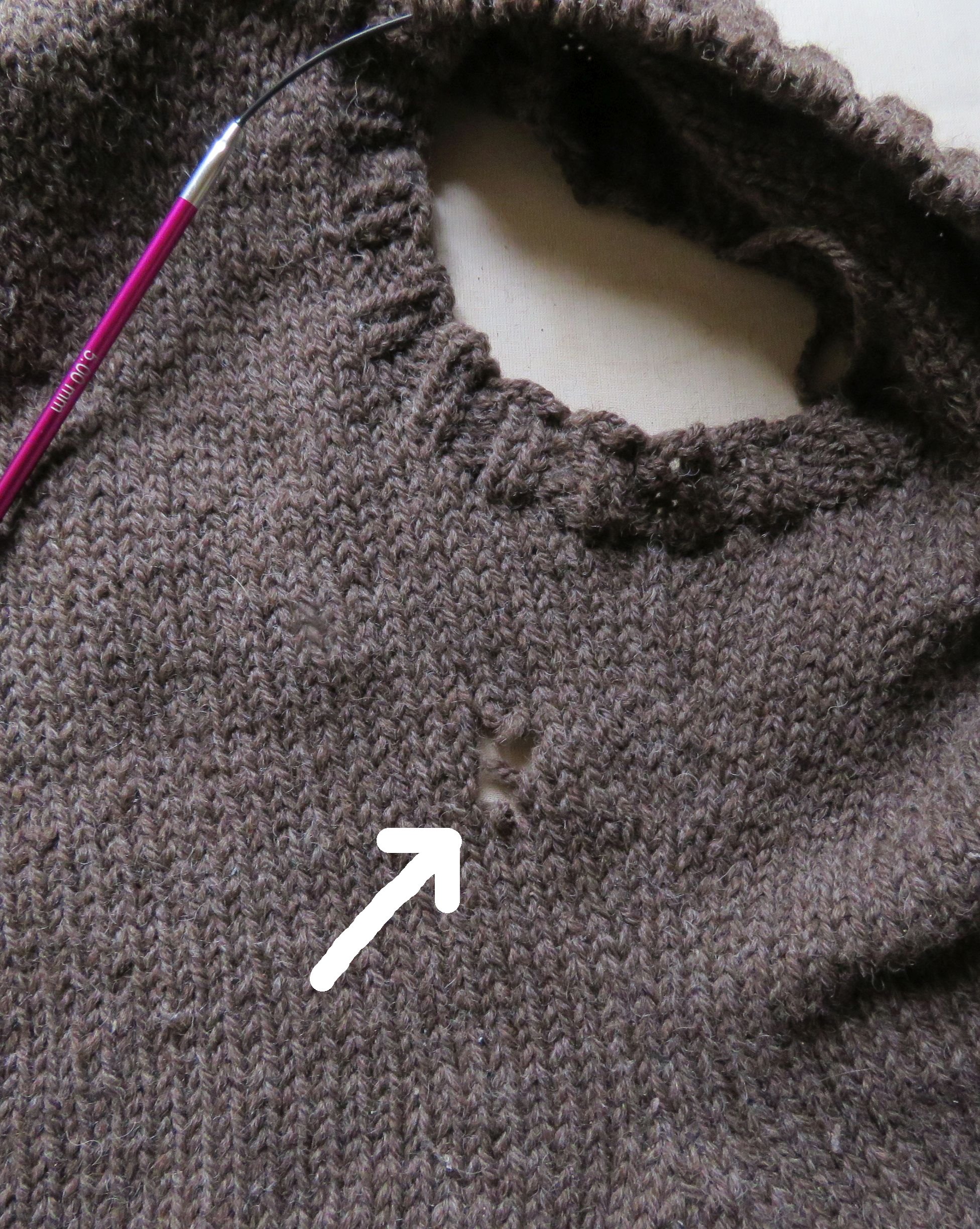
Possibly, the moths had had an all-over nibble because it looked to be shedding gritty little crumbs.
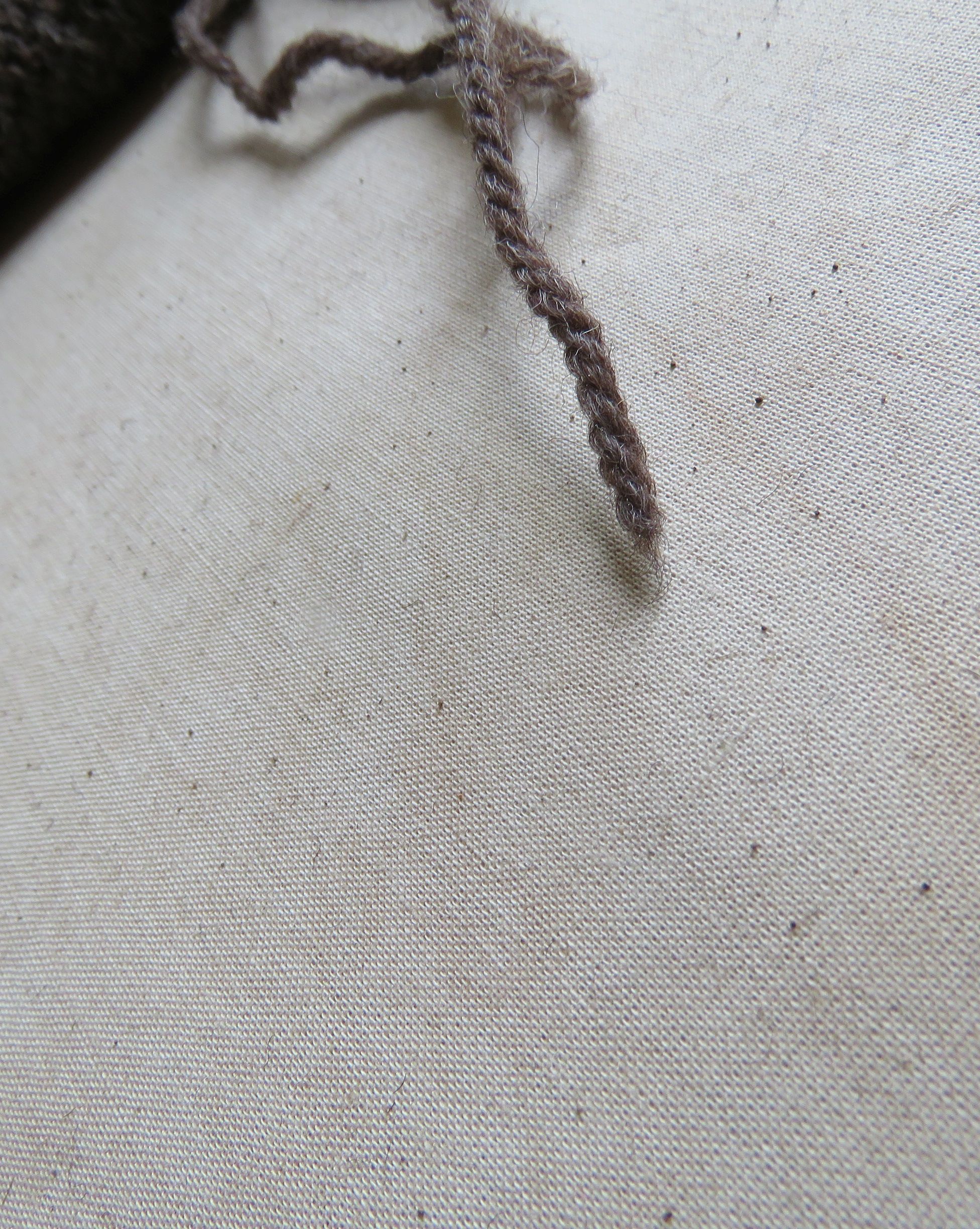
Will the whole thing fall apart if Liz washes it?
Liz finished knitting it (it only needed a cast off!!!), wove in the ends, and then looked at the hole. Ever the optimist, she saw an opportunity to try an invisible knitted-in mend; she’d never done one before.
A poke around on YouTube brought up loads of “5-minute craft” type videos, very soothing to watch, which fell into two camps: (1) The Classic method: creating a support with temporary thread and swiss darning over it, like this, and (2) weaving loose strands horizontally across the hole, then picking up stitches with a crochet hook like fixing a ladder like this.
But all this looked a little too easy and Liz had questions:
What happens to the tiny ends each side of the hole? If they’re left then another hole will appear. Should the hole be enlarged to deal with the ends? What if the moth hole isn’t a neat square like theirs – should it be made square first?
The hero appears
Enter Norman of Nimble Needles, knitting extraordinaire, whose comprehensive video validated Liz’s fears and answered every question and more.
Liz settled down in front of the computer with reading glasses, a powerful headtorch and the hole.
She discovered it sure is harder to use matching, dark coloured, yarn instead of a contrast!
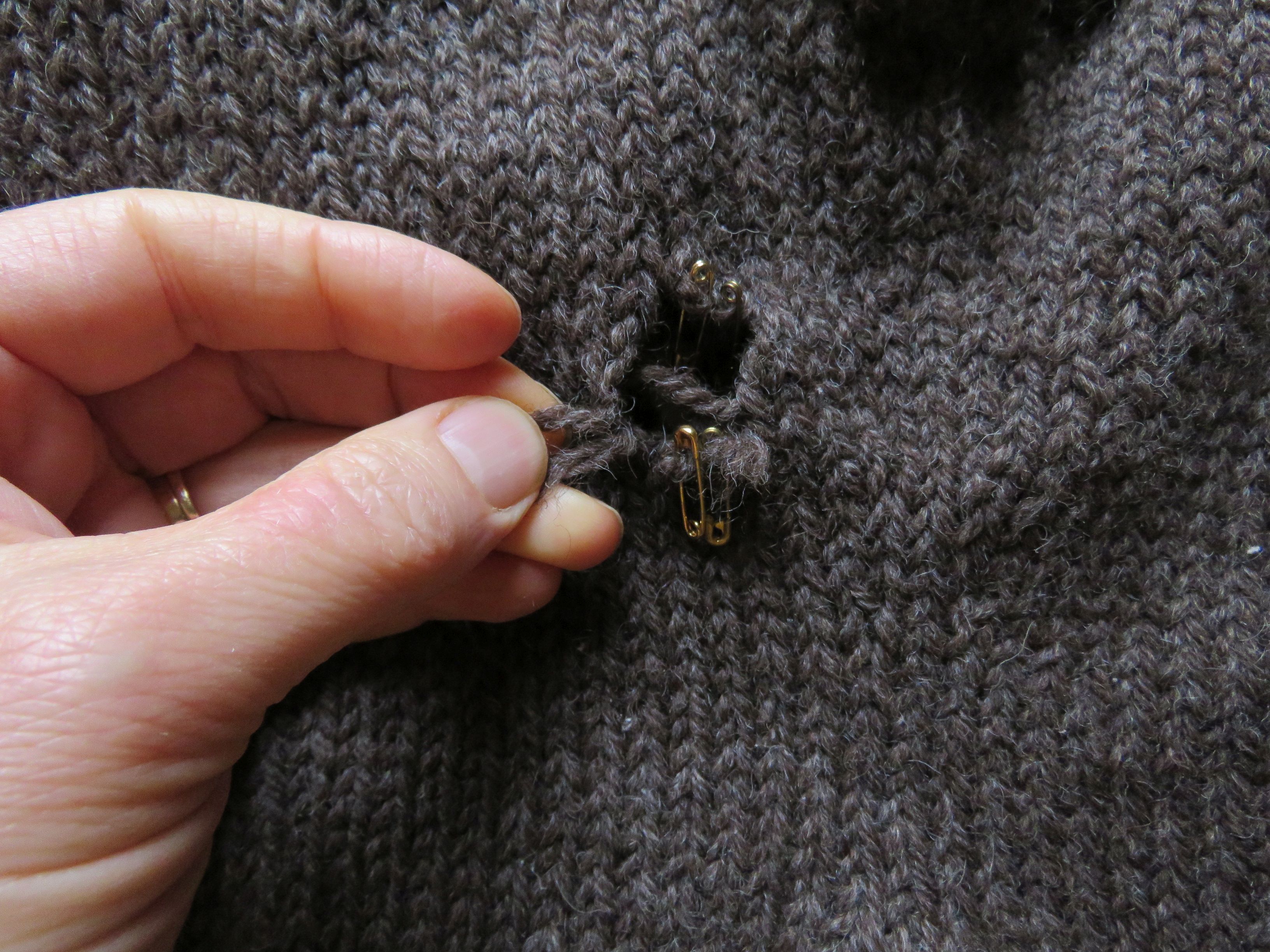
Liz started by making the hole bigger…
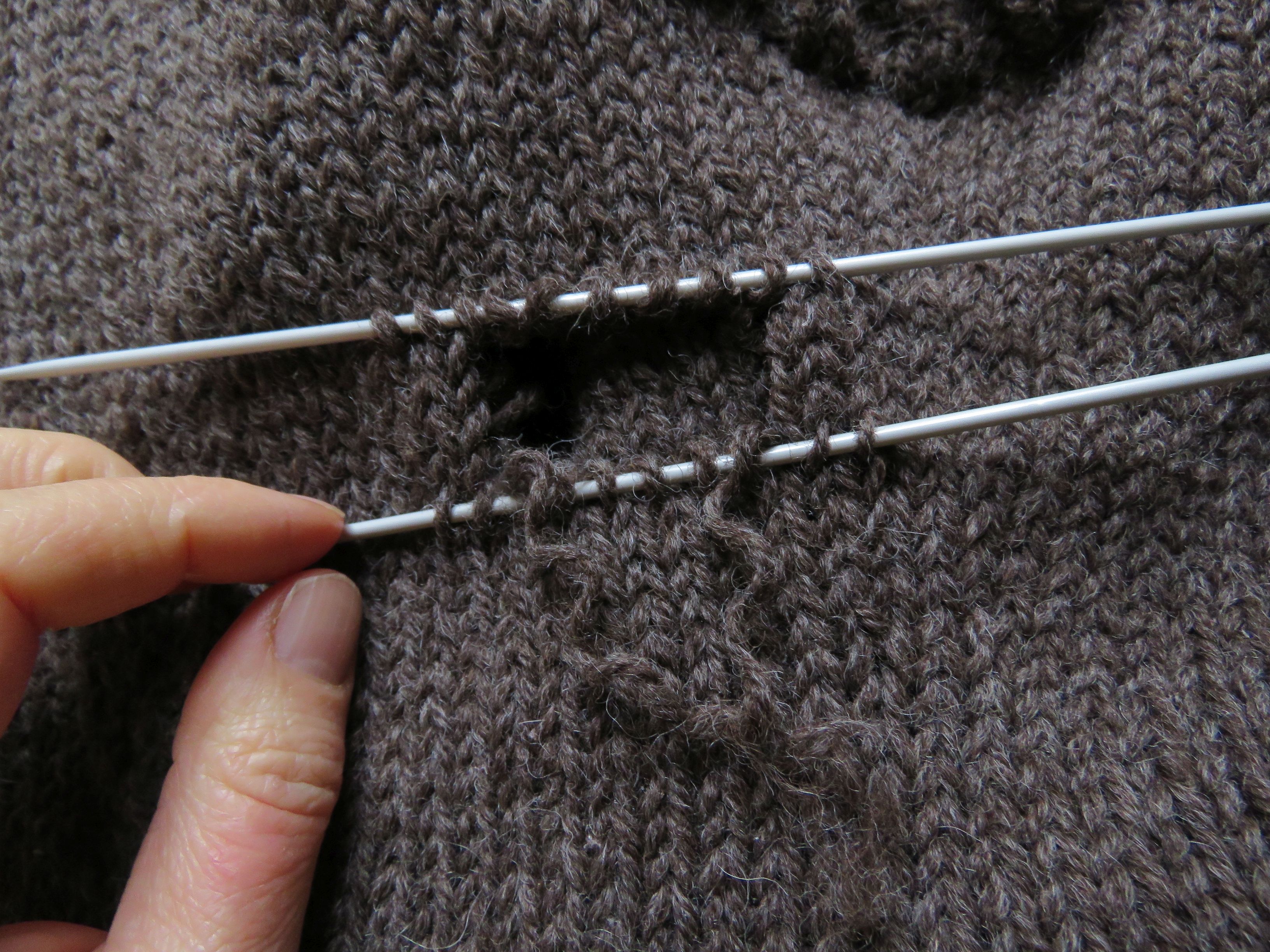
…and securing the ends to weave in later.
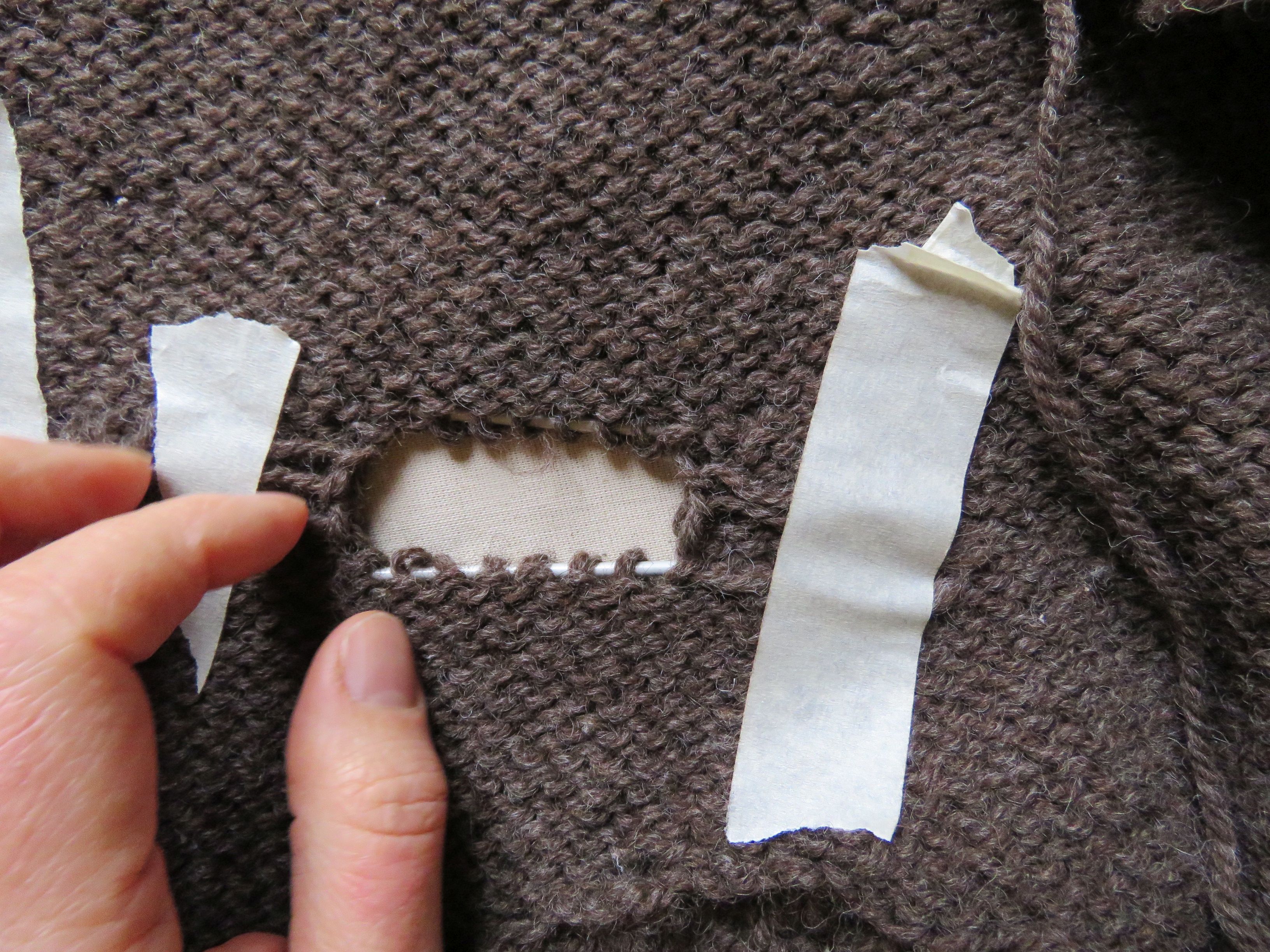
She did the actual mend, then went on to tidy up the loose ends.
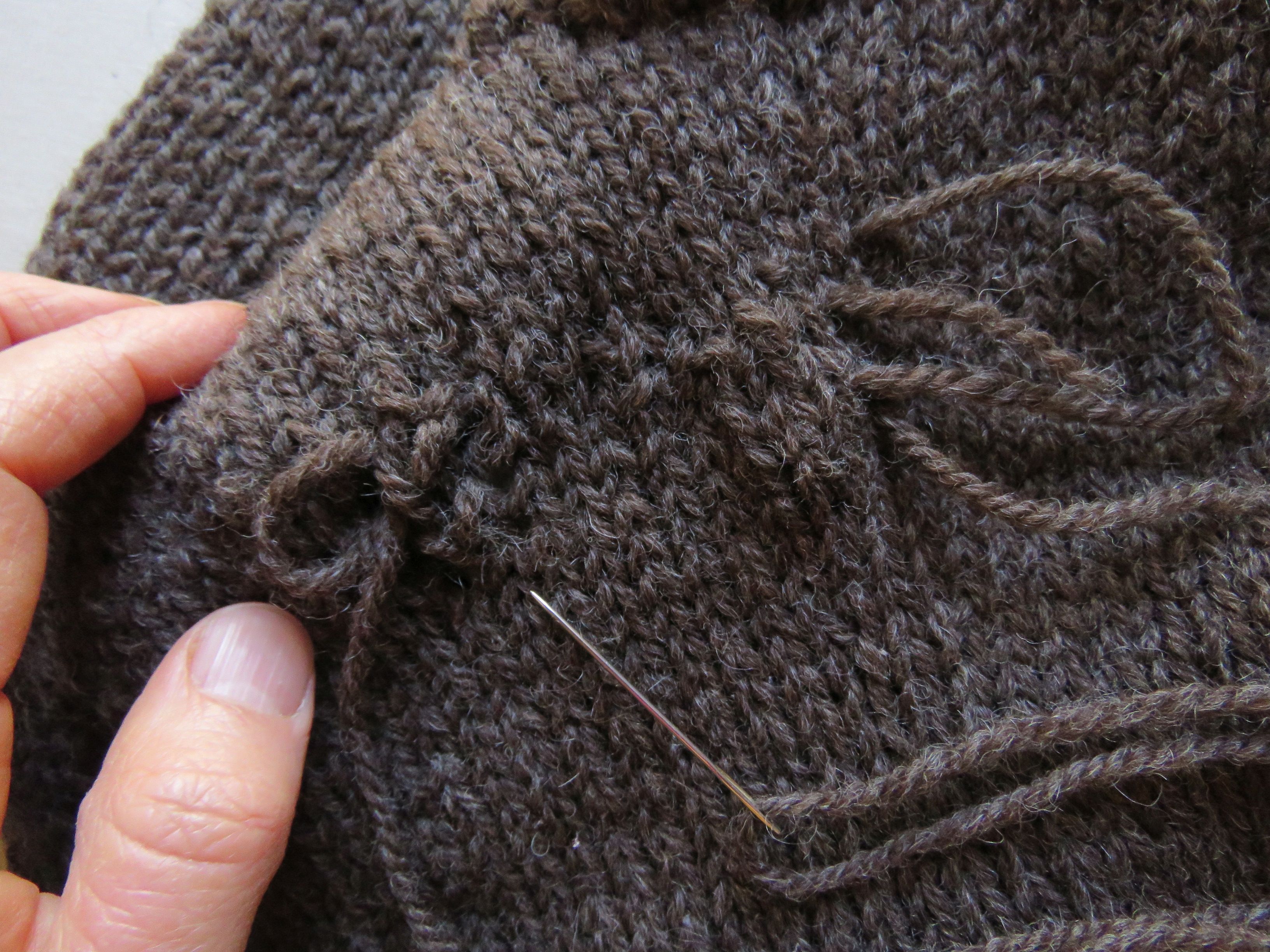
Her stitches were correct although the tension wasn’t great. A press with a damp cloth helped it look better.
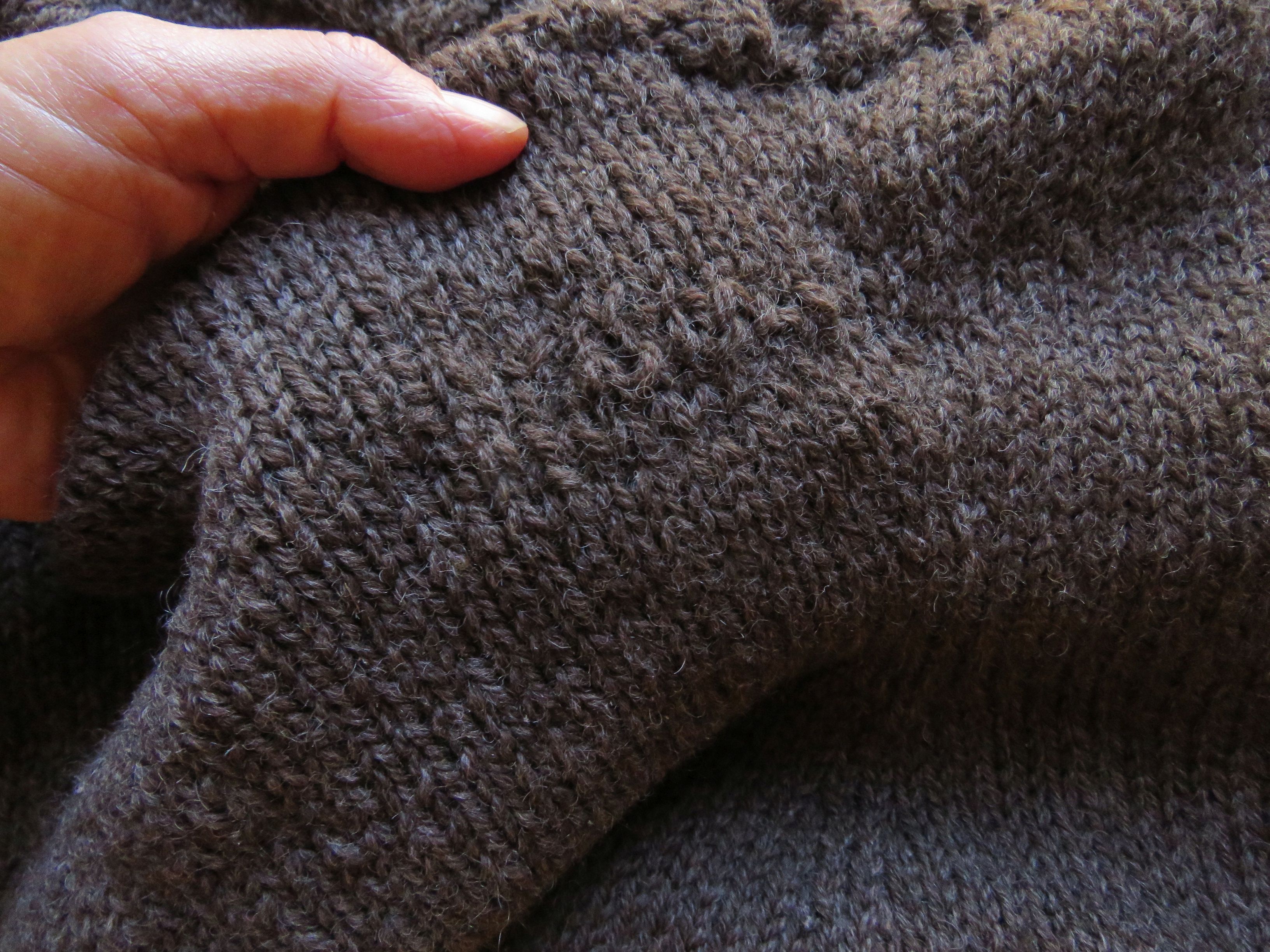
The reverse side was nothing pretty, but it never is, is it?
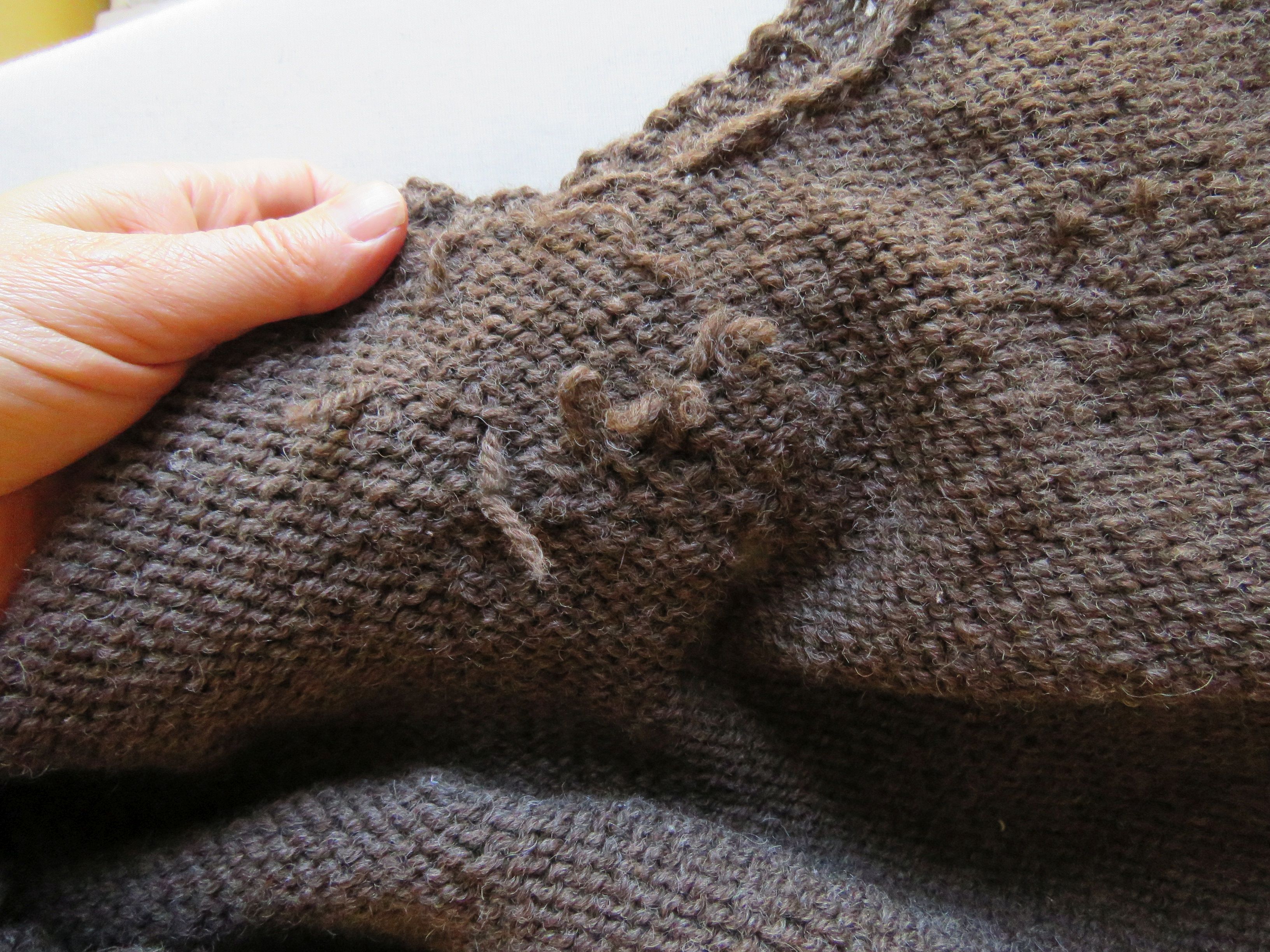
A happy ending
Liz was successful! She thought she might add some sort of front closure, maybe crochet some loops and sew on buttons.
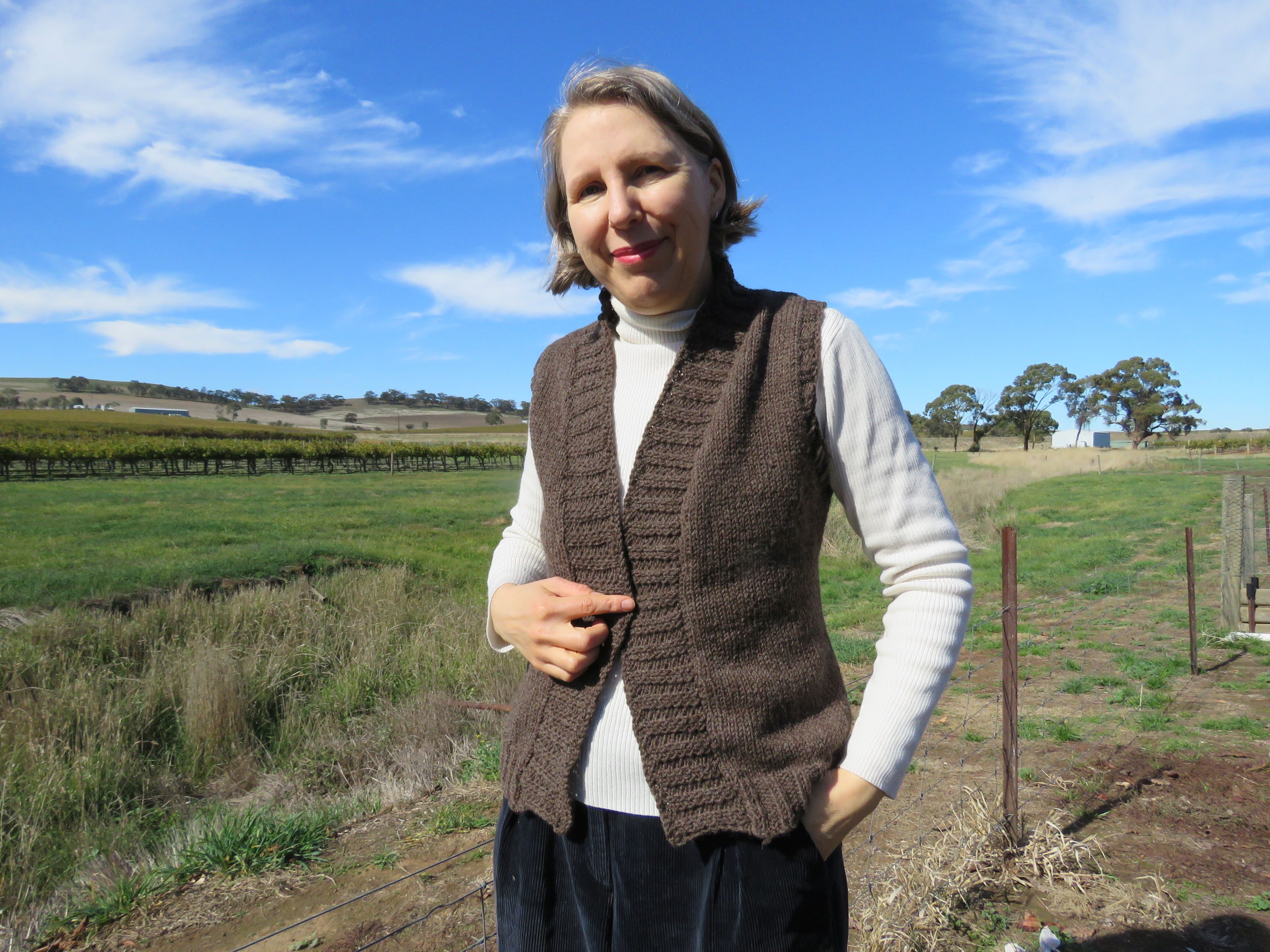
The mend was barely noticeable, especially by Liz when she was wearing it.
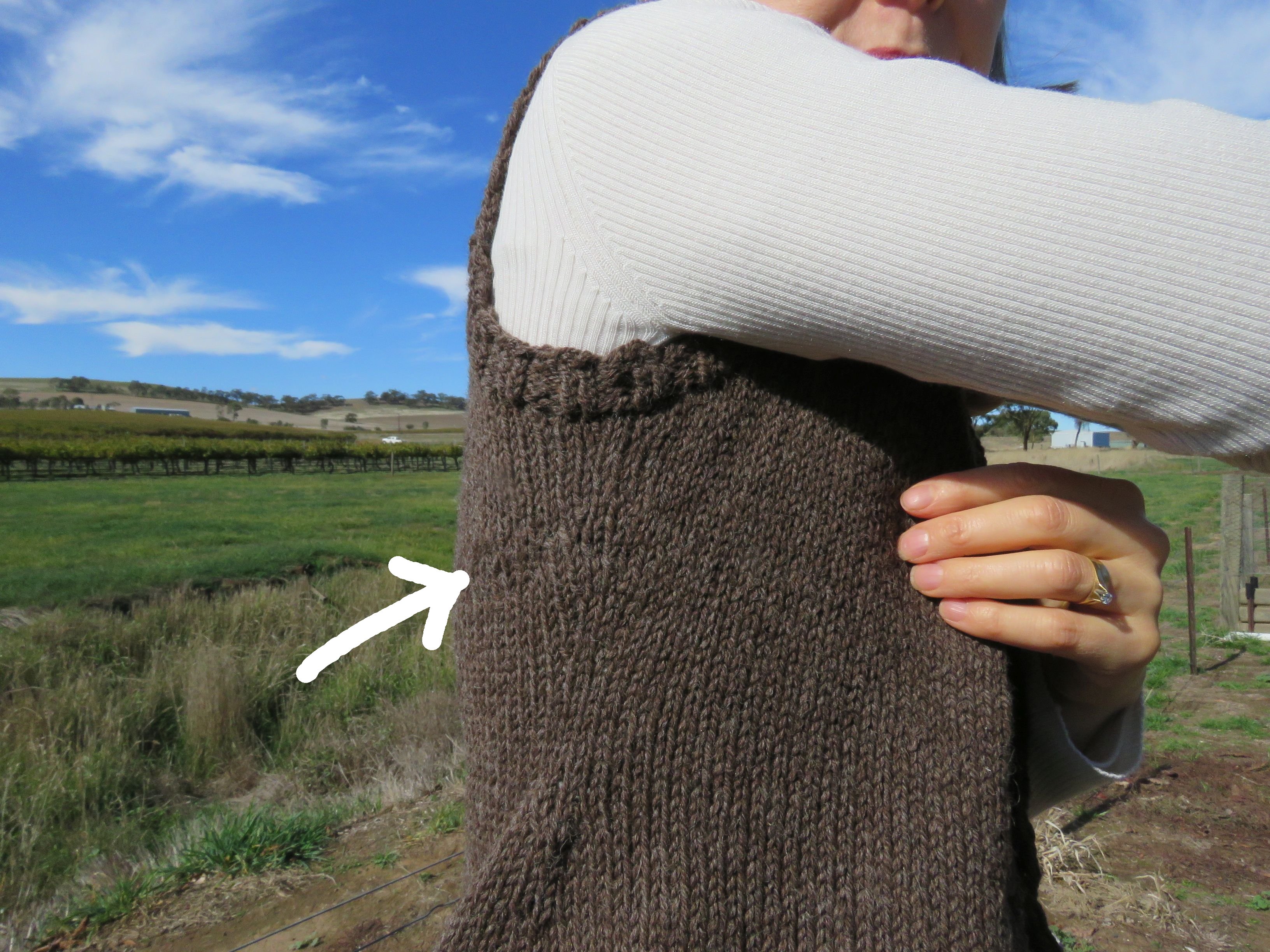
Liz’s vest lived happily ever after, and the moral of the story was to never let woolly knitted things get into this kind of moth situation.
Discover more from The Craft of Clothes
Subscribe to get the latest posts sent to your email.
There’s a moth infestation somewhere in the building and the moths fly up into our flat. They ate up the collar of my me-made winter coat (ONLY the collar, on the fold, right in the middle, where it’s absolutely impossible to hide it either with an embellishment or a “not to visible” mend… and they also ate up (>20 holes) two me-made baby cardigans I wanted to keep for the next generation. Maybe that’s a good thing for them 😉
Thank you for making me discover Norman, I’m going to have a close look at his website and well done for saving your vest, it’s a good revenge against long covid too!
I bet you’d love to know where those moths are coming from! Interesting the moths went for your coat’s collar and left the rest.
Moths are fairly seasonal here, mostly in spring, and they hide on clothes drying outside, so everything has to be shaken when it’s taken off the line. They seem to prefer darker coloured clothes.
Yeah, Norman’s a bit of a gem. I spent a pleasant time looking at things on his website.
The moths that I get on my clothes on the outdoor line here in Brisbane (darker coloured, about 1.5cm long and 1cm across) are totally different from the ones whose caterpillars eat my wool and silk items (moths go for protein based fibres, silverfish for cellulose – thankfully they prefer paper to cotton clothes). The moths who destroy my clothes are tiny – less than 1cm long and only a couple of mm across, quite similar to pantry moths. They are the bain of my life! Love wool and silk but hate worrying about the items being destroyed.
Nice vest! Always feels like a bit of a triumph to make something useful and likeable out of a UFO!
Thanks Jeannie, I wore it today. In the absence of buttons for the front, I found a wooden stick that belonged to a hair accessory and lapped the fronts over and put the stick through. It worked well 🙂
As a non-knitter any form of Swiss darning fills me with trepidation, although I have had some success using the Classic method on a cardigan of a similar gauge to your piece. How people manage to do it on fine machine knits is beyond me. I have seen videos of the technique you used- and it raised similar questions. How long (is a piece of string) to leave the horizontal ends and how to get the tension ‘right’. I have not tried it yet!
I’m glad your gilet has been successfully saved and without a cameo from Mr Hitchcock.
I have no idea how people do it on fine machine knits either (probably with some serious magnification!). I had a vague little fantasy of mending knitwear for a living…until I did this 🙂
I’m always impressed by proper Swiss Darning. I’ve never tried it myself, because it scares me, so thank you for finding Norman. I’m happy you were able to bring this jumper into usage after all this time.
I think patience is the key! And a lot of thinking. Have already worn this vest, with a wooden stick holding the fronts closed – maybe I won’t bother with buttons after all 🙂
wow what a horror story with an incredible ending! heroic!! absolutely bonus points for doing it for the first time on such dark (and precious) wool…. the first time i had a go was with a black jumper of a neighbor’s and I ended up knitting a whole new patch and then whipstitching the patch on. the whole was much bigger than that one, that’s my justification 🙂
if you want more beautiful examples of (visible, though) swiss darns/duplicate stitch and other jummy-specific mending, https://www.collingwoodnorrisdesign.com/ is my favorite and she has very soothing presence as well. but i’m a norman fan too!
congrats on the vest (waistcoat? gillet??? garment!) finish! it looks great and it’s a well-won finish!
Yeah, the dark brown was hard to see (and LC has accelerated eyesight deterioration) but it’s a lovely, rough natural wool and enjoyable to work with. I’ve since worn it for Me Made May with a wooden stick as the closure.
Thanks for the Collingwood-Norris link; I spent a very pleasant time looking through her website.