Book Review: Zero Waste Weaving
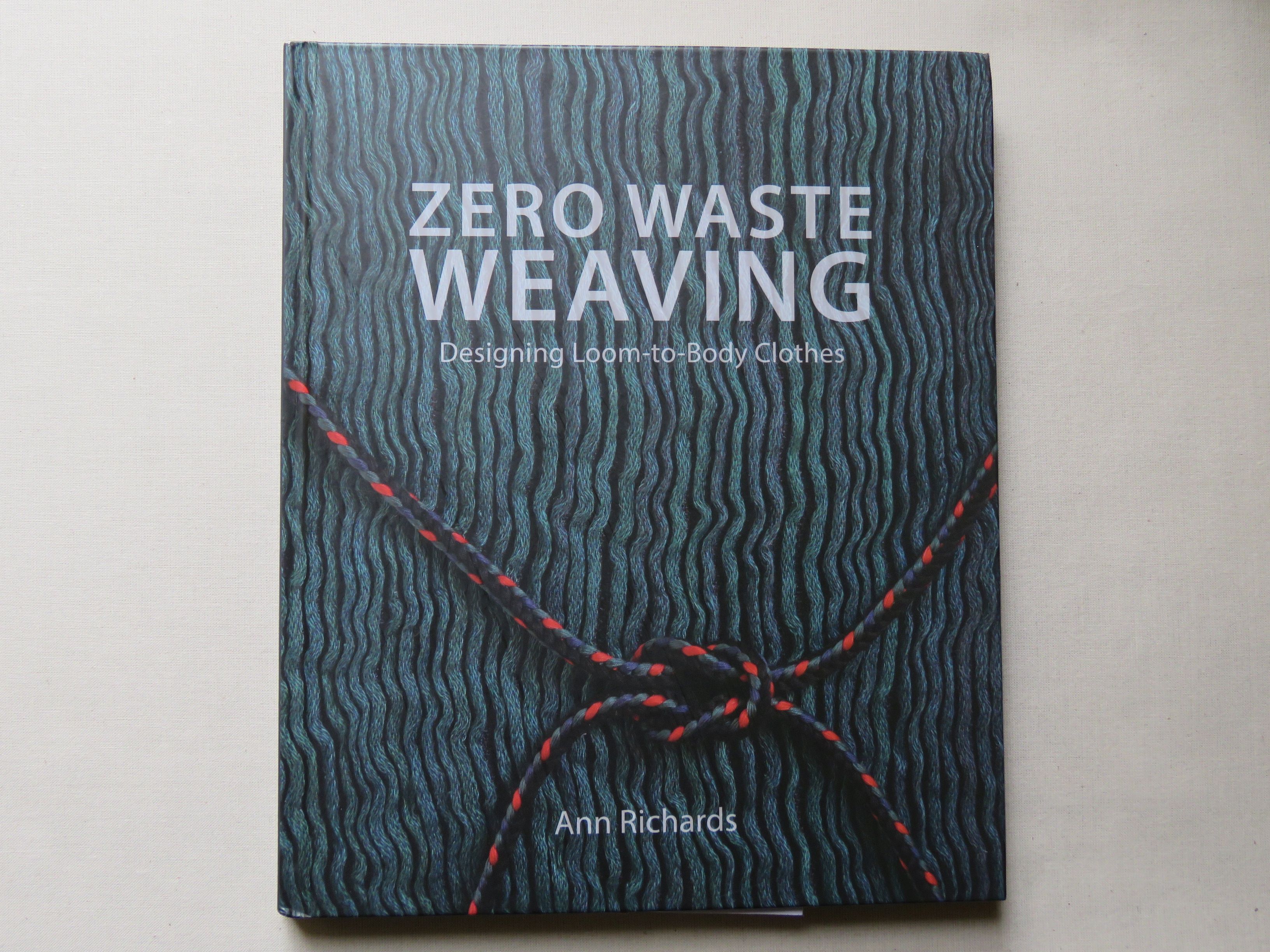
It’s my pleasure to review Zero Waste Weaving – Designing Loom-to-Body Clothes, a new book by Ann Richards (Crowood Press 2026).
In the interests of disclosure, I purchased this book myself, however Crowood Press sent me a review PDF as some of my images are included in this book. But it looked SO good, even though I’m not a weaver, I had to own a copy.
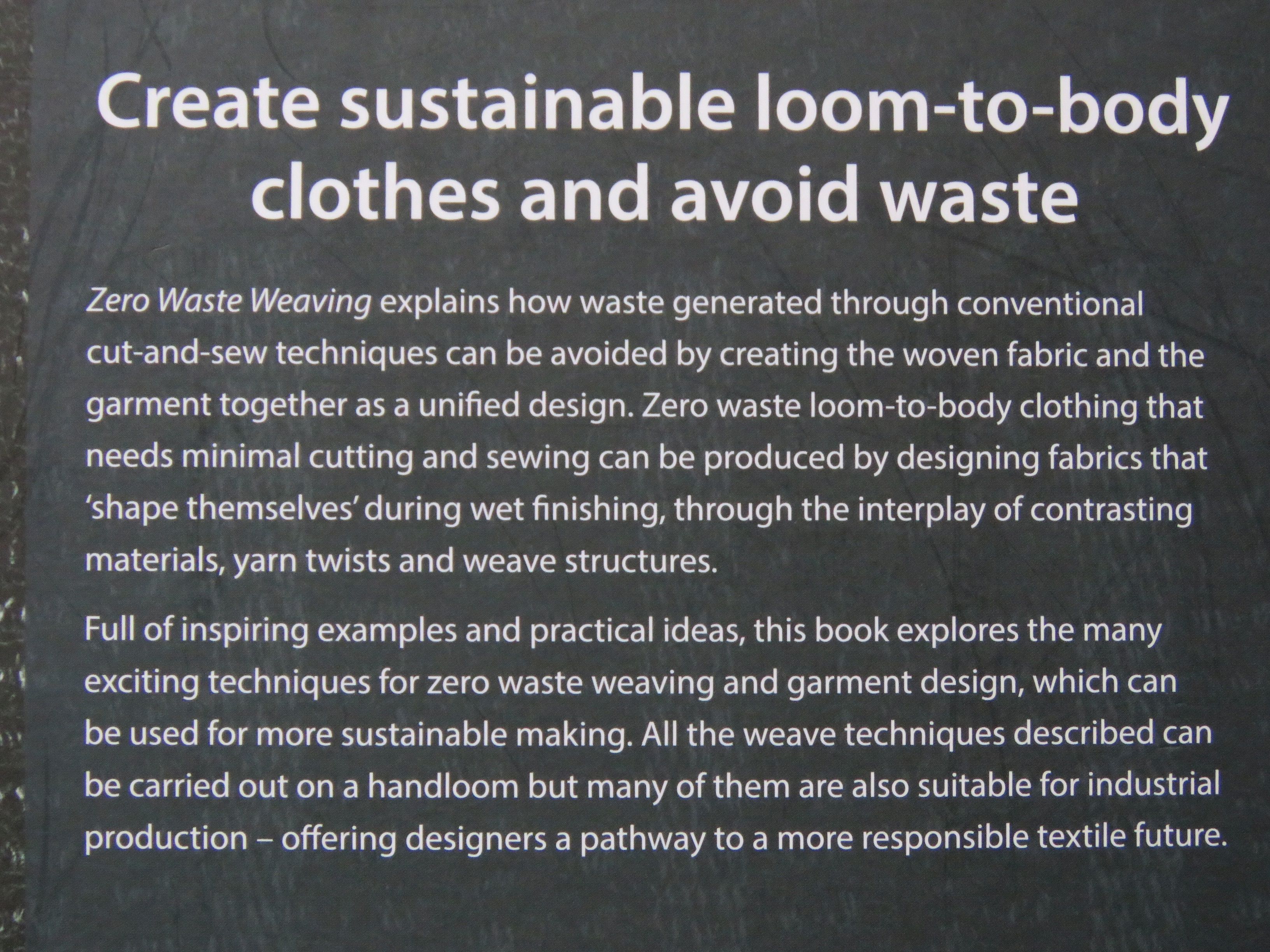
Zero Waste Weaving explains how waste generated through conventional cut-and-sew techniques can be avoided by creating the woven fabric and the garment together as a unified design. Zero waste loom-to-body clothing that needs minimal cutting and sewing can be produced by designing fabrics that ‘shape themselves’ during wet finishing, through the interplay of contrasting materials, yarn twists and weave structures.
Full of inspiring examples and practical ideas, this book explores the many exciting techniques for zero waste weaving and garment design, which can be use for more sustainable making. All the weaving techniques described can be carried out on a handloom but many of them are also suitable for industrial production – offering designers a pathway to a more responsible textile future.”
Ann Richards is a weaver based in the UK, and the author of Weaving and Weaving Textiles that Shape Themselves. She has a special interest in wet finishing, where the cloth is woven as a rectangle but shapes itself when it gets wet, through the interplay of yarn twists, structures and contrasting materials.
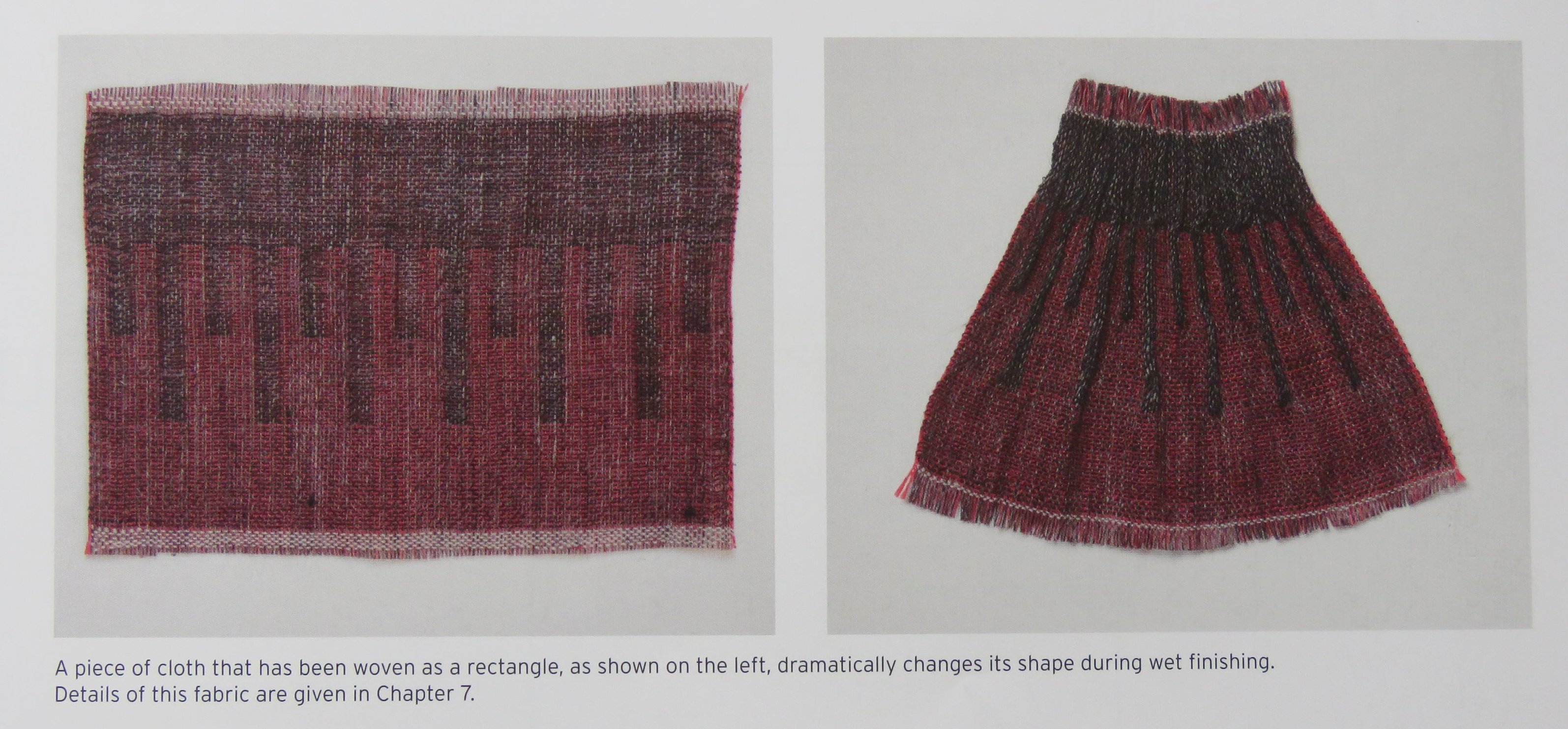
This book shares weaving techniques which create shape, and looks at ways weavers and designers can achieve zero waste.
Zero Waste Weaving is a technique and ideas-type book, rather than a projects book, and every concept in the book can be woven on a handloom, and most on a power loom.
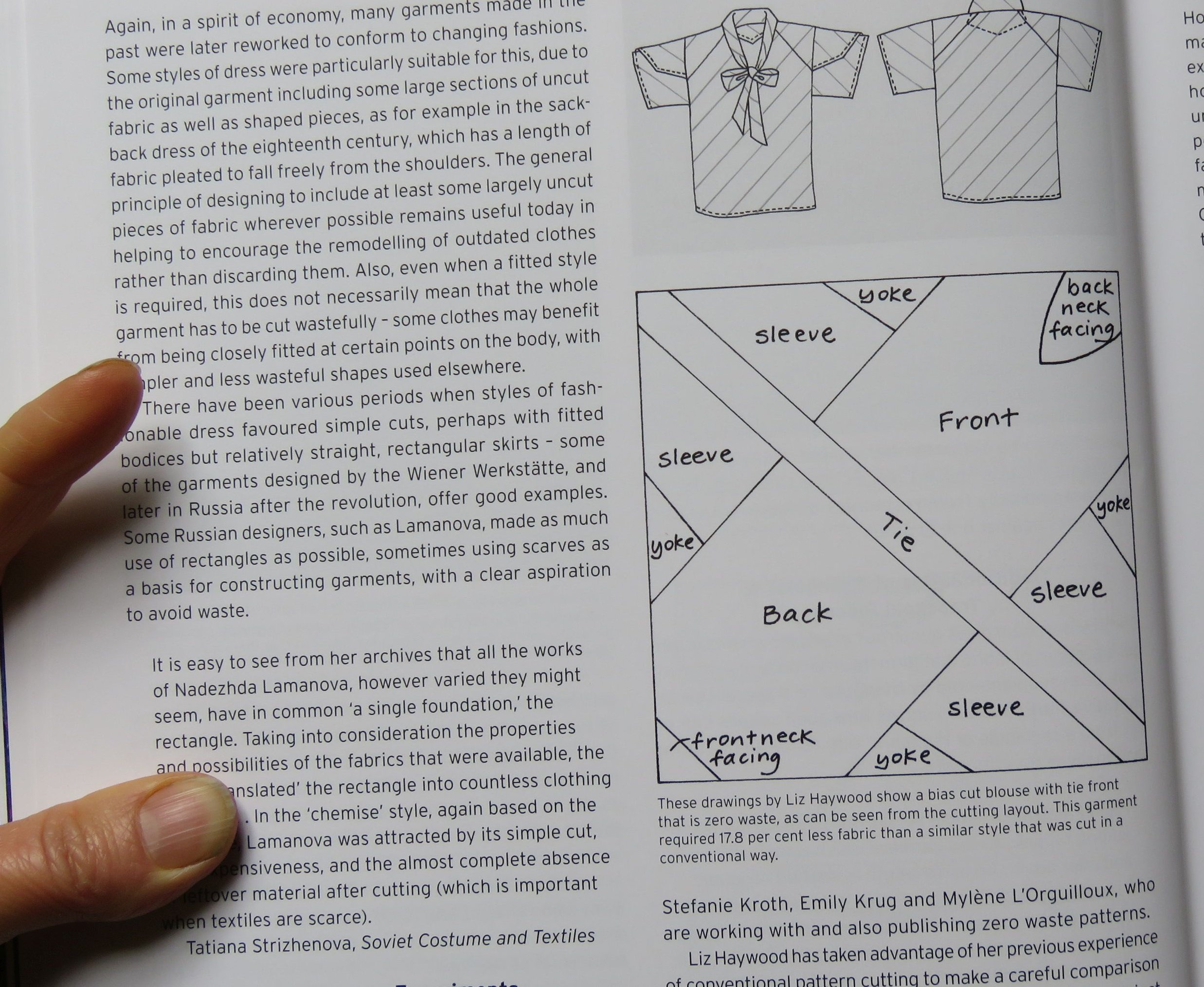
The book begins with an overview of zero waste clothes, describing the evolution from single draped rectangles to multiple rectangles sewn together, shaping and cutting rectangles, using bias cuts, to modern zero waste patterncutting. I’m in this part! The Xanthea and the tie front top (below) both make an appearance.
This is followed by discussion on creating shapes on the loom itself. Who knew corsets could be woven entirely on a loom with shaping, gussets and integrated boning? (there’s one in the V&A)
We then move onto business: weaving for elasticity, weaving pleats, wet finishing and more. Ann addresses particular challenges of zero waste design – shaping necklines, armholes, shoulder slope, and skirt & dress fullness.
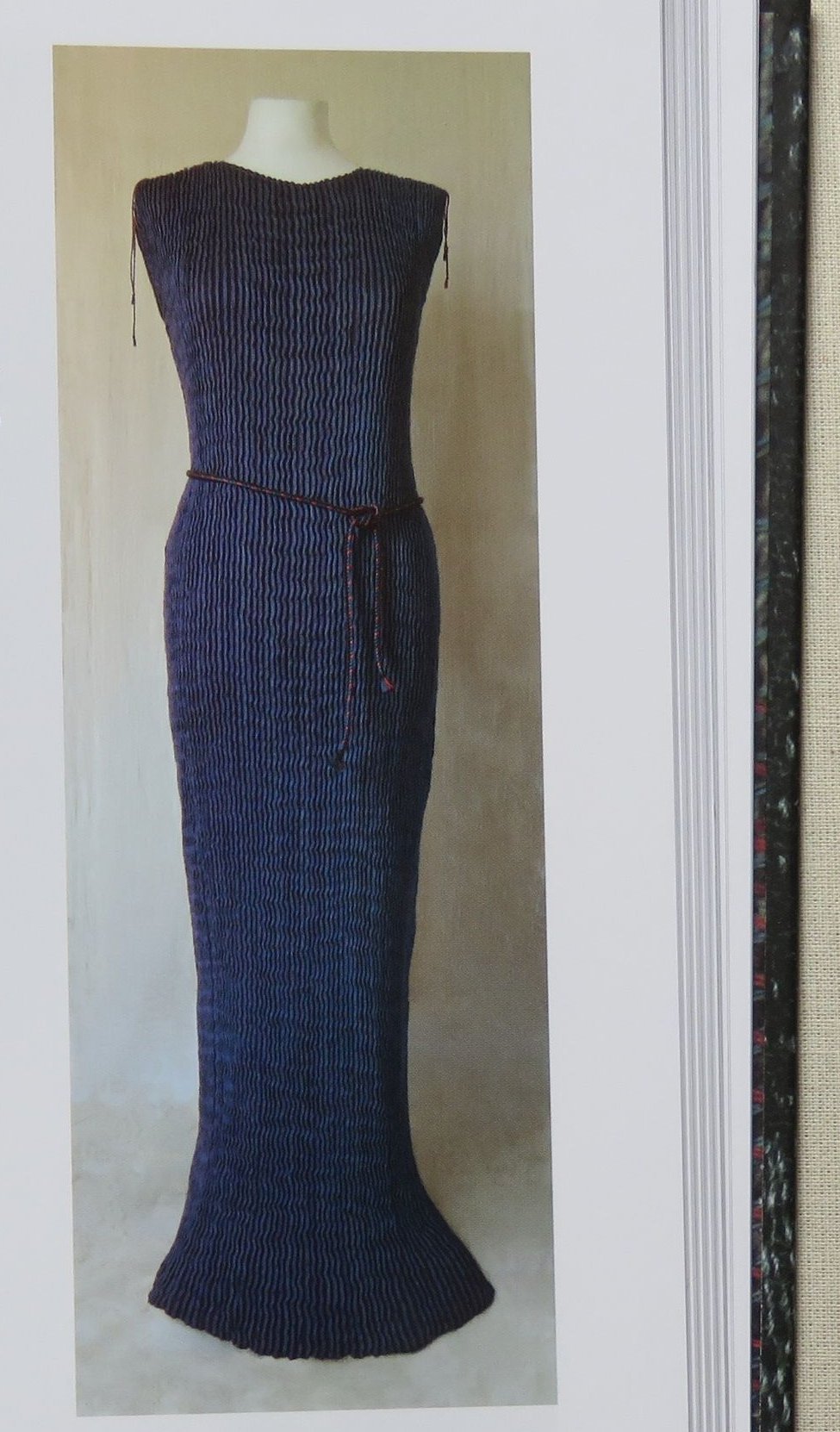
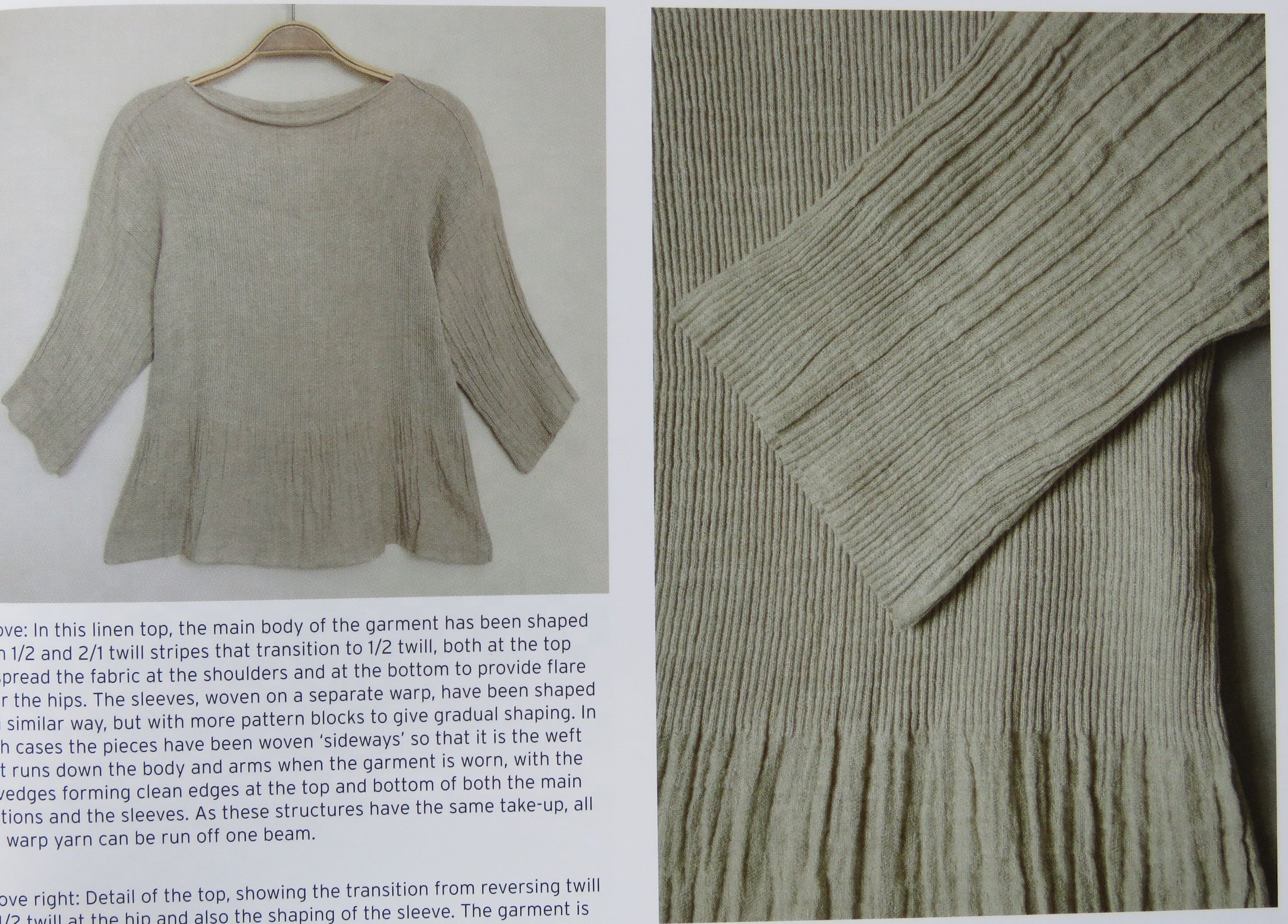
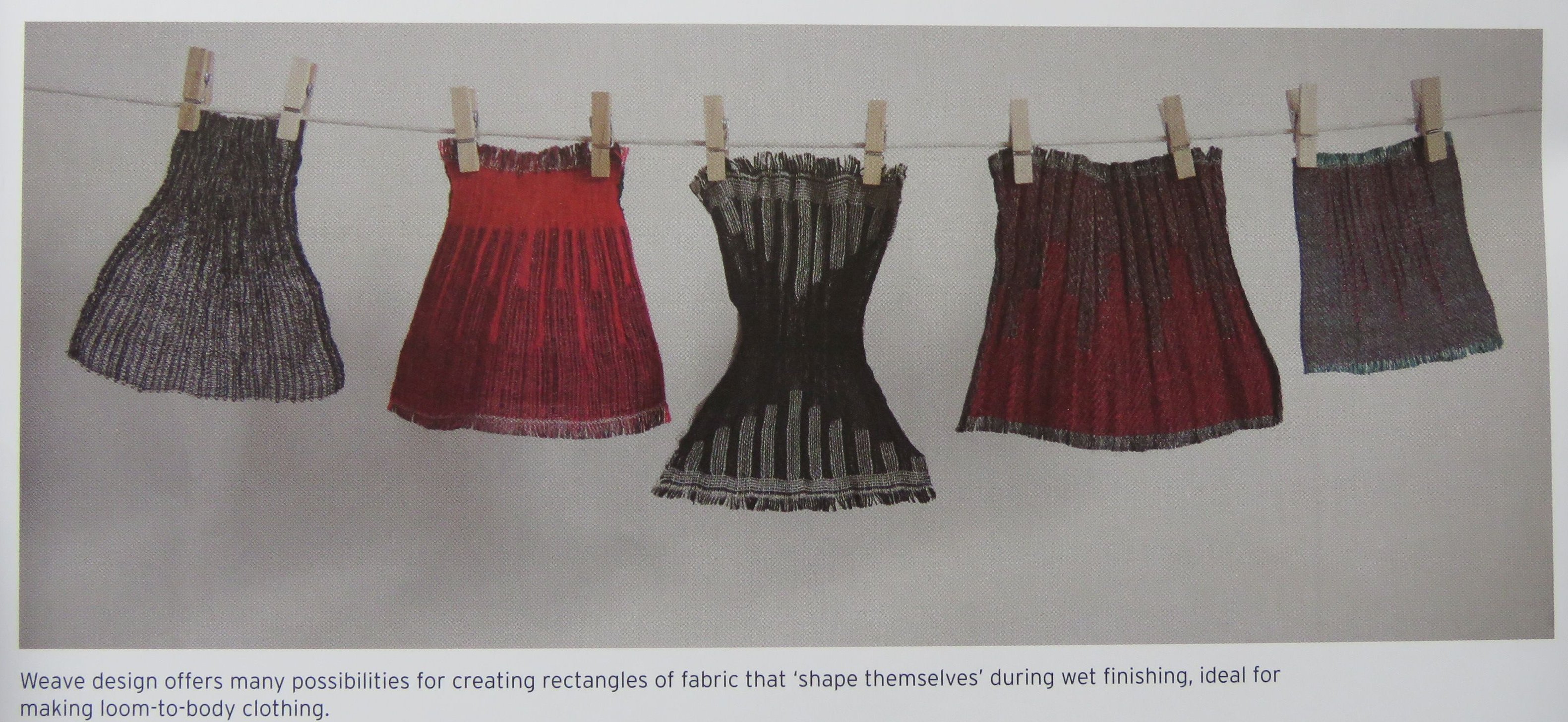
Clothes woven with this type of shaping can be assembled into garments with hardly any cutting and simple sewing.
Ann sits loom-to-body clothing within the bigger picture of sustainable clothing design, and gives ideas for reducing loom waste, recycling and composting, mending and community projects. She has suggestions for combining weaving with other textile techniques, such as felting, knitting, sprang and braiding.
As a non-weaver, I sort of expected to skim read the nitty-gritty weaving parts but it was so fascinating I read the whole thing through. In the zero waste overview (an area I’m very familiar with) I found myself taking notes for things to look up later. The impressive bibliography and resource page is practically worth the cost of the book alone.
If you’re a weaver wanting to explore techniques, there’s plenty to experiment with in this book. If you’re not a weaver but into zero waste clothes, you might enjoy it as much as I did.
Discover more from The Craft of Clothes
Subscribe to get the latest posts sent to your email.