New Book: Sewing Without Scraps
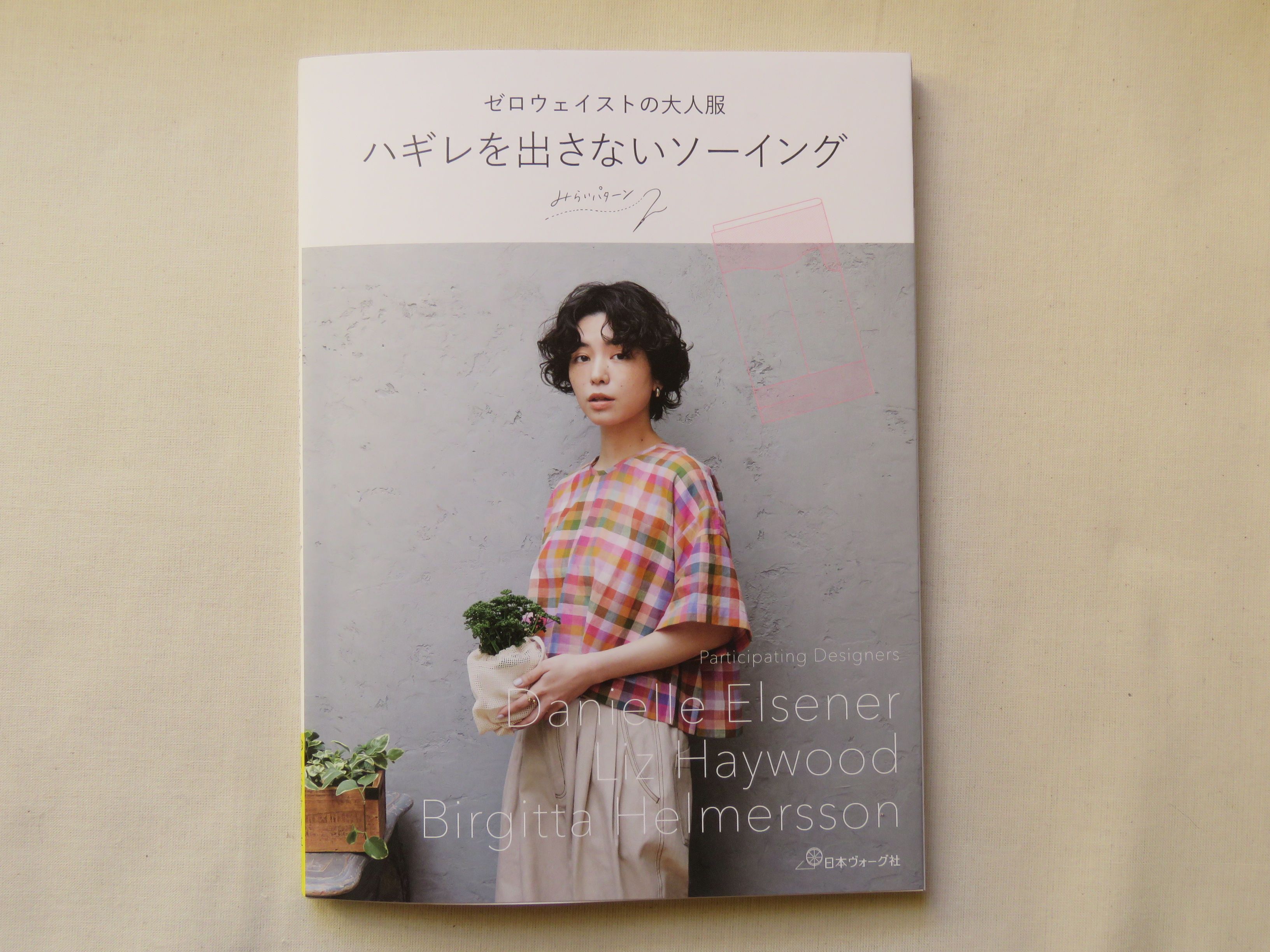
A new zero waste pattern book has just been unleashed on the world! And I have the honour of being one of the authors.
Sewing Without Scraps has new zero waste patterns by Birgitta Helmersson, Danielle Elsener of DECODE and me. The fourth author is Sae Hagino of Mirai Pattern in Japan. The book is in Japanese.
Here’s a flip-through:
The patterns in the book are arranged as a little capsule collection by each of us. Birgitta, Danielle and I each made 3-4 patterns with variations, giving enough styles in the book to create a zero waste wardrobe.
How did this amazing opportunity fall into my lap? You may know that Mirai Pattern licenses Birgitta’s and my patterns to translate into Japanese. Sae has been doing this for about two years, and at the same time promoting zero waste patterns in Japan (for example this jacket and coatigan in Cotton Time magazine). She got a book deal, and invited Birgitta, me and Danielle to create patterns for it.
The design guidelines were to create “timeless, everyday pieces that people will want to wear for years to come, made with intention and thoughtfulness. They should be suitable for year-round wear, and not too difficult to sew.” Patterns had to primarily use 110cm or 145cm wide fabrics. The intended audience is Japanese women in their 40s-50s with relatively conservative taste, in sizes to fit their size chart.
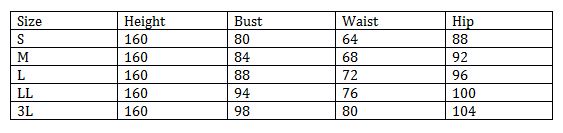
We spent some time coming up with ideas, and then had a zoom talk with the lady from the publisher Nihon Vogue, with Sae translating. She was quite excited about this book. We talked about the type of clothes that the book’s intended audience might want to make and wear for her lifestyle.
Then I spent three months last year making the patterns and sewing samples. I made little videos of myself, in our kitchen, show-and-telling what I was working on, and the others did the same. We handed in all the patterns and instructions by August. Birgitta, Danielle and I didn’t do much after this, but Sae translated them, found suitable fabrics that co-ordinated, had samples sewn and did the instruction’s diagrams according to the sketches we sent. Unseen hands at the publisher did photography and formatted the book, then there was a round of checking.
It has really been such a pleasure to work with a group of people I admire. I miss working in a team, and this has reminded me how nice it is.
That this book is in Japanese is very exciting. Although traditional Japanese clothes are zero waste, modern zero waste patternmaking has not made big inroads into Japan, mostly (I think) due to resources being in other languages.
I thought you might like to see some of my samples.
Coat
This is my favourite pattern in the book. It has a hood, deep pockets and bound edges. It’s a single size, with options for adjusting the sleeve length. I’ve tried this coat on friends with a 42″/106cm bust and it still fits. It takes a mere 1.32m!
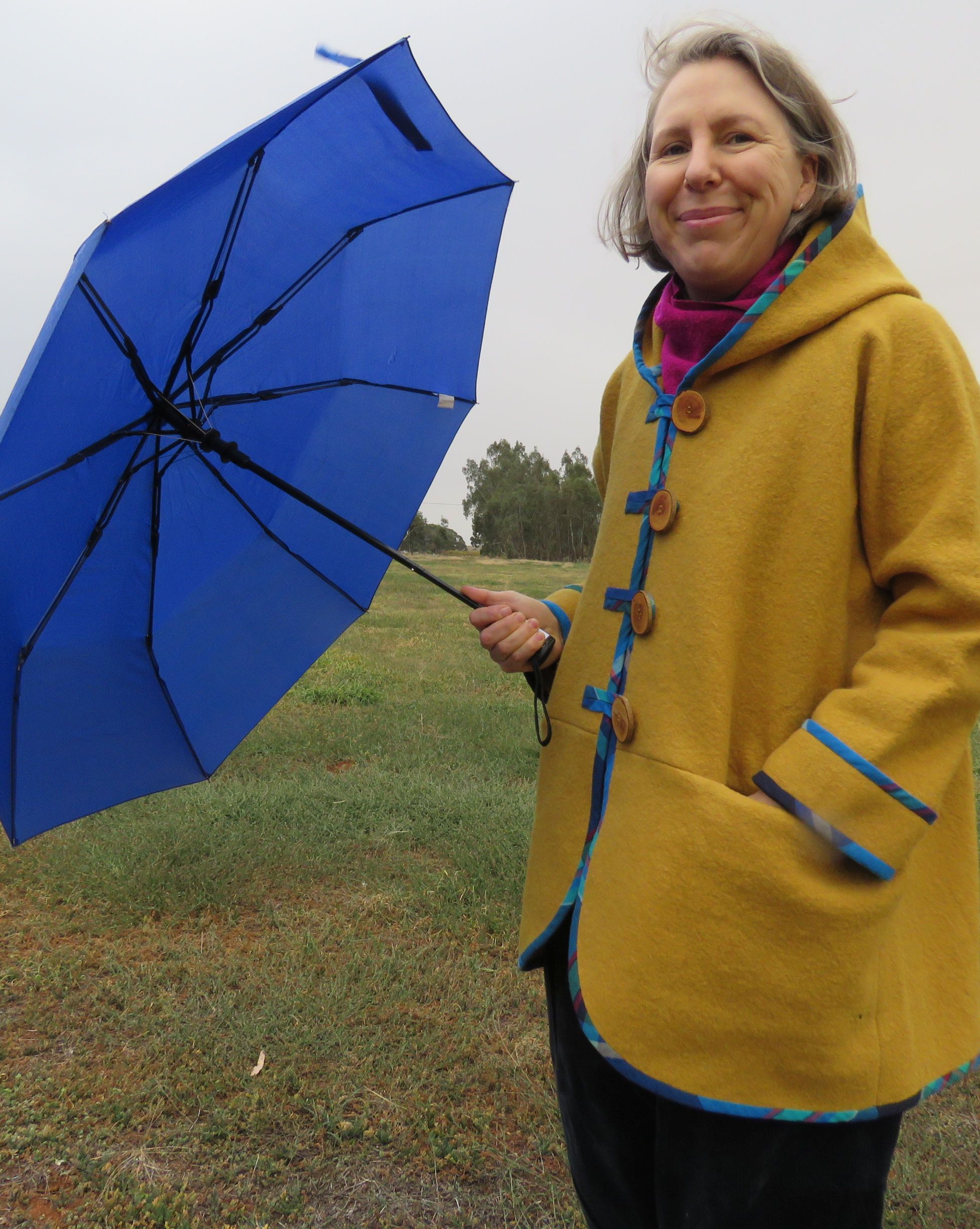
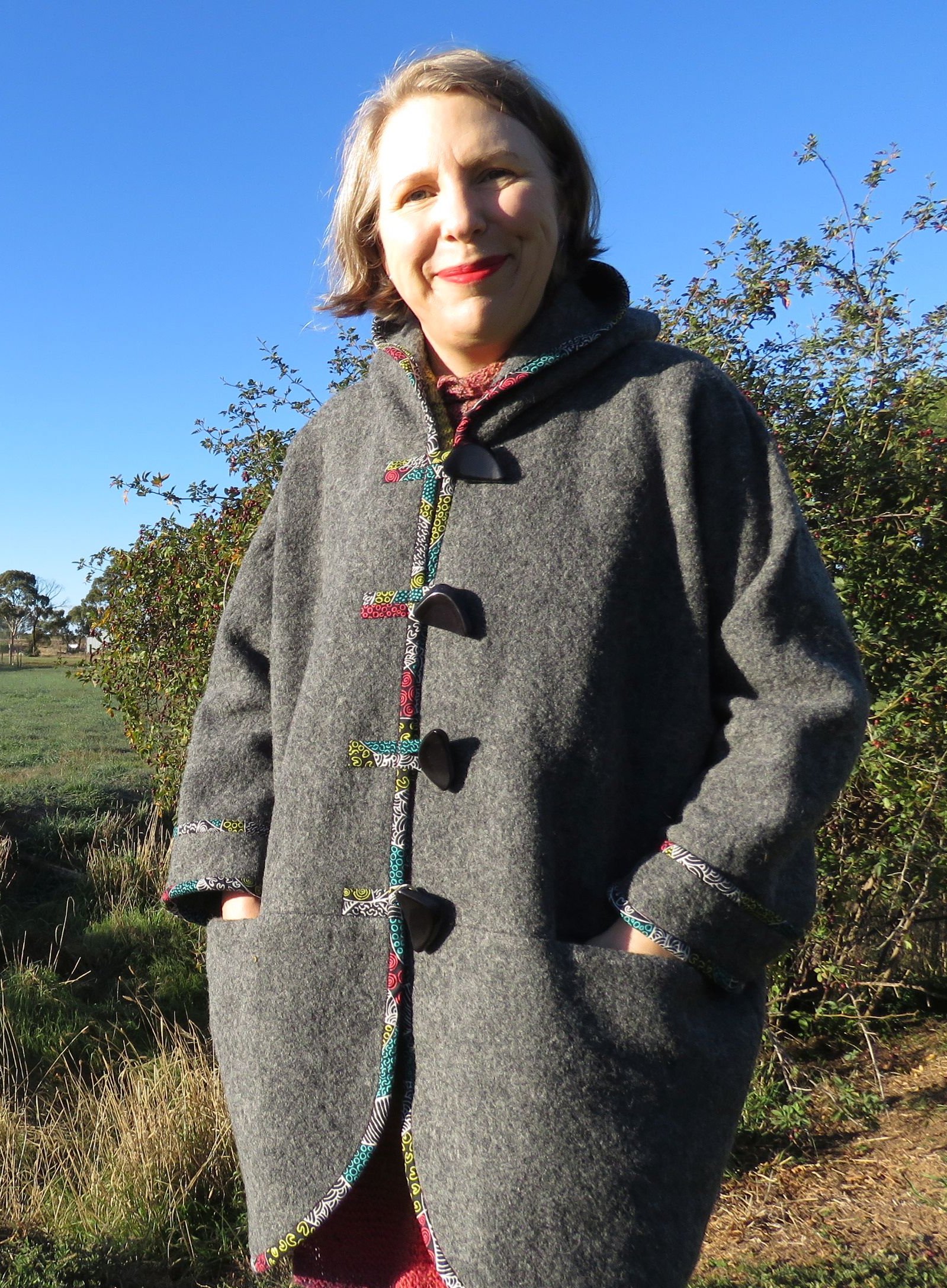
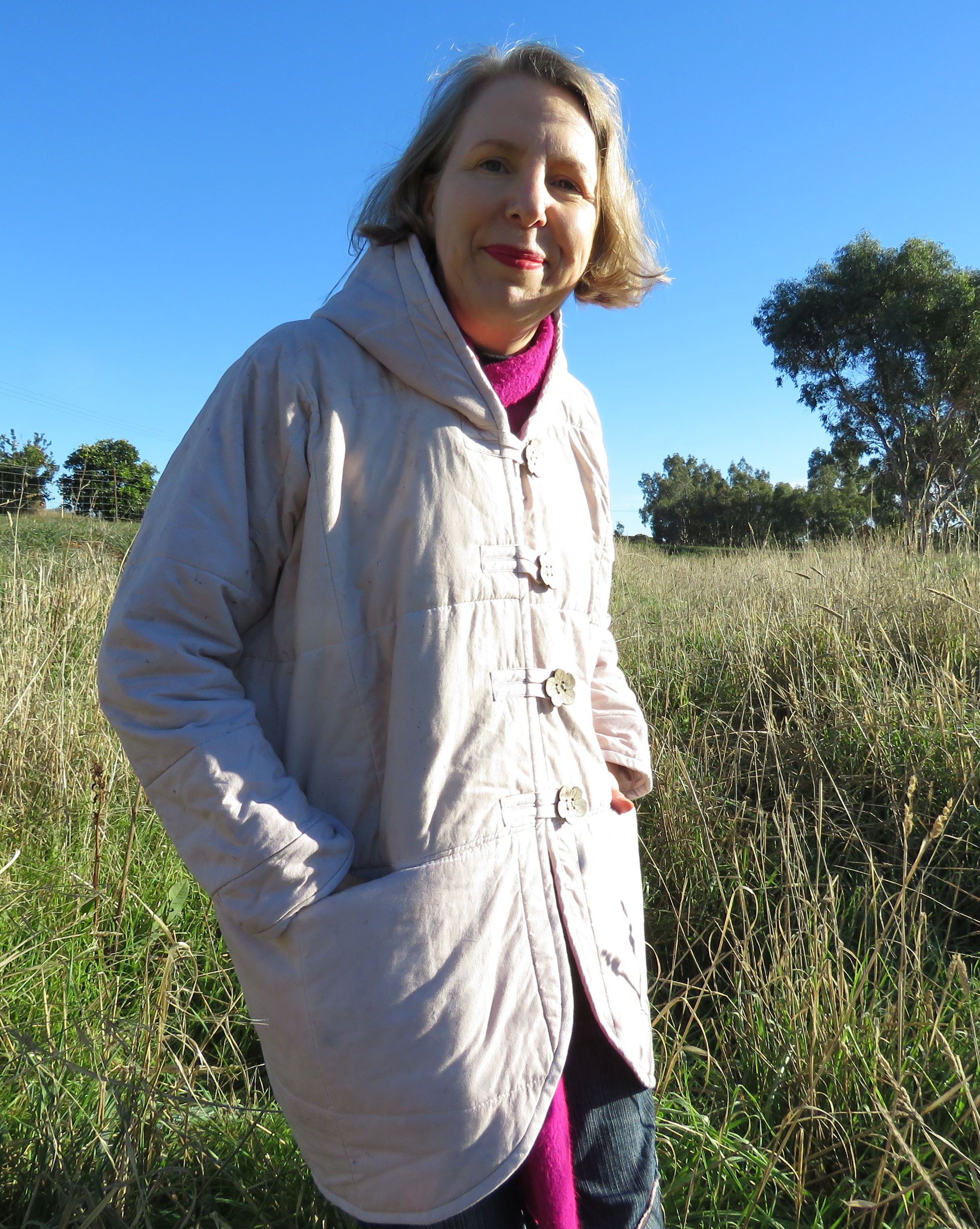
Nice quilted fabrics are hard to come by in Australia (maybe because we don’t need ’em so often!) and this is an actual quilt. It’s a cotton Sheridan Comforter from the op shop, dyed pale grey. I threw in some plain white cotton at the same time to make perfectly matching binding.
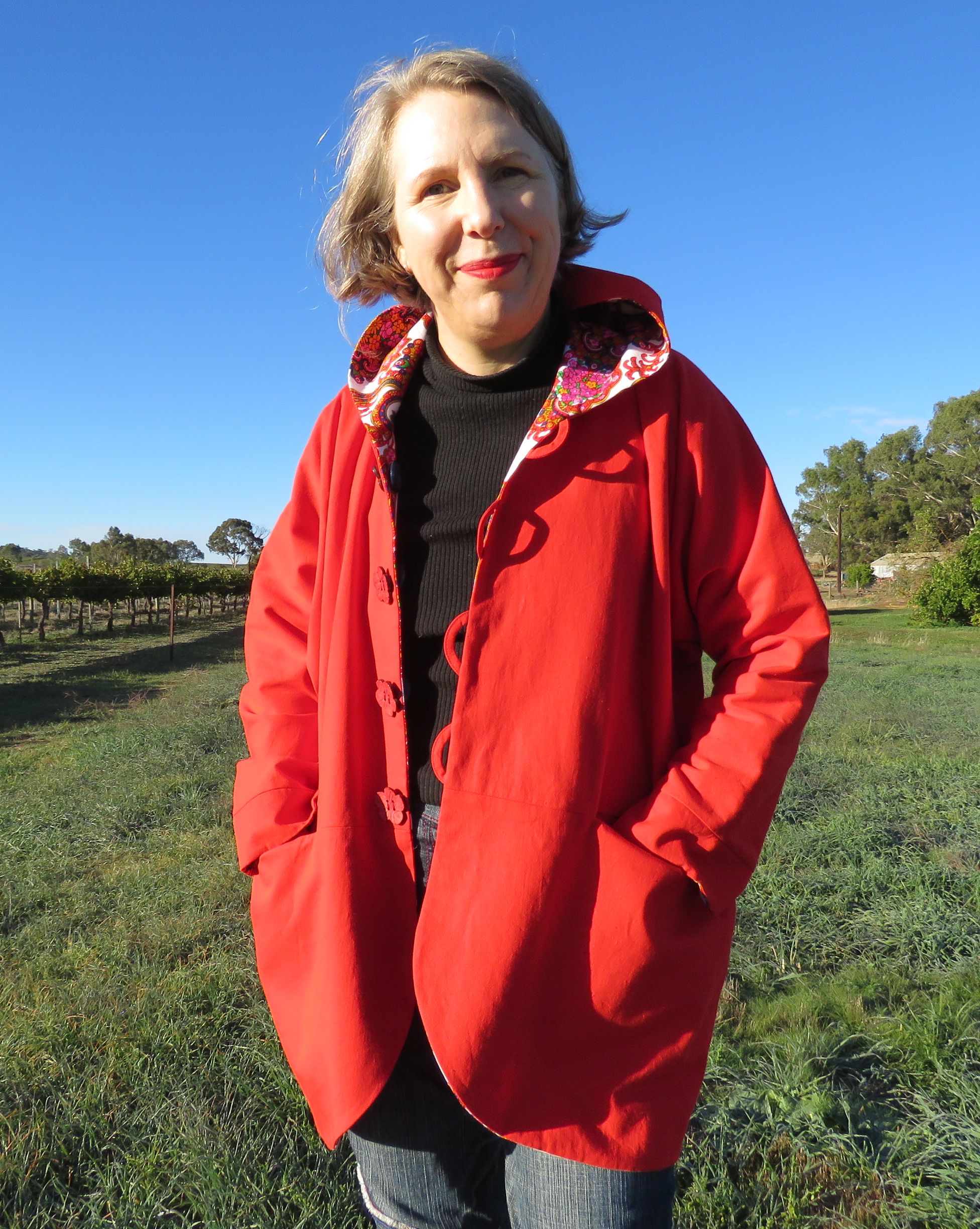
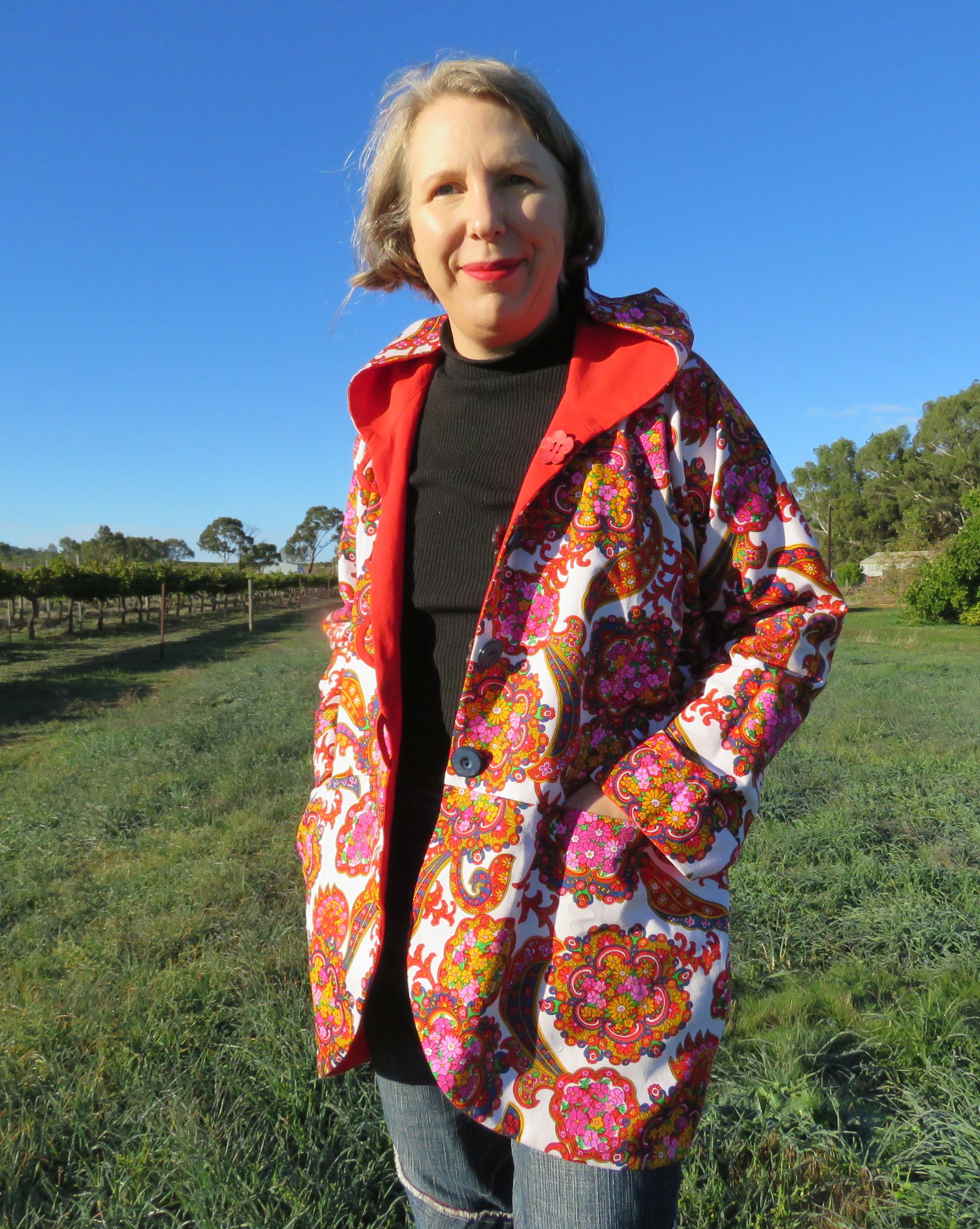
This coat has another version, which is reversible. Instead of binding, the edges are sewn together, and button loops are inserted into the seam. There’s a set of buttons on each side. I feel this is a really happy coat (is it the colour?) and if I were going on holidays I think it would be beaut.
Spiral dress/top + skirt
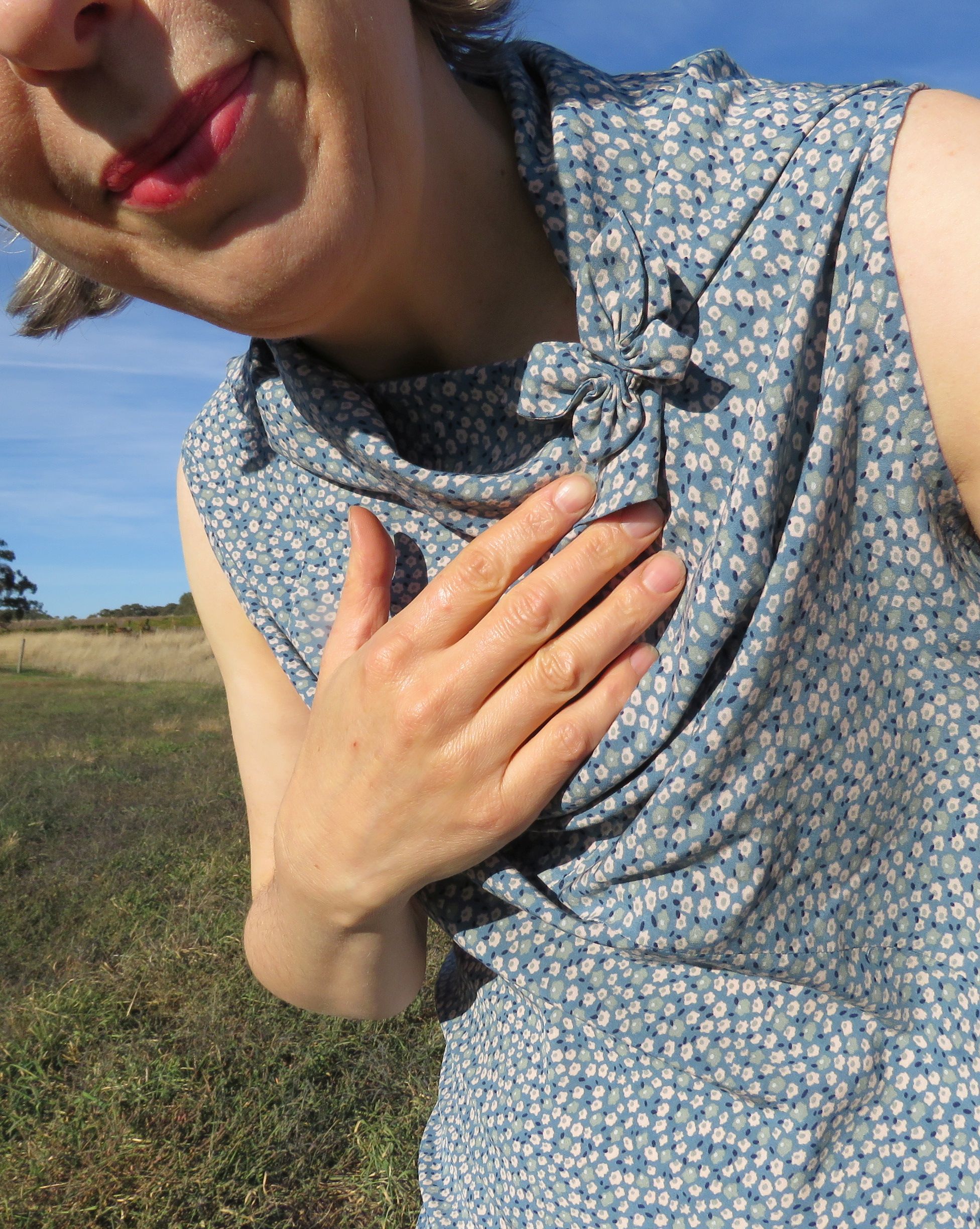
This is a bias cut, sleeveless dress, which can be made any length. It can be cut as a top, with a separate matching skirt, or the skirt can be cut as a stand-alone if you want a bias pencil skirt (sorry I didn’t take a photo of the skirt). This pattern is designed for fluid, drapey fabrics.
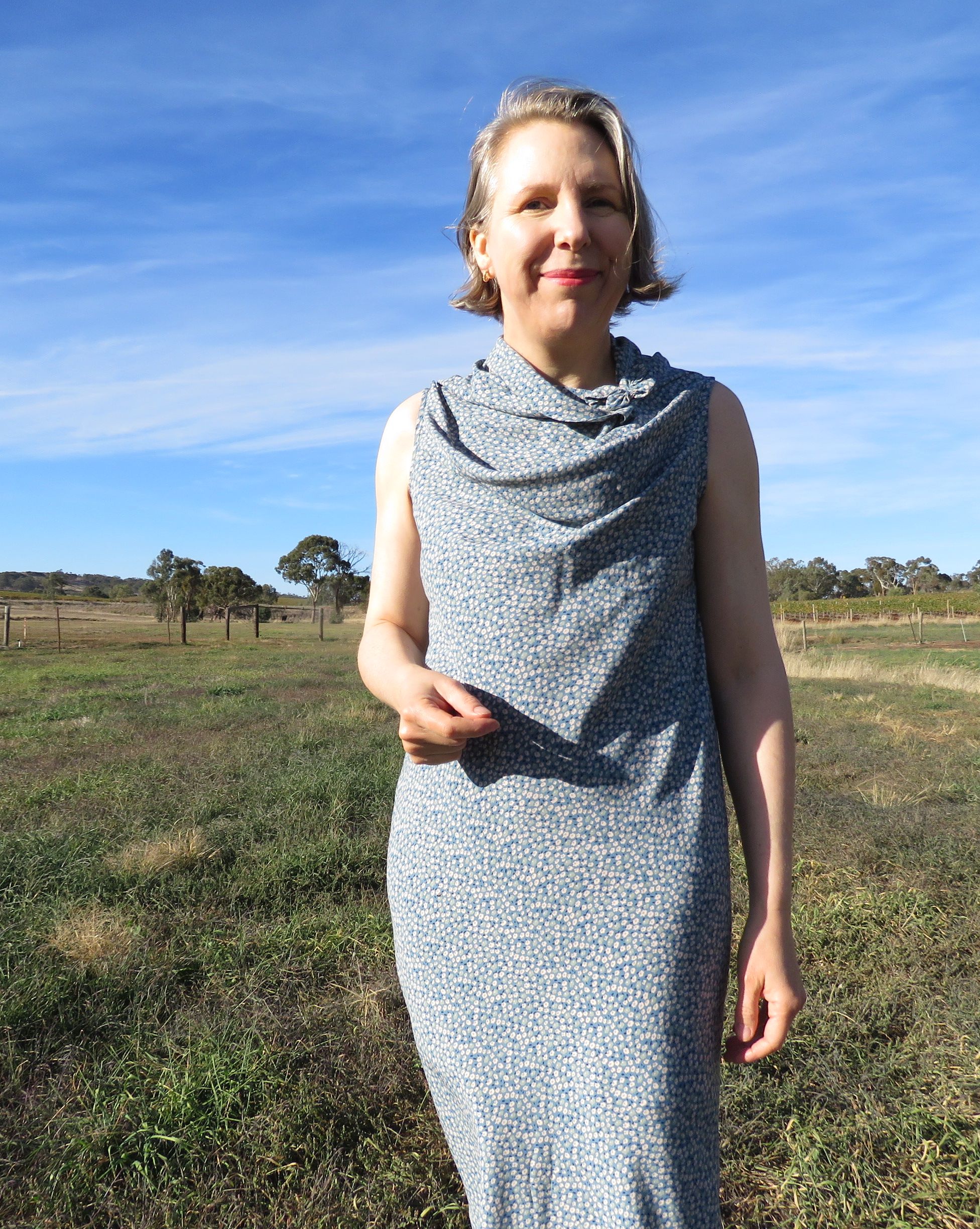
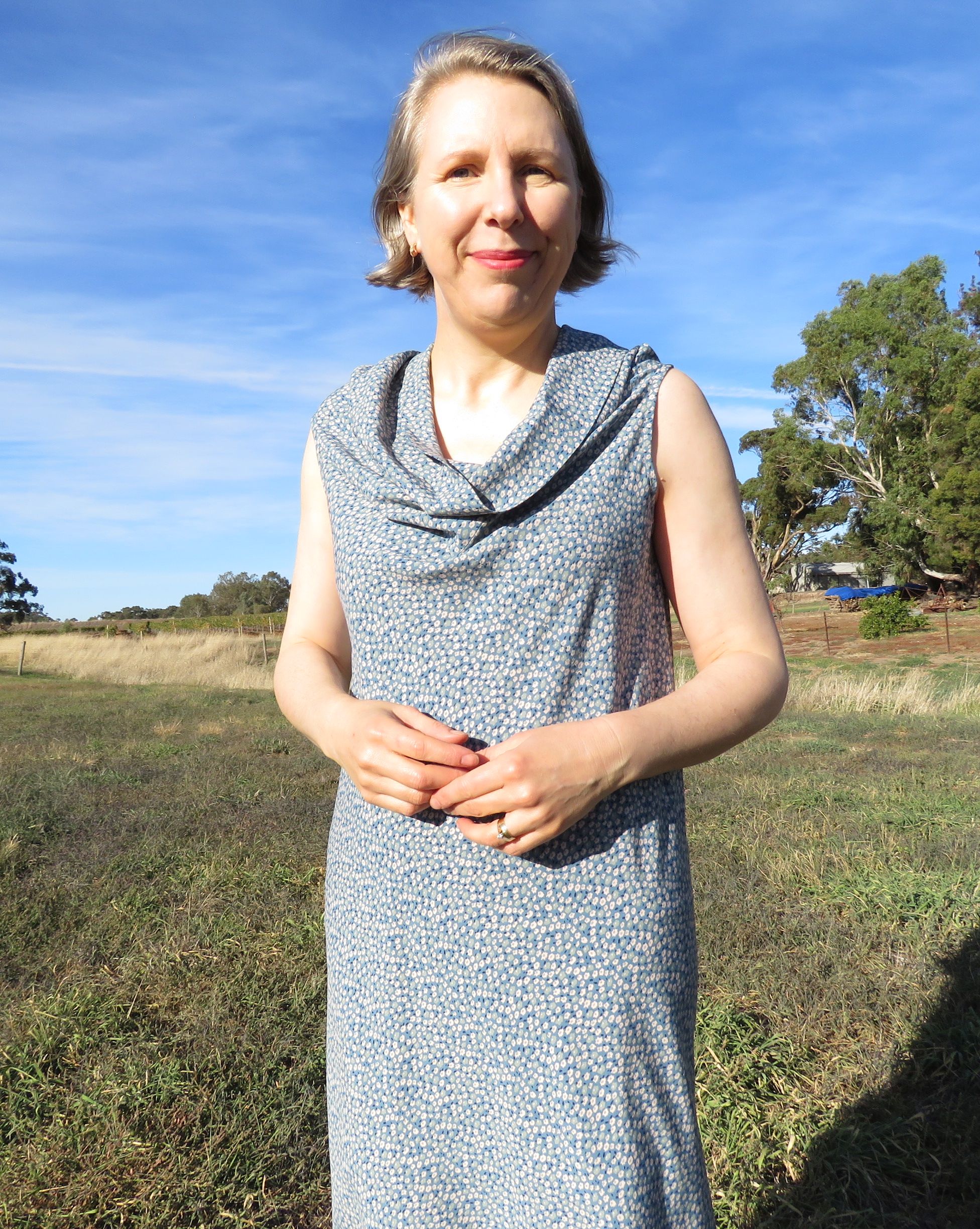
Btw, I tried making this dress with a sleeve option but it didn’t work. However, it could be worn with a top underneath.
Bias top
A top with two versions cut using the same pattern. A bias tube is created, then the pattern is laid on top and cut out. It’s designed for either stable or fluid fabrics, and looks very different in each. The sleeves can be cuffed if the fabric is stable.
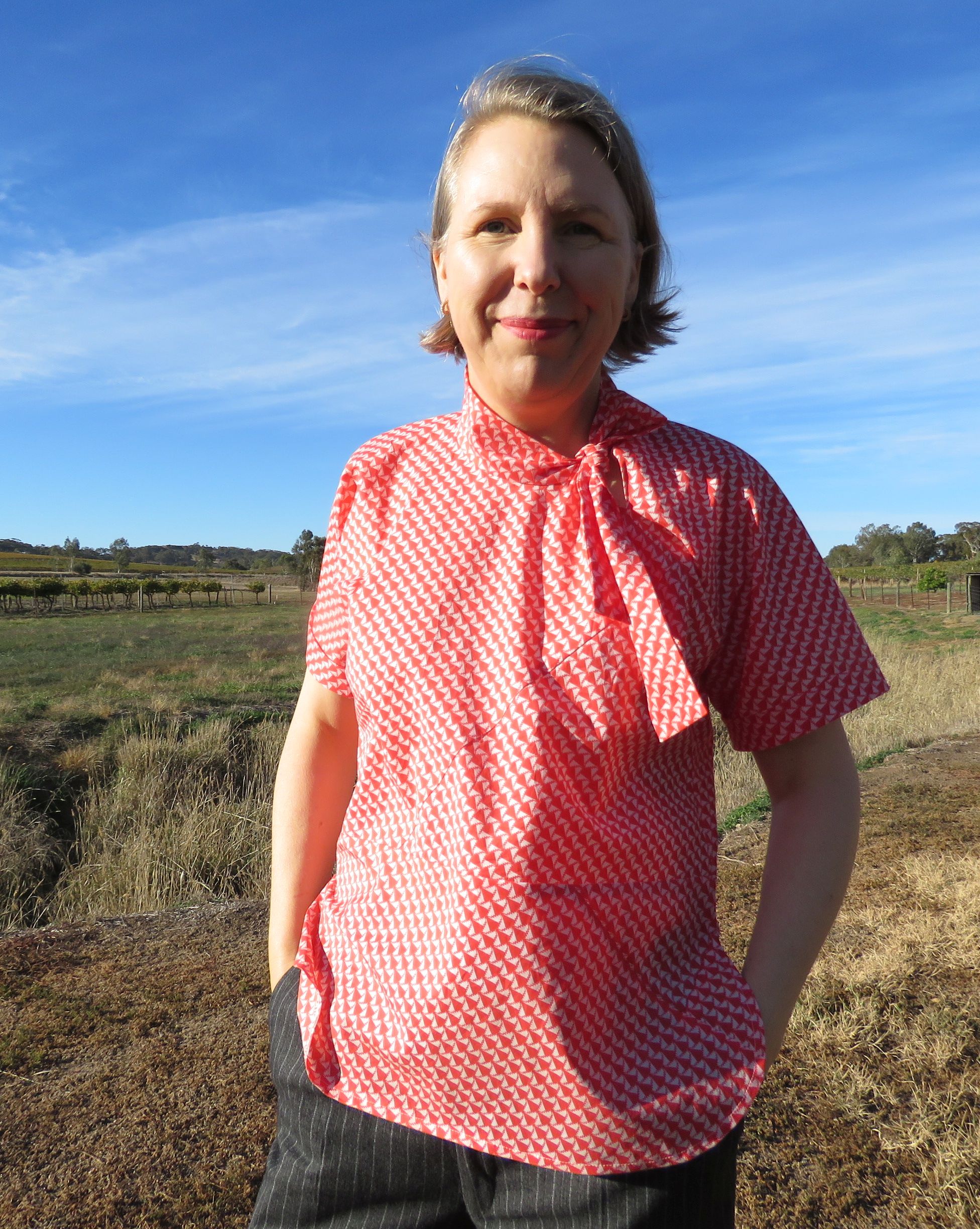
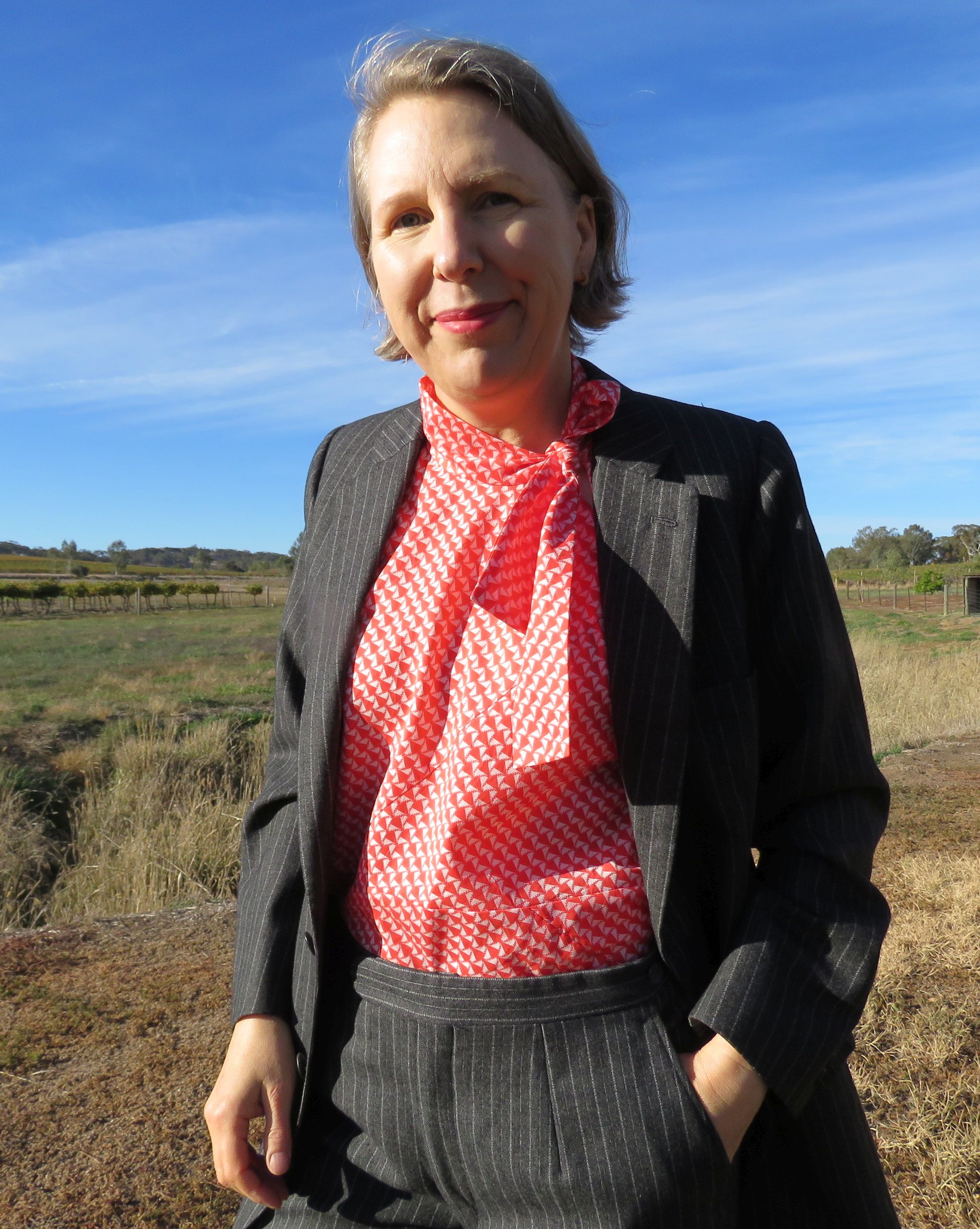
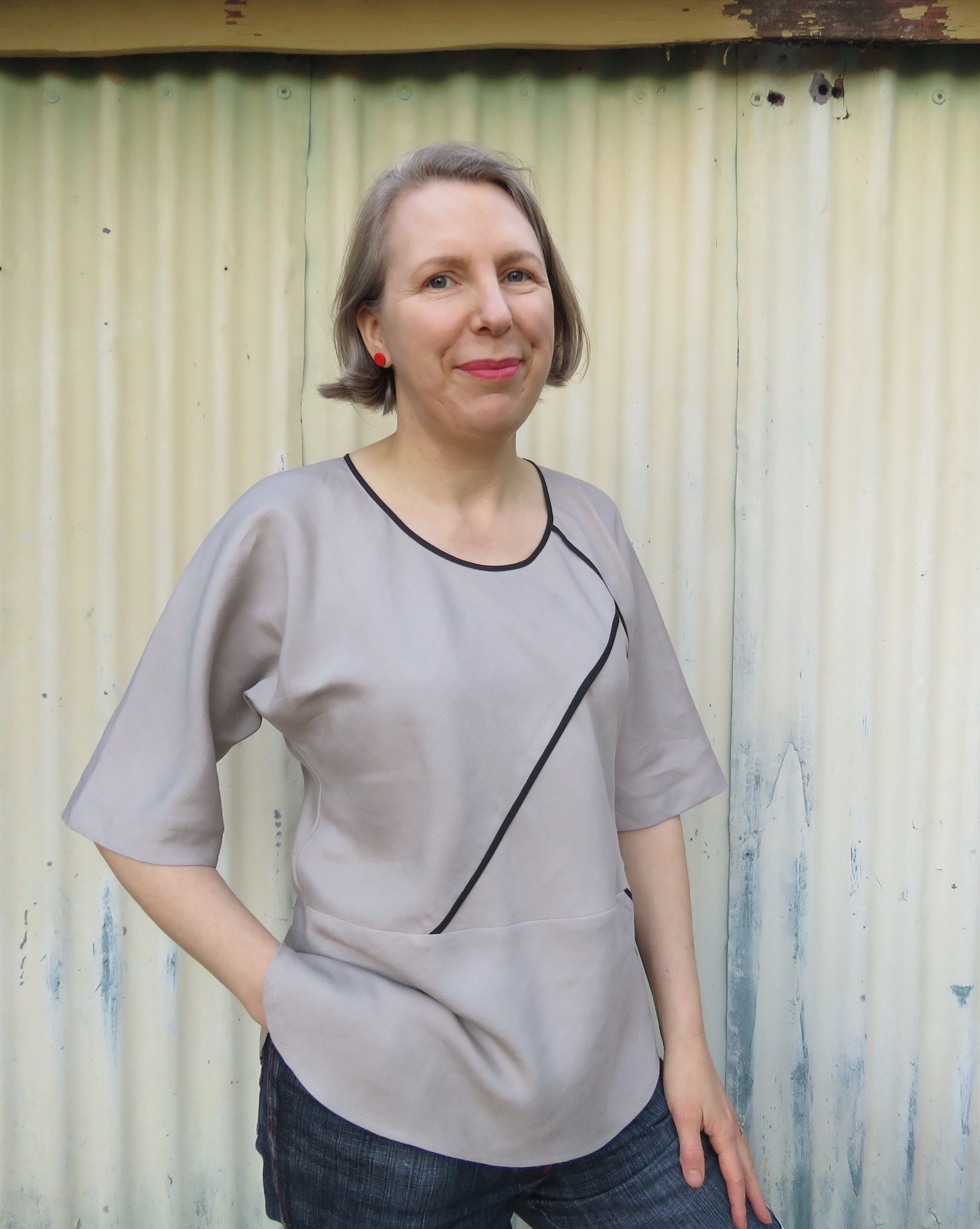
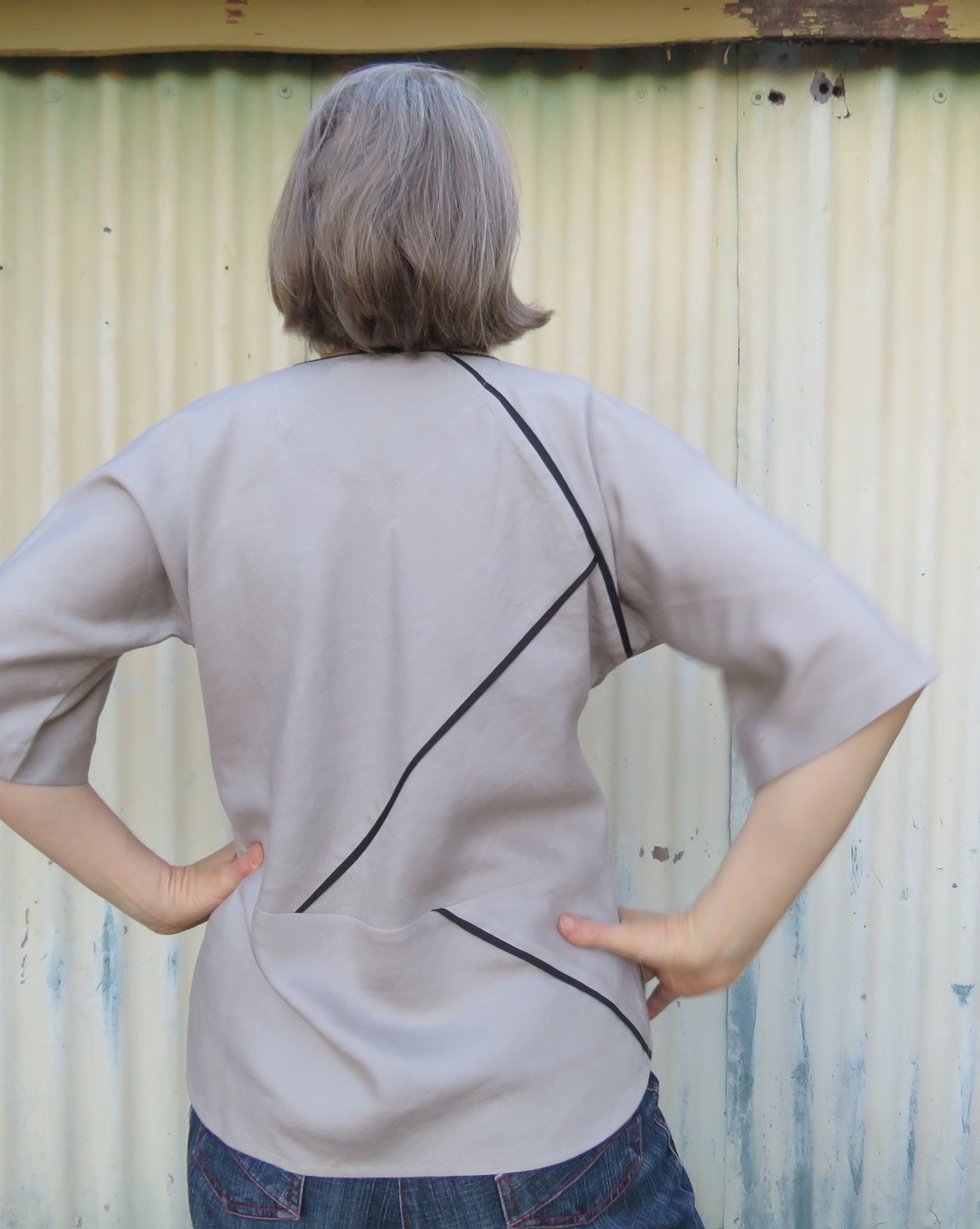
This top is on the back cover of the book, sewn in a stable fabric.
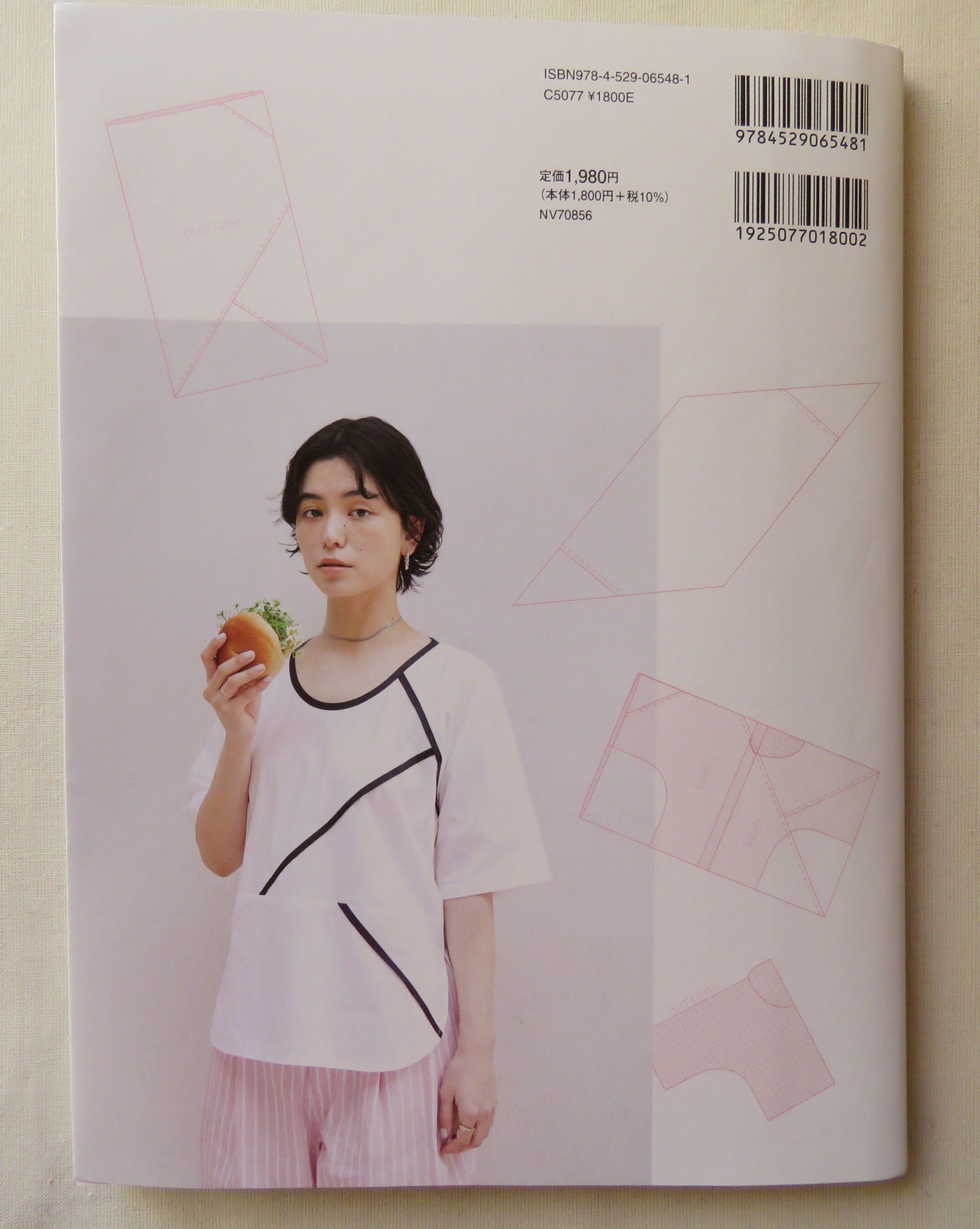
For the non-Japanese reader who has some sewing experience, the book has good diagrams and can be read with a translation app on your phone (or you could take a photo of the text and “translate image”).
How to get this book: The book can be ordered from Japan Amazon here. If you’re in Australia, I have 50 copies coming and you can order direct from me and my newsletter will advise when they arrive. Birgitta in Sweden also has 50 books coming; sign up to her mailing list to find when they’re available. Danielle in the USA has books for pre-order.
Title: ハギレを出さないソーイング/Sewing without Scraps
Subtitle: ゼロウェイストの大人服/Zero-waste patterns for women’s clothing
Author: みらいパターン/Mirai Pattern
Publisher: 日本ヴォーグ社/Nihon Vogue
ISBN: 978-4-529-06548-1
Cheers!
Discover more from The Craft of Clothes
Subscribe to get the latest posts sent to your email.
I hope this book (as many japanese books) will get translated to French or English soon, it looks really great! The list of requirements was impressively long…
I must say I especially like your patterns so just in case: is it like for Tauko where after a while, you can sell them yourselve or will they never be available anywhere else?
We hope so too! It’s out of our hands though.
We retain the copyright of the actual patterns, so we could release the separately but not in the immediate future.
Is the quilted jacket pattern available as a single pattern? Or will it be in the future?
Good question – no, it’s only in this book at this stage, however a book is a very economical way to buy patterns, and 1.5 or 2 things in the book would equal the cost of a single pdf pattern.
How cool! The flowy bias top looks very chic, and the quilted coat so snug (in the sense of warm, not tight – honestly, English!).
Thanks Deborah 🙂 Very happy with all these patterns.
Hi Liz, you are so clever! I love all of the patterns you made for this book. such a variety but all with a classic vibe. I am interested in getting a copy of the book once I know how much they will cost.
Many thanks Christine 🙂
Are you in Australia? If so, drop me an email and I’ll give you some book details.
I can’t wait to have this book in my hands! I have already chosen my blanket for the jacket – it’s bright orange so might need toning down. Loving the other patterns too.
You will love this book, Sue. I can’t wait for you to see it!
What a book! I especially liked two of your patterns – the coat with the hood and the top with the flat piping. The coat would be perfect for fall and spring in Canada. And what a way to jazz up a plain tee shirt. Wonder why I never thought of that?!!!
You had mentioned that the designs had to be fairly conservative as the target audience was Japanese woman in their 40’s and 50’s. So why did they use very young models instead of models instead of models whom were a bit older? It just doesn’t compute in my brain anyway!
Keep up the awesome work.
Thanks MC 🙂 I’m glad you like the coat; it’s my favourite too.
With using younger models, maybe that’s what they always do? Or else she’s 50 with an amazing skincare regime!
I have perused the pages on the Amazon site and knew that top on the back cover was yours – you must have e a signature neckline curve!
I have a birthday coming up – hints have been made 😉
I don’t need another coat but I do love making them and I love a bit of bias – binding and/or whole garment.
Fantastic designs Liz.
Maybe because I borrowed the neckline from Xanthea? 🙂
We had a really interesting email exchange regarding neckline and head size, and I went down a grading rabbit hole. The book’s smallest sizes are very small by comparison to western sizes, which suggests that neckline sizes are smaller too, however, head sizes are independent of body size, so a person may have a small body yet average-large head and therefore need a corresponding neck hole so they can get the garment on over their head. I dug around to see if Asian head sizes were generally bigger or smaller and got mixed results (depending on which Asian country). Militaries in every country have done tons of body measurement taking for years, to help them design uniforms, cockpits, seats, etc (admittedly mostly on young fit men of military age, because that’s what they have) and it appears that Asian heads are a different shape, being bigger at the top and flatter at the forehead and back. Which is difficult if you’re designing helmets and eyewear for both groups (my Indonesian BIL confirmed – said he can never get Aussie sunglasses to fit on his face properly). So, after much fascinating reading which fed my inner grading nerd, the conclusion was that you cannot make neck holes smaller beyond women with a 34″ bust.
Anyway, I think you will like this book, Wendy.
I love these patterns! I’ve ordered the book, (though they don’t seem to have taken any money yet), and I’m really looking forward to trying them all out!
Thanks Bea!
Oh, I love that reversible coat! What a fantastic project to be a part of.
Thank you Cindy, yes it’s been a very wonderful experience.
fabulous!!!! also great haircut 🙂 it’s so cool to see a piece of fabric be able to do so many things, straight grain or bias or a tube or a puzzle…. this is such engineering magic.
Thank you!
I cut my hair with my dressmaking scissors 🙂
Dear Liz,
This is great. I texted Decode for the book that is supposed to be available this month. I am and old (84) consultant to the fashion Industry here in San Francisco and a former master educator for the San Francisco Fashion Incubator (closed due to location at the former Men’s Macy’s and Covid).
I have been interested for a long time in zero waste, both in structure and substance.
Thank you,
Dorothy
Many thanks Dorothy, and I hope you enjoy this book.
I just had a very pleasant time looking at your website 🙂
Hi Liz, just curious what size of the bias top did you make for yourself? I’ve got a copy of the book and my measurements (other than height) correspond to 3L in the book, so that’s what I made, and it is just comically large on me. Way more ease than either yours in these photos, or the modelled version.
I’m also curious about the measurements of the bias tube, for the round neck it suggests the length should be 89cm and for the tie neck 102.5, but I don’t get how that can be if they are made from the same size starting rectangle with the same process. Mine came out to 99cm.
Hi Elaine, I made a size Large, and I have a 35″/89cm bust, so I’m 1cm bigger than a size L. The red and white top measures 102cm in circumference = 14cm ease.
I’m scratching my head as to why yours came out too wide. Can you recall, was the bias tube the correct width?
With the measurements for the bias tube, there’s a typo in the book regarding the starting size for the rectangle. On the diagram on page 44, the starting rectangle should be 126cm long, not 145cm, but the correct 126cm measurement is in the “fabric required” section at the top. The errata is in the video sewing guide. This would explain why your bias tube/top is too long.
Your top can be rectified, as it’s a simple shape, by bringing in the side seams and shortening. I’m sorry the book went through with a typo and I’m really sorry (and perplexed) that the size came out too big for you.
That’s alright, it’s pretty rare to find a pattern that fits right out of the box! Thanks for sending me the errata, I hadn’t seen that. I assume 126cm is the right fabric length for both bias tops? I did use 145 cm and I think I remember the bias tube was the right width, though I’m not positive about that.
I got your email, will send along a photo.
It’s 126cm for the round neck, and 145cm for the tie neck (the tie takes the extra length). If you made the round neck version with 145cm, it will be approx 8cm too long above the horizontal seam.