A Dose of Gingham Goodness
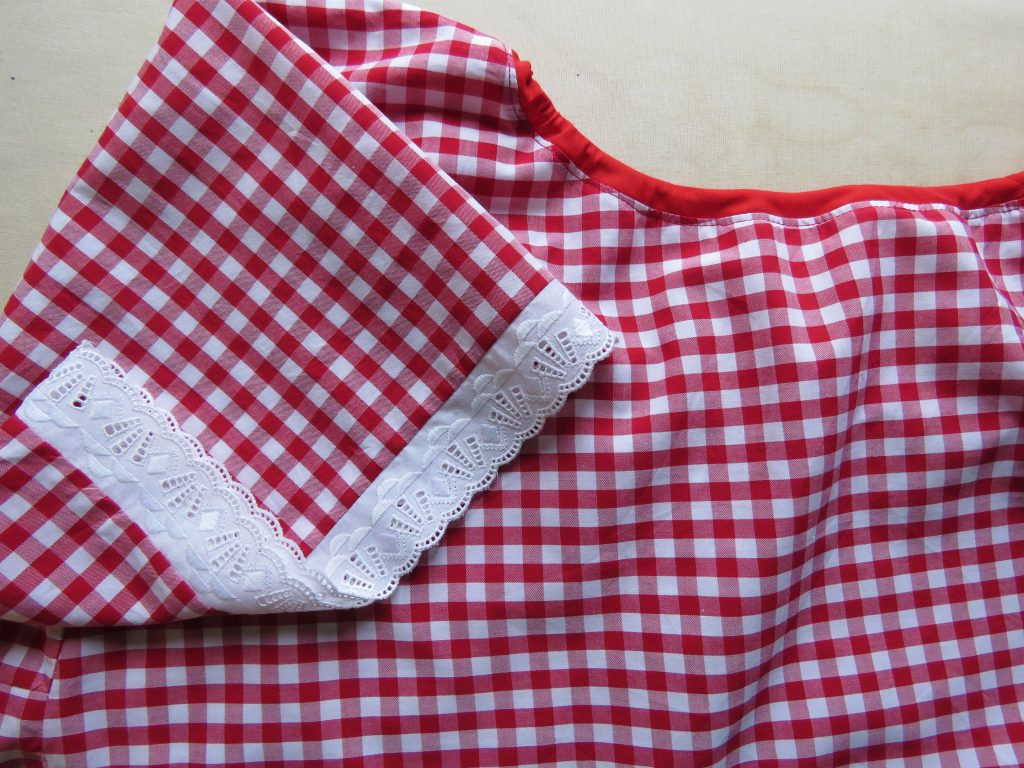
I’m making a nightie for my teen using a Jane Austen-era pattern for a shift, following on from last week’s post on using an historical sewing pattern.
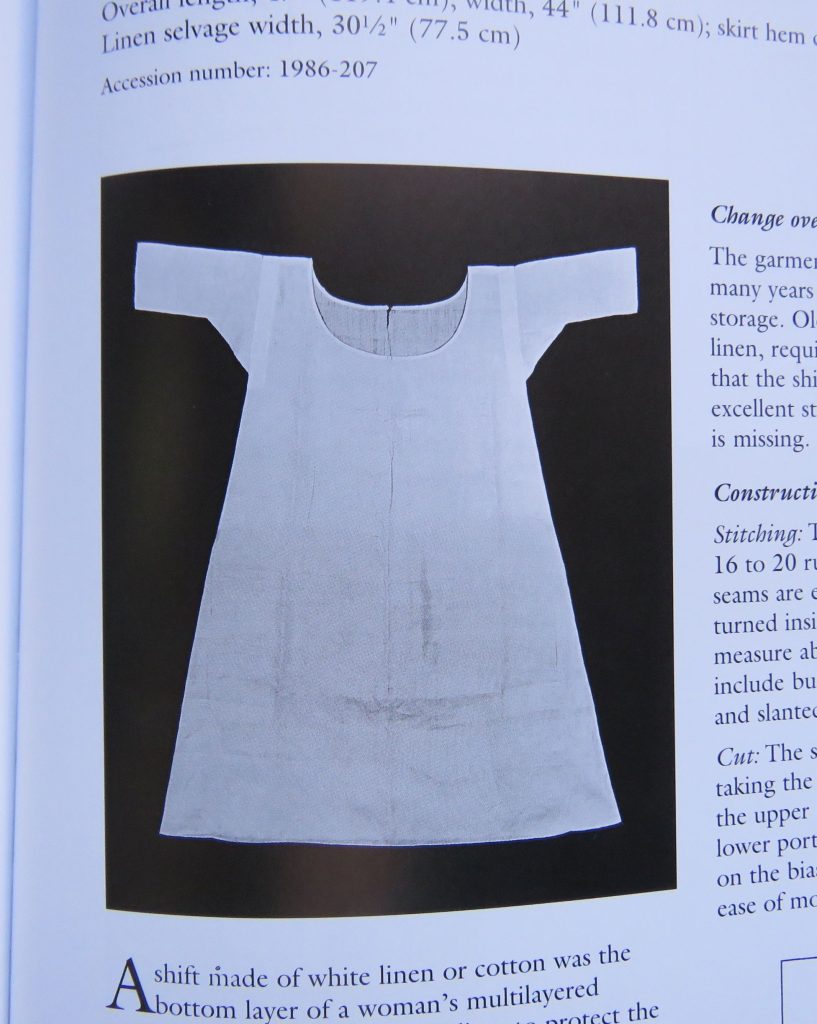
The pattern is in Costume Close-Up – a book of patterns from garments in the collection of the Colonial Williamsburg Foundation in the USA. Beyond the patterns, the book examines how clothes were made, mended, laundered and stored. You can view the first few pages on the Internet Archive.
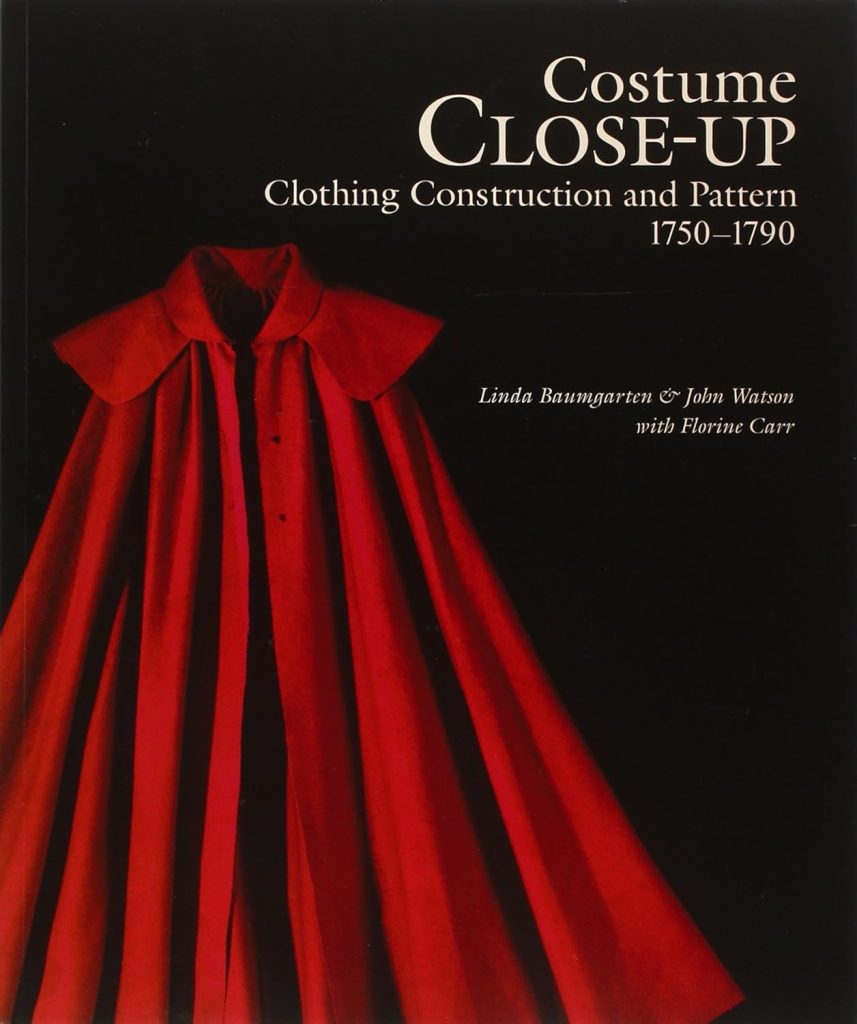
However, I’ve used the pattern as a starting point and gone my own way with it. I thought it would make a good nightie for my teen.
The original is cut in a zero waste arrangement. It’s longish, below the knee, and has a drawstring neck.
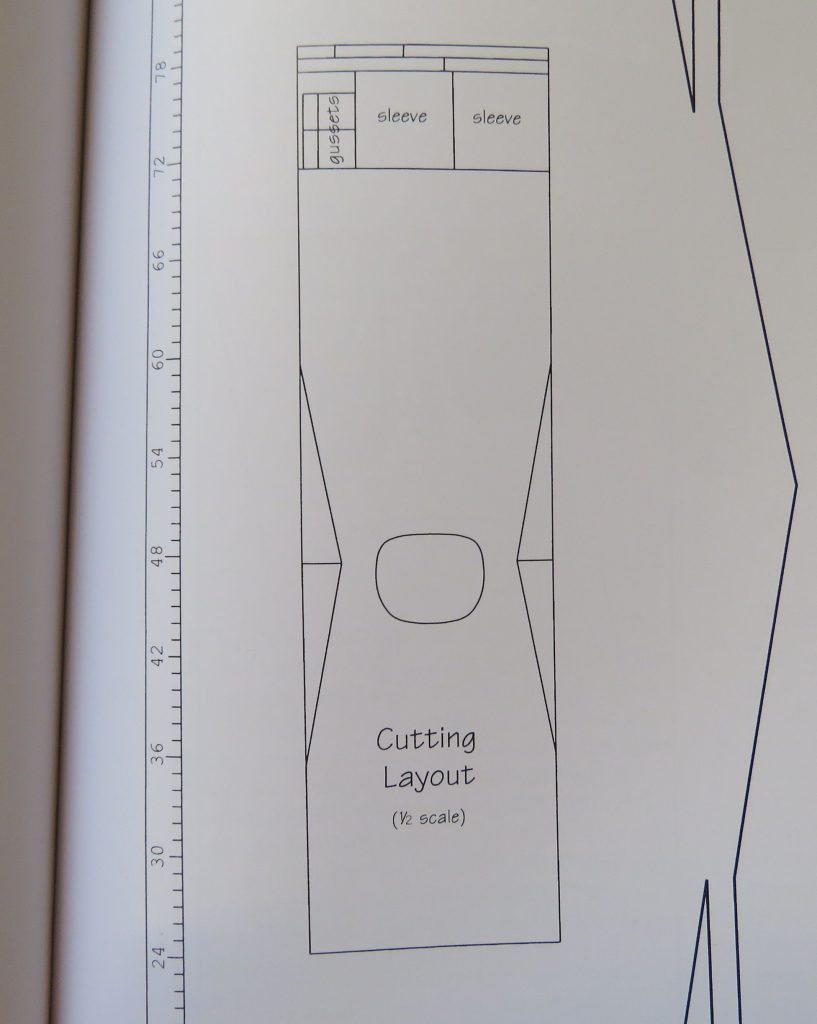
I drew a pattern which you can see from last week, but made the sleeves wider. The originals were square, 30cm x 30cm. They must have been tight, for I made mine 40cm wide and still thought they were very close fitting. The tight sleeves seemed at odds with the very loose body. Here it is pinned together:
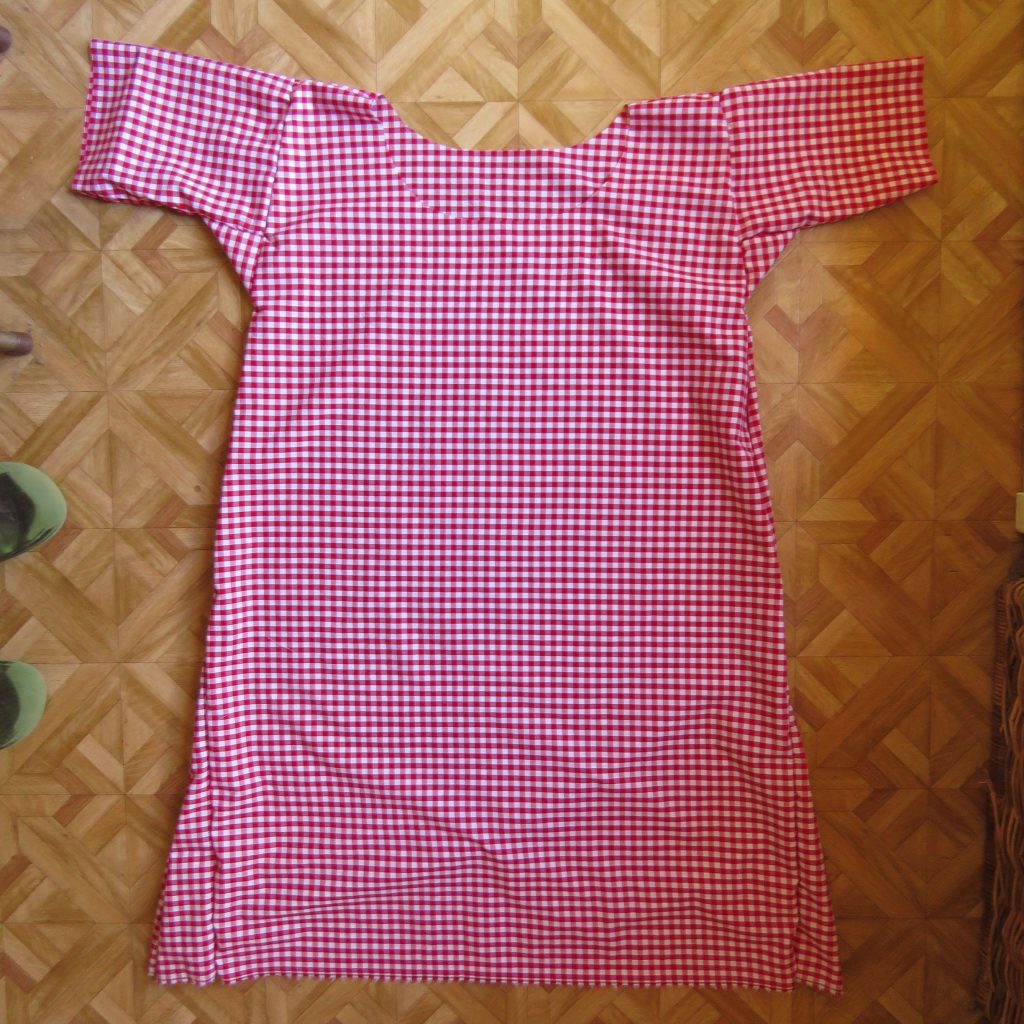
I tried this on myself, and decided to make the sleeves even looser since no-one likes tight sleeves on a nightie. I re-cut the sleeves from some spare fabric to be 50cm wide x 20cm long.
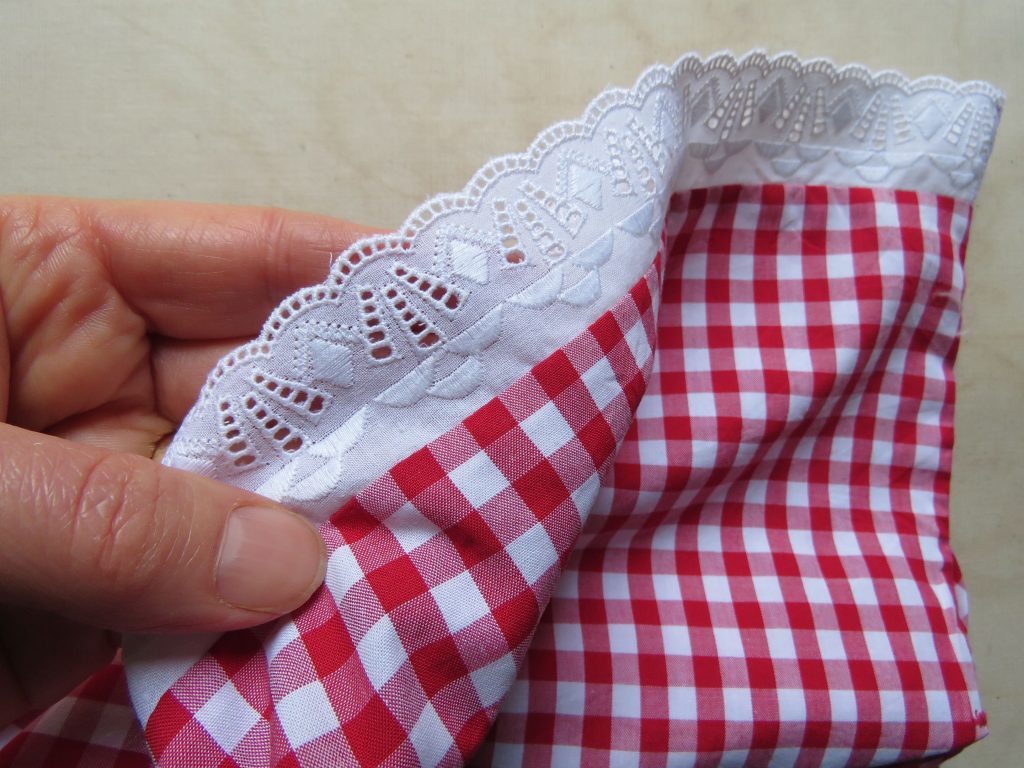
Teen wanted something pretty – lace trim? I suggested broderie anglaise, which I feel has the same “wholesome” vibe as gingham. A search through the lace box brought up exactly enough of some circa 1990s lace (Adelaide readers: I think I bought it at Johnson’s Fabrics closing down sale).
I made the neckline casing from red bias binding, and threaded red ribbon through. The reds are a little orangey compared to the gingham – I might replace the ribbon with black. Wishing I’d overlocked the neck in red, but we’re past that point now.
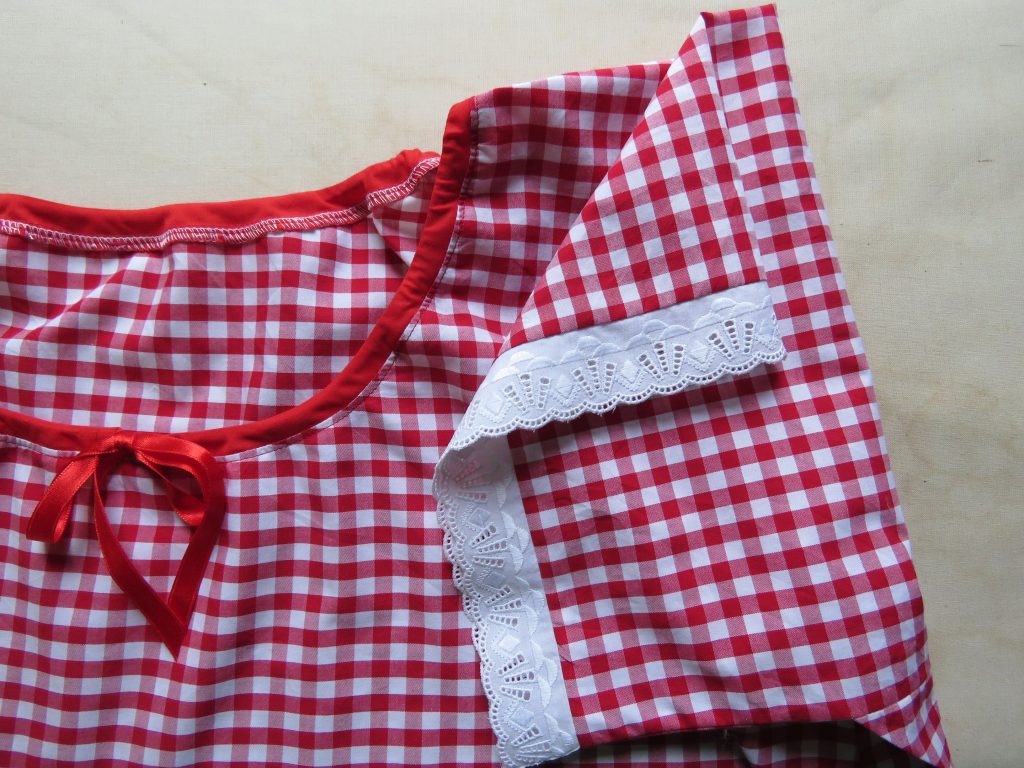
It’s hard to tell how much the original shift might have gathered up at the neckline. I can see why it had a drawstring, because it would be easier to iron, and adjust to wear with particular clothes.
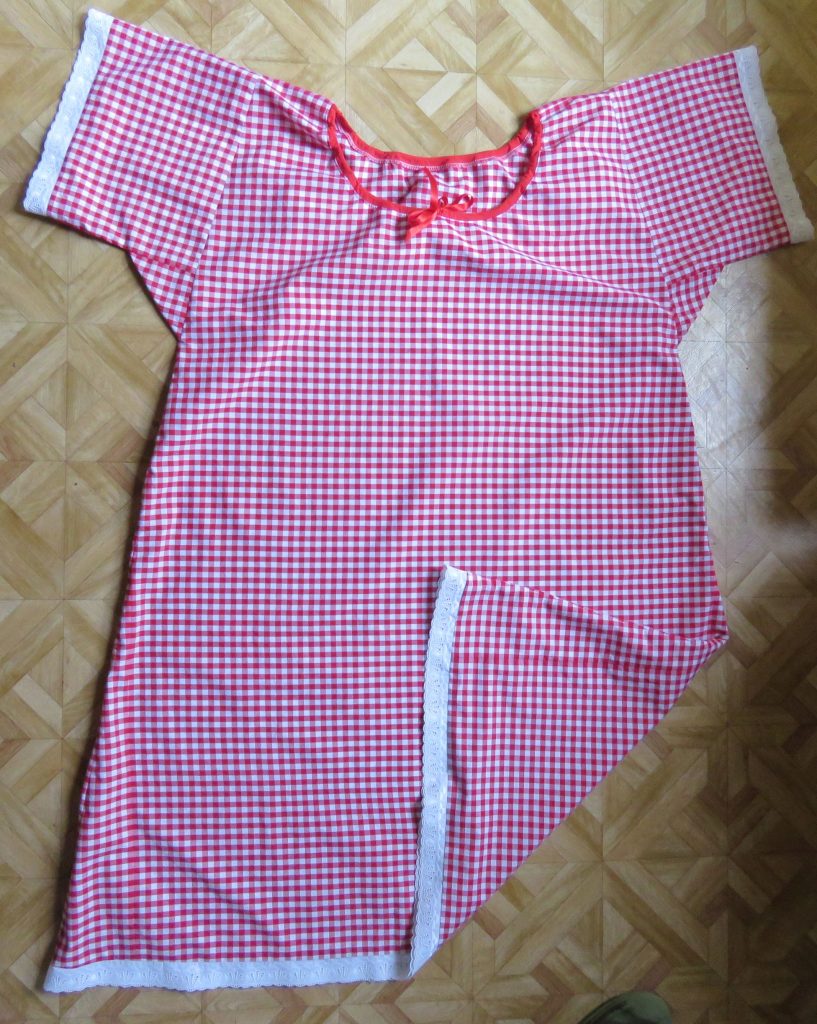
It ended up looking like this:
But how does it look when worn? To satisfy your curiosity, I’ve modeled it for you. Bear in mind she’s a size bigger than me. Since it’s a nightie, I’ve styled it with “bed hair”.
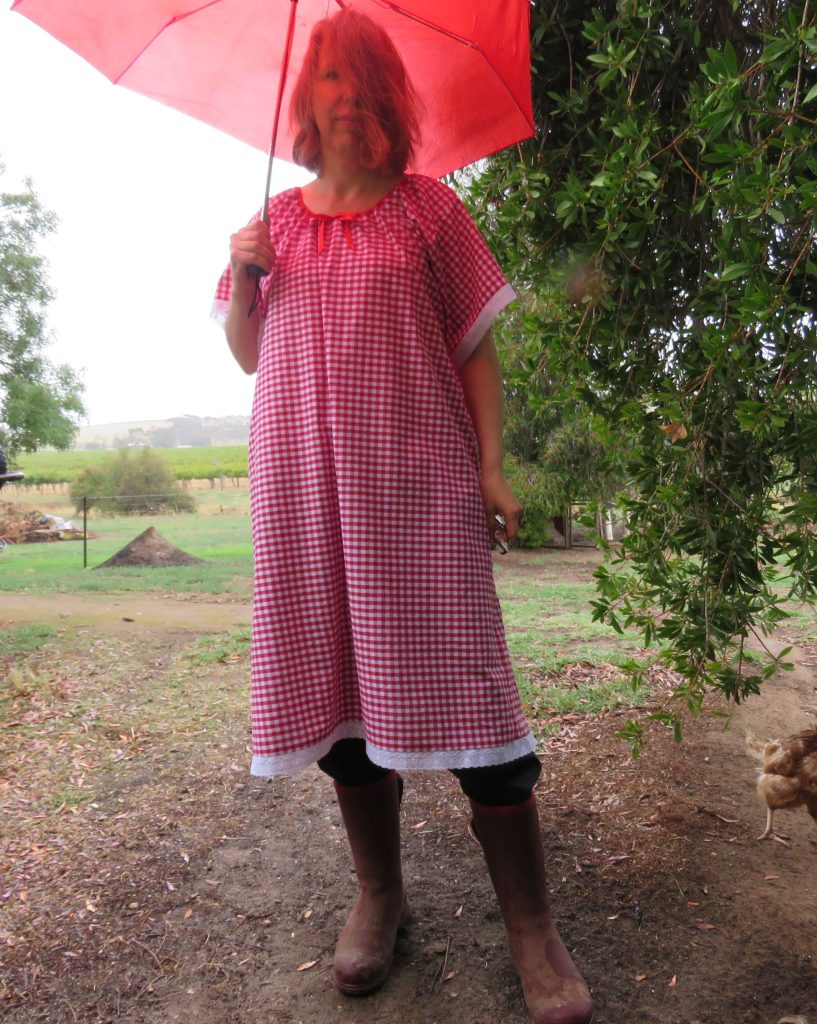
As it so happened, in the driest part of the driest continent on Earth, during a seven year drought, it was raining. So I stood outside in a nightie with a brolly and gumboots, and hope you appreciate my dedication to this blog.
Since then, my teen has worn the nightie and given it a big thumbs up, and says 10/10 would recommend.
Cheers!
Discover more from The Craft of Clothes
Subscribe to get the latest posts sent to your email.
Love the nightie, Liz, almost as much as your modelling, it must have taken ages to get that bed head look. Your dedication knows no bounds.
Keep up the good work and the fantastic writing.
Xx
Thank you Donna, the bed hair was a masterstroke by my stylist, and took surprisingly little time to achieve.
Hello Liz! The nighty is adorable! I am not a nightgown person myself but I could see this making a great gift. I‘m loving your deep dive in sewing historical clothing. Thank you so much❤️
Thank you Giul – the lace gave it the lift it needed. Very happy that teen liked it.
Wow! Gorgeous photo, and a great looking nightie
Thanks Helen, it looks better on my teen (she looks good in red). She said it felt a bit like she was the animated version of Pollyanna.
I so love your modelling – with wellies!
Thank you Liz, wellies go with any outfit outdoors 🙂
I love it! This nightie reminds me of the muumuus my grandma would wear when I was young. Makes me nostalgic.
Thanks Michelle, it sort of reminds me of things my grandma wore too, yet somehow on young people it looks impossibly cool.
Indeed I do appreciate your dedication to this blog! Thank you for your excellent instructions and humorous narrative!
Thanks for reading Sandy!
I had a good laugh at your comment for the last picture, thanks! Good choice to chance the sleeves, being too tight in a nightie is no fun at all… I love the result and as usual the whole process too, thank you for sharing!
Thanks Liseli, there’s sort of a happy medium to strike with nighties: too tight is no good, but too loose = too much fabric to deal with in bed. Teen said she thought the sleeves could be a little tighter if the underarm gusset was bigger.
I do hope the ‘usual’ joke was made re: umbrella instruction manual!
The shift looks ideal for its intended wearer and her needs (aesthetic and practical). Maybe Austen era wearers just had very skinny ( undernourished) arms or did they have to fit sleeves under multiple other layers? I have a Repair Café colleague who makes historical garments – I will ask! They probably weren’t volleyball players (thinking of your comments on the geometric top).
Jackets in the heat, nightclothes in the rain; your dedication is admirable!
Of course it did! But alas only the chickens were around to hear it.
I found the tight sleeves answer here – it was to suit the fitted sleeves on their outer clothes. Still, this pattern has pretty tight sleeves. My upper arms are fairly thin and the original sleeves are skin tight.
Your dedication knows no bounds, and is very much appreciated 🙂 :-).. Really good use of historical patterns, this is a medieval chemise, imported from the middle East during the crusades, in turn imported from the Indian kamiz.. I had for a while an excellent heavy linen version as a house dress, a French 19th century almost unadorned iteration. It was incredibly comfortable. The sleeves were shorter than yours and indeed narrower than you’d think, but that in turn kept in place the whole heavy tent, which consequently could be quite loose and allow excellent ventilation. The best hot-weather attire possible, almost no contact but a bit of linen touching your shoulders. Check it out, fellow dry-hot-weather inhabitant!
Thanks for sharing about your heavy linen house dress, and its sleeves. Great to hear from someone who’s worn one.
The gingham nightie has since become a favourite.