Trialing the Stoppax Hemstitching Fork
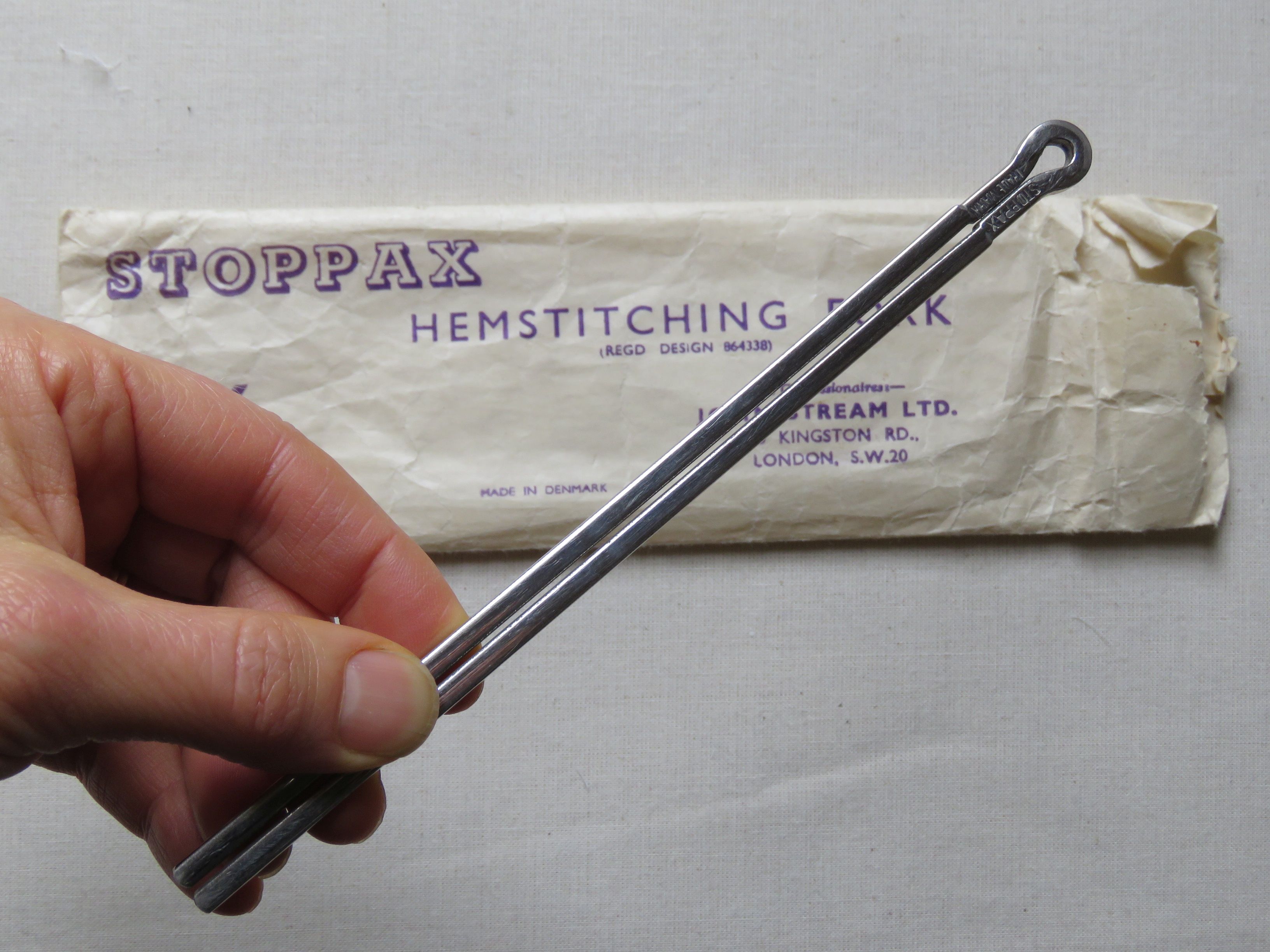
The Stoppax hemstitching fork is a vintage sewing tool that Mr H chanced to see at our secondhand shop. It was $10 which he thought was a rip off for a strip of metal, so he passed on it. When he got home he looked it up on Ebay, then went back and bought it!
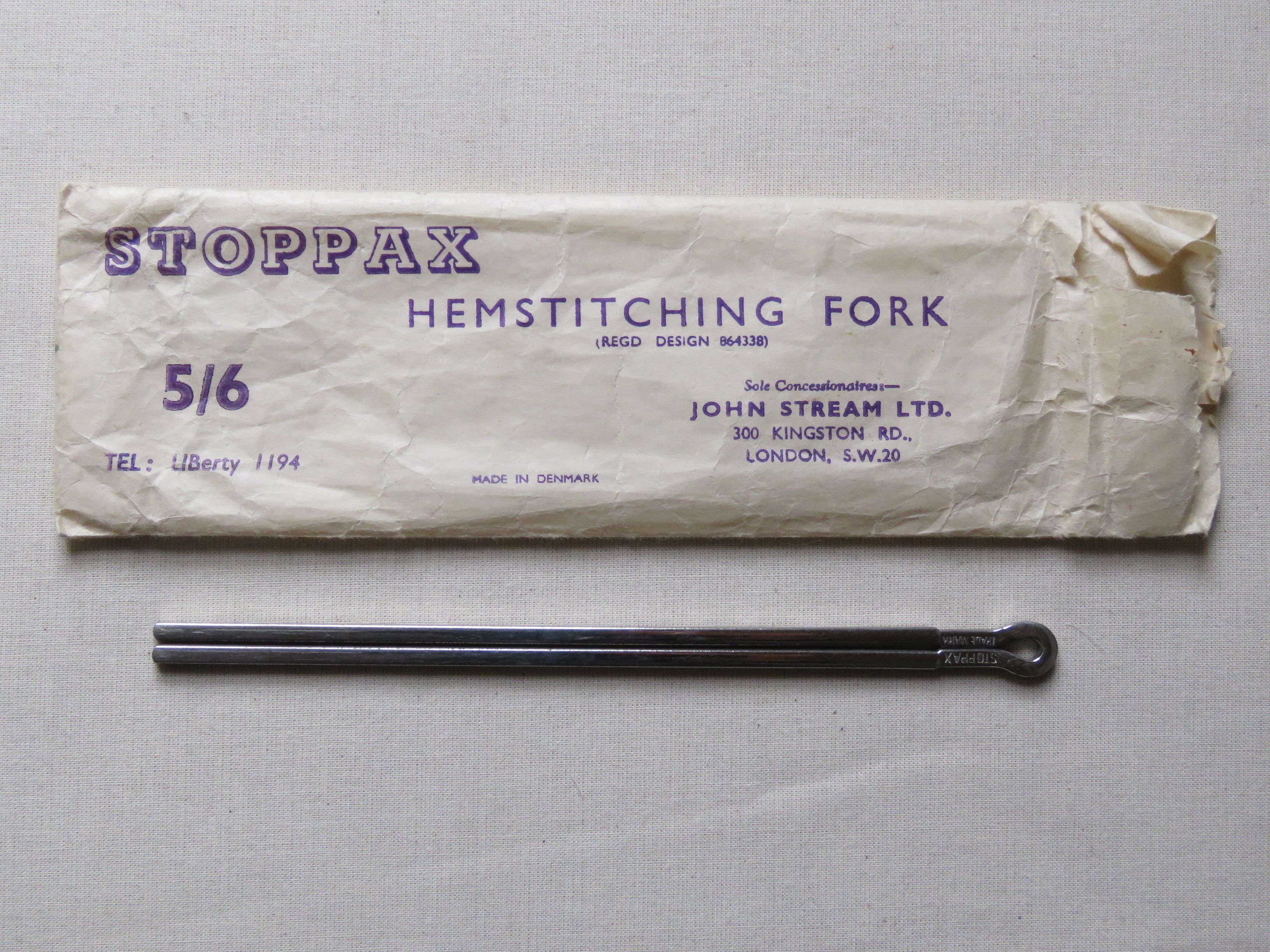
It was in the original paper bag…
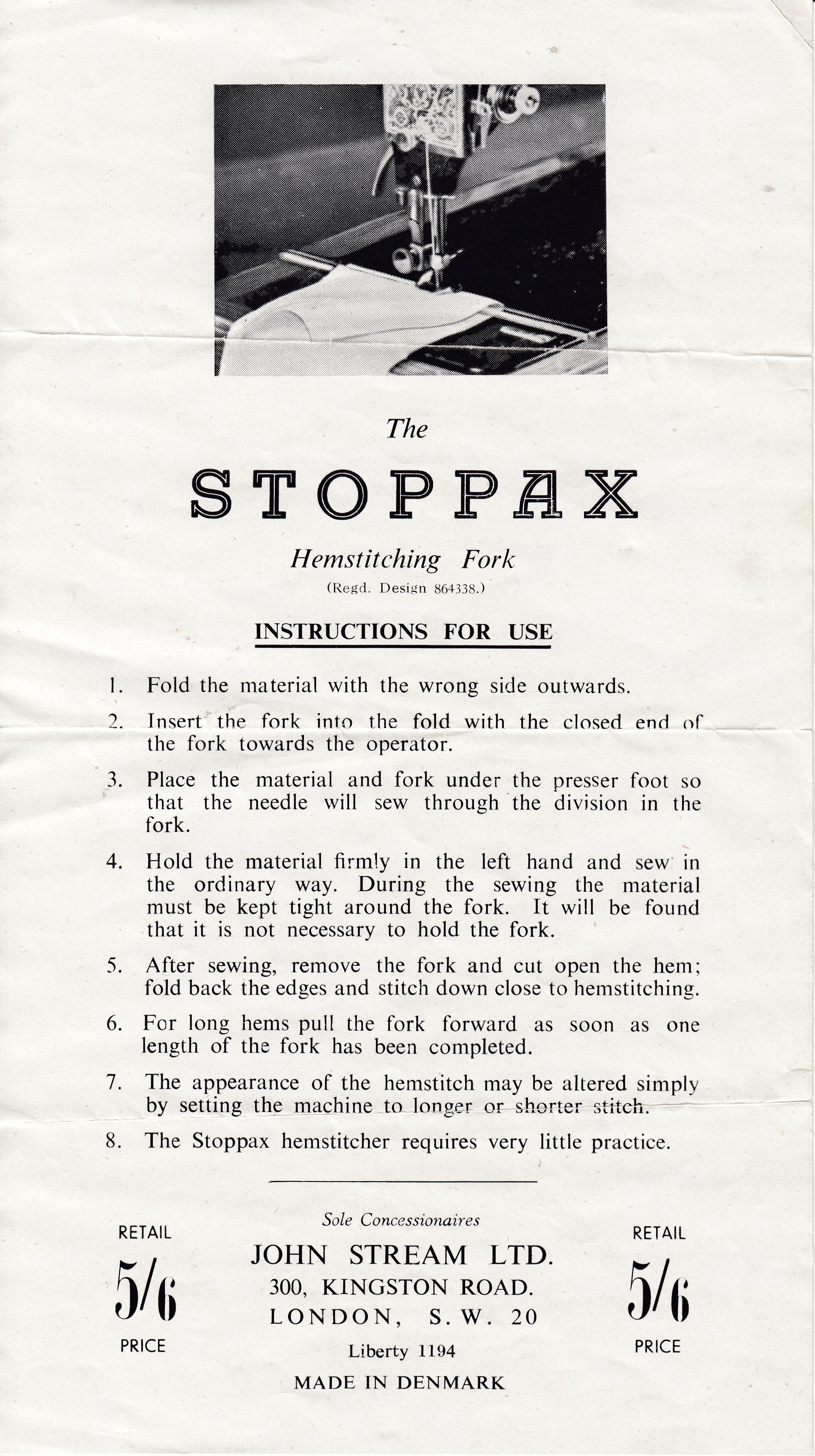
…with a little leaflet on how to use it.
However, the leaflet didn’t show what the finished product should look like. Luckily, the previous owner had left a tiny sample, squashed down at the bottom of the bag.
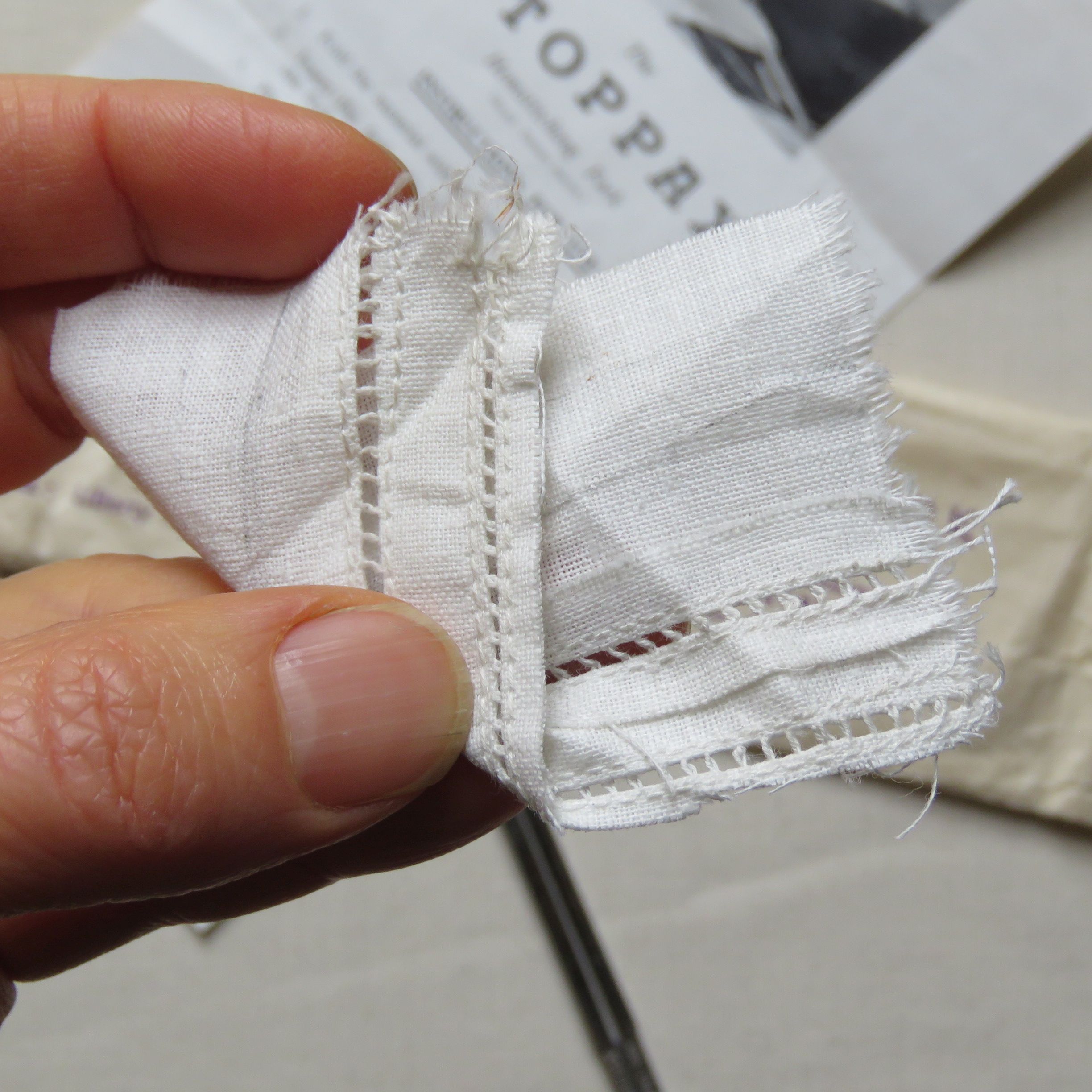
It makes a machine replication of faggoting stitch, which is often seen in heirloom embroidery and Victorian nighties/undies/blouses.
I had a poke around on the internet and found two very useful blog posts from Offspring here and an even more useful one here.
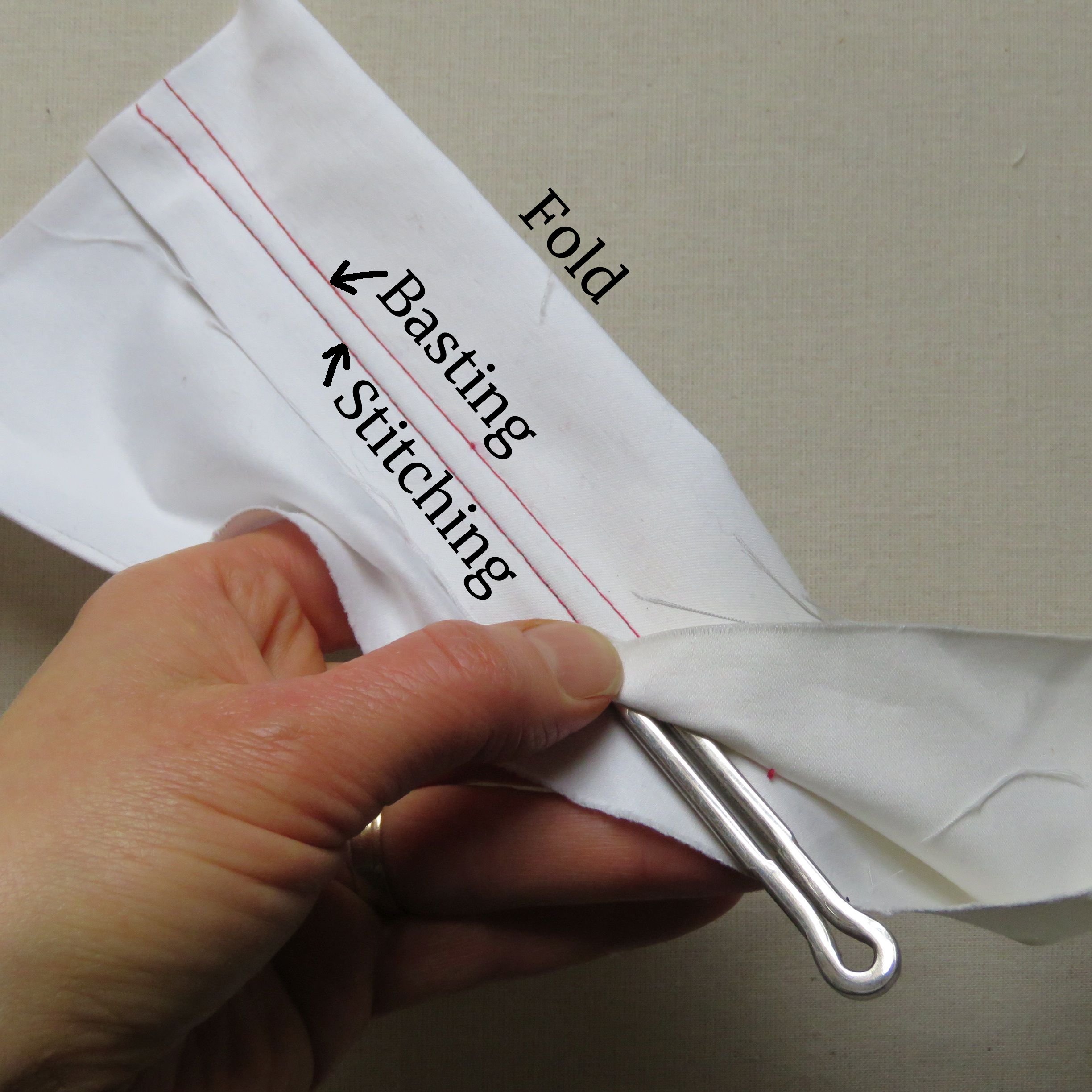
Then I gave it a go. To use, you encase the fork firmly in the fabric, right sides of the fabric together. Stitch through the gap in the fork, sliding the fork along to sew each section. Gotta be careful because it’s very easy to break a needle!
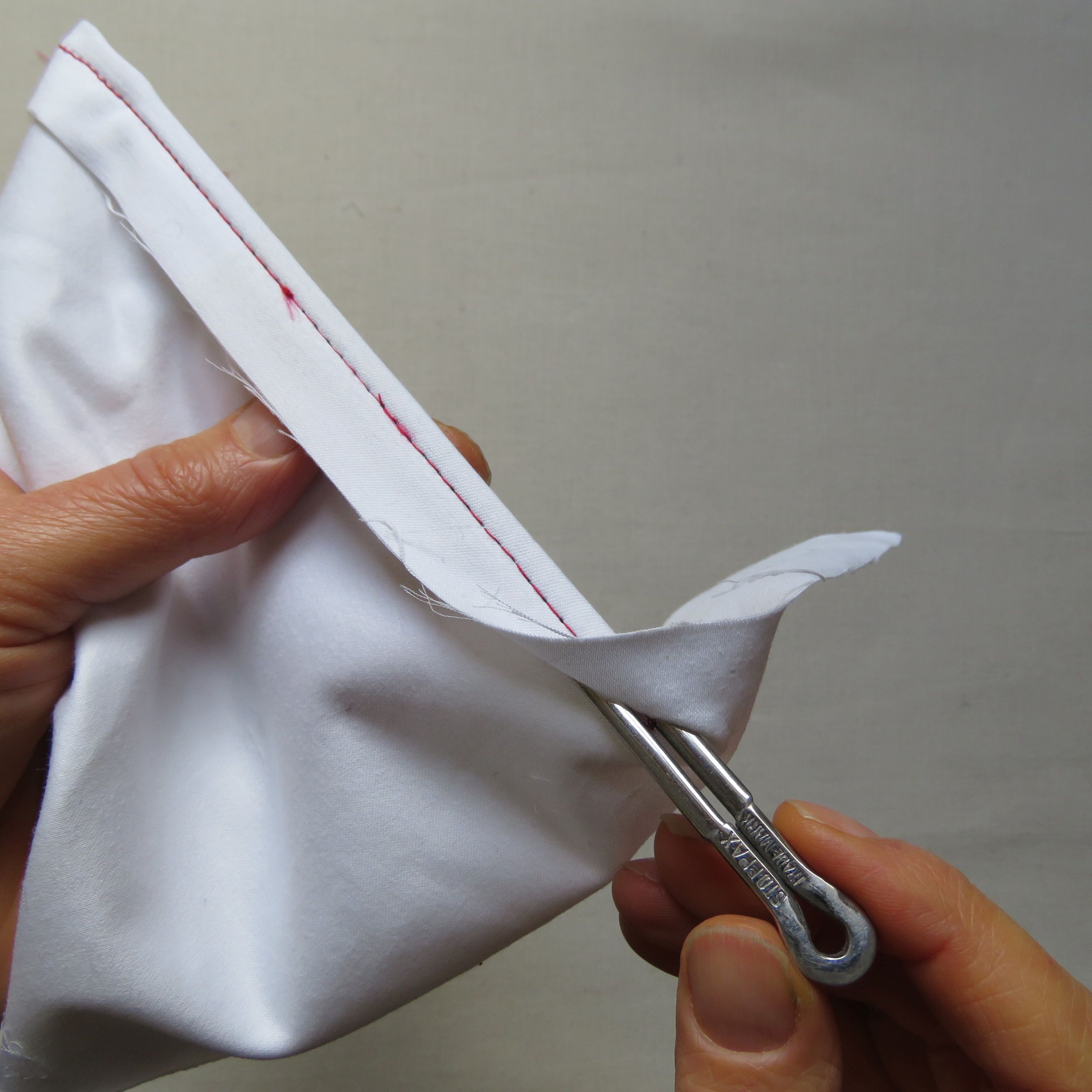
Then you take out the fork, cut the fold and press it open.
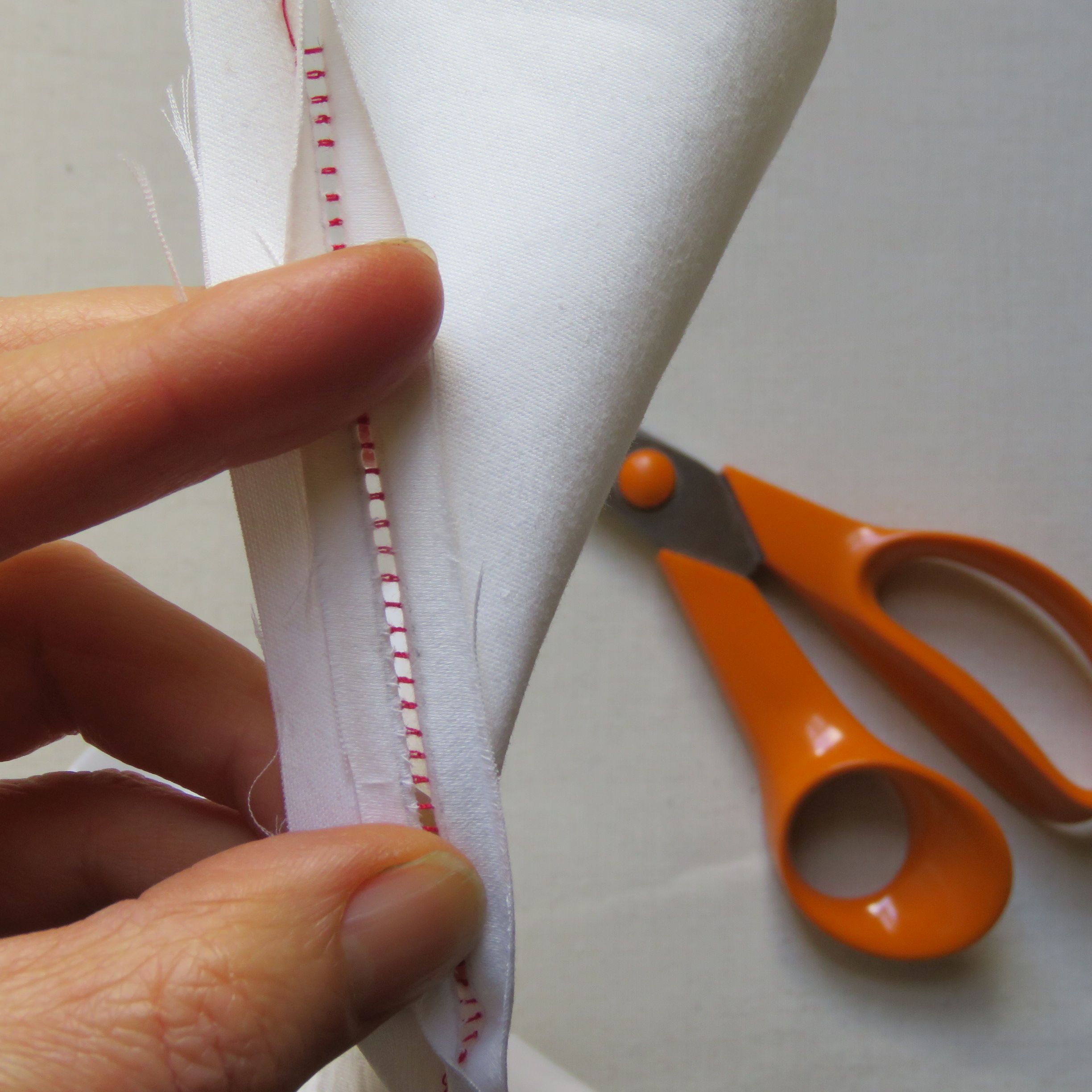
As promised by the leaflet, it “requires very little practice”.
I tried it with various stitch lengths, and concluded that regular length was fine.
As Offspring mentioned in her post, after cutting the fold the raw edges need to be neatened by turning them under and stitching. I couldn’t do this with mine, as the fabric was too thick to turn under twice – it’s thick cotton sateen sheeting. Instead I topstitched either side, just to see what it would look like.
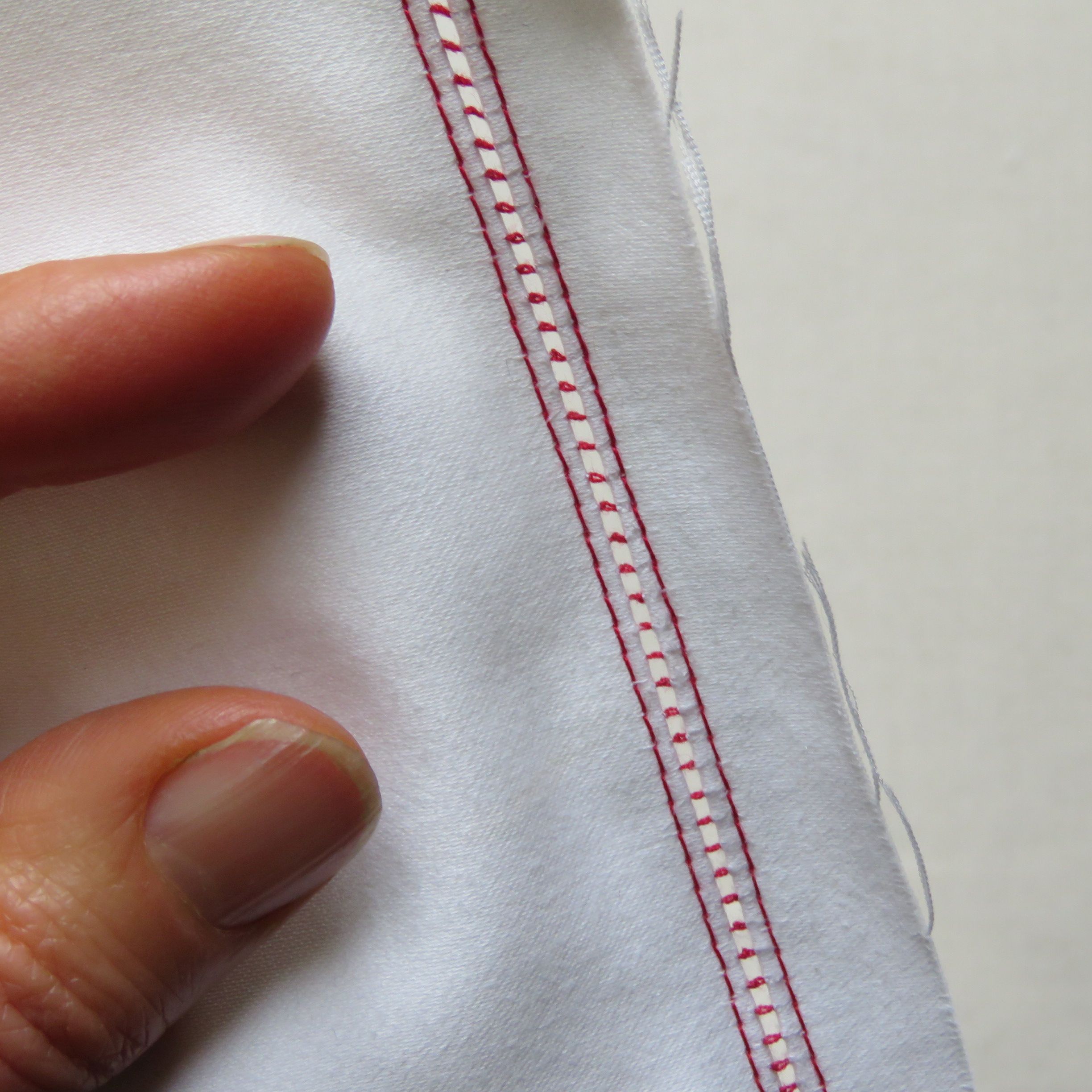
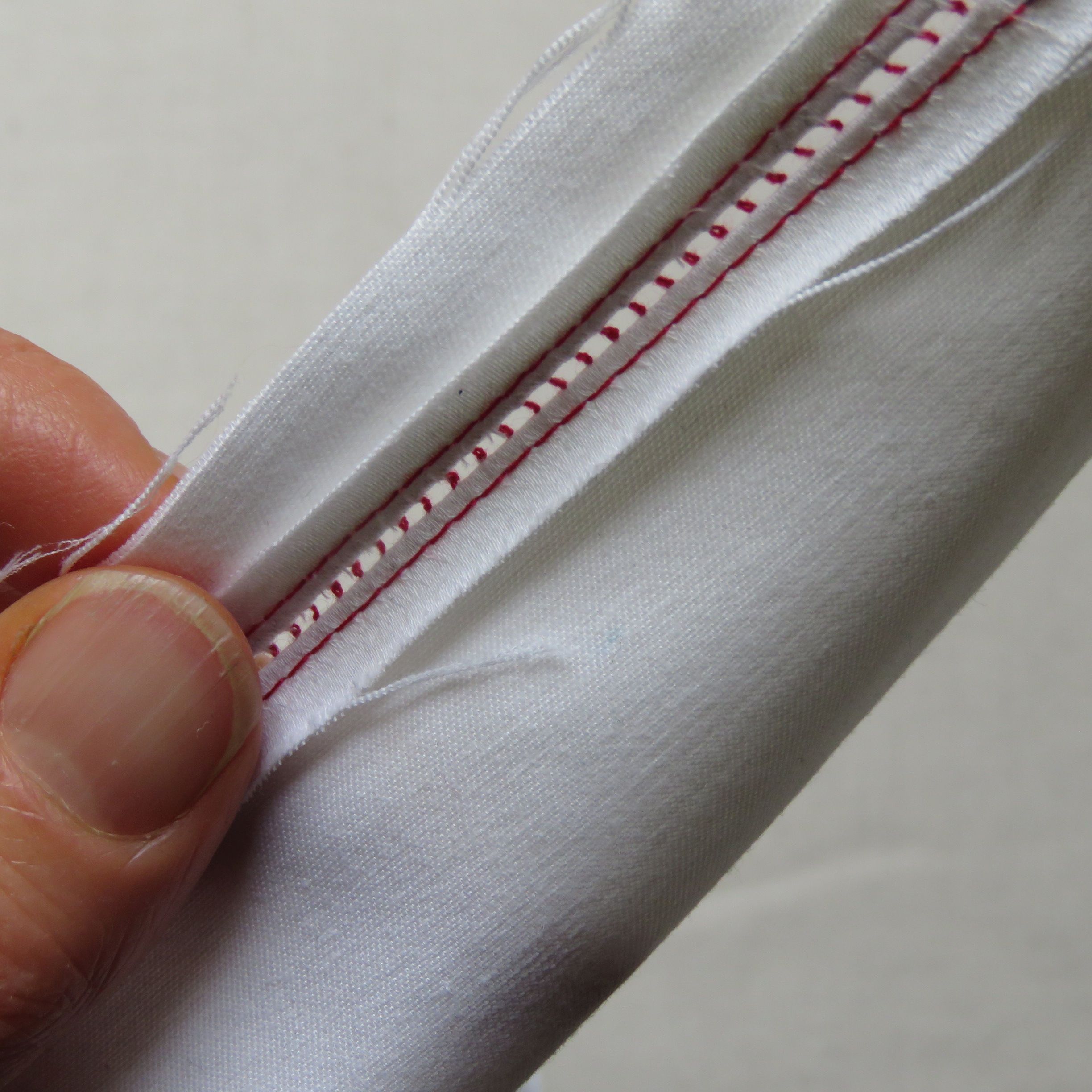
Then I tried a wider hem, where the fork is positioned further away from the fold. Offspring recommended a line of basting stitches to butt the fork up against.
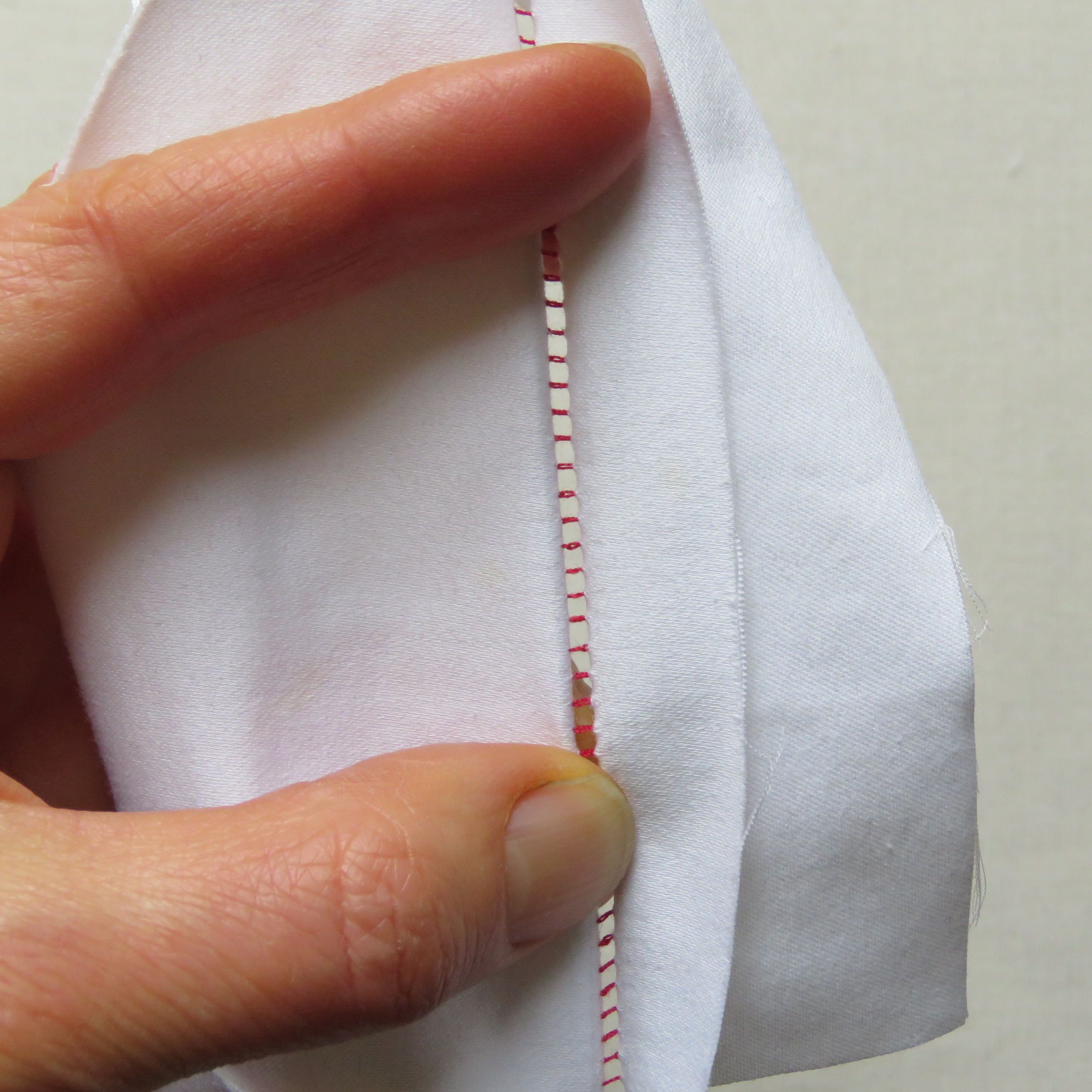
The Verdict: Great! I can see all sorts of uses for this: around dirndl skirt hems, on blouses, on cuffs and collars. Have you tried a hemming fork before?
Discover more from The Craft of Clothes
Subscribe to get the latest posts sent to your email.
Brilliant! I wonder if one could make a hemming fork with two lengths of wire coat hanger? Or two thin knitting needles?
I bet you could. The Stoppax has square edges, and you can buy square knitting needles, but regular ones would probably work, maybe even better. Two of them and some tape at each end. Think I might try this! Thanks Janie.
Janie and Liz – I read this post, and your comments last night, and gave it a shot this morning.
I’ve never used a proper hem stitching tool (so who am I to say!), but my thoughts on the knitting needles are that they are an okay substitute.
Liz – I think you’re on to something with the square edges. I taped two aluminum knitting needles together with painters tape (at just one end bc taping at both ends would make it more difficult to maintain the same width between the needles throughout) and the effect was not as crisp as your photos suggest. I wonder if the the square ends pull or hold the fabric differently under the pressure of the pressure foot? This could be due to my machine, my scrap fabric of choice, or the thread, but my conclusion is that square edges matter.
Based on my own sewing style, I may pin down the fold to the left of the needle, where your instructions state to hold the fabric taught, to keep everything even. Otherwise, I agree with you – very little practice is necessary to achieve a good outcome!
I like the potential for subtle and low waste embellishments rendered by this tool and will keep my eye out for one.
As always – thanks for an interesting post.
The Offspring links were also very educational!
Thank you trying this out and reporting back – I haven’t tried this yet. So interesting about the square edges. Did the rounded knitting needles slide apart as you stitched? In which case putting pins on the left as you suggest would help.
My brother read this post and reckoned he could 3D print some. He said there’s no files for these available, and will look at the Stoppax next time he visits us. Keen to try this out!
Also, there’s a more modern Husqvarna version of the hemstitching fork, with what I think is a slightly better design. It has a bigger (asymmetrical) loop of metal on the end to hold. https://www.sewingpartsonline.com/products/hemstitch-fork-viking-4015367-45
Very cool!
I have an unrelated question. I ‘m in the process of making a pleated top/dress from your pattern in A Year of Zero Waste Sewing. I would like it to have sleeves and I remember you posted that someone came up with a pattern for a variation with sleeves. I looked and looked but couldn’t find that variation. Would you remind me where I could find it?
I love your blog! You are so thorough and so clear with instructions. Thank you for all the time and energy you put into it!
There’s a new link for the sleeves: https://miraipattern.com/blogs/freepattern/pleatedtopsfreeaddon She changed her website around and the old link doesn’t work anymore. It’s all in Japanese, so you’ll need to run it through a translator.
Thanks for reading my blog!
I have never heard of such a thing. That is so cool! Good on Mr. H for picking that up for you. I’ll have to keep an eye out for one now.
I hadn’t either! Never even knew they existed, much less tried one.
Having spent a bit of time working with vintage tablecloths, I often marvel at the fancy hem stitching. And have felt bad about unpicking it to suit my upcycling purposes! This is so interesting. It helps to explain the few cloths I’ve encountered which don’t quite look handmade but still have fancy features. I didn’t know there was a machine ‘shortcut’.
Mr H knows your kind of treasure! I hope there weren’t too many needles sacrificed in your experiments.
The phone number is ‘Liberty’ – I love that. From the days of dial telephones with letters and numbers next to each finger hole?
I didn’t know there was a machine shortcut either. Maybe you won’t feel so bad unpicking machine fancy hem stitches? I wonder if the “Liberty” phone number is a post-war thing? I mentioned Janie Hampton’s comment to Mr H and he wondered if it could be achieved with two chopsticks, and then thought that knitting needles might work better as the rounded sides might deflect the machine needle. I only broke one machine needle trying out the Stoppax 🙂
Not a ripoff at A$10 if the first Ebay one I found just now (out of curiosity) is anything to go by! Add a zero and then some. And yours has the original packaging! Well done, Mr. H!
His thoughts too – from memory the Ebay one was $375-ish!
What a great vintage tool! A sewing colleague of mine was once shown a 1890’s era hemstitching machine and we both said we’d love to own one. Sadly neither of us has found one in all the years we have been looking.
Thanks for sharing. Just had a poke around on the internet for 1890s hemstitching machines – apparently they are really rare. (https://www.hemstitchers.com/ in case anyone reading this is interested) Would love to see one in action.