Fashion, Puppets and Making: an Interview with Daniel Byrne of Puppets Magic
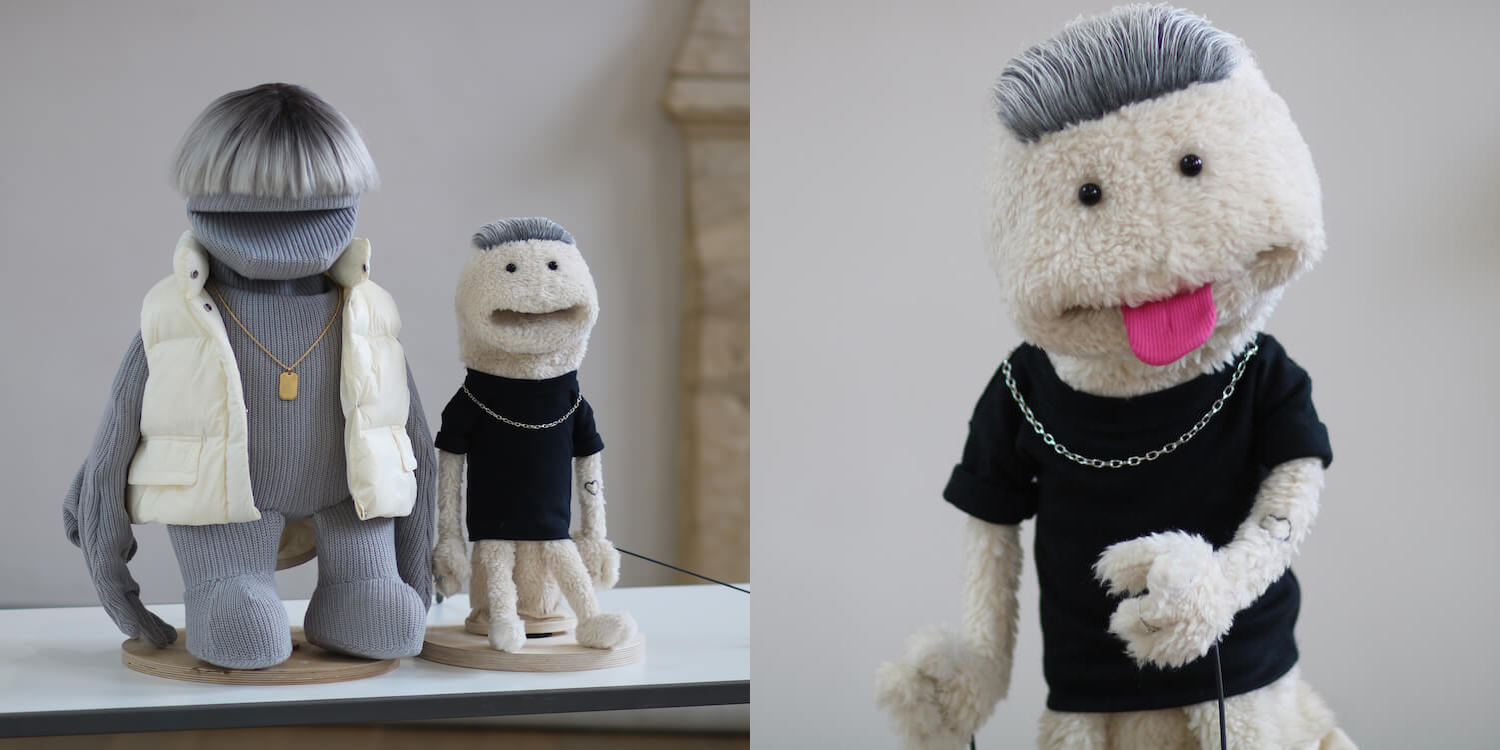
I recently connected with Daniel Byrne of Puppets Magic in London. His studio makes custom puppets for film, TV, stage, adverts and live events. You may have seen his studio’s work for Aldi, Vodaphone, Marmite, Hofmeister beer and Tonight at the London Palladium, to name a few. A commission for the pre-loved clothing platform Vestiaire Collective used actual pre-loved clothing to make the puppets, who were then dressed in more pre-loved clothing.
I asked him about the puppet design process, sewing, fabrics, and creative challenges, and he kindly answered all my questions. I hope you enjoy this interesting conversation.
How did you learn to make puppets, and how did you come to start Puppets Magic Studio?
I’ve been fascinated by puppetry for as long as I can remember. As a child, I was always drawn to television programmes featuring puppets rather than animation or live action. There was something magical about watching a physical object come to life on screen. Even though I couldn’t put it into words at the time, I was captivated by the idea that these characters had been carefully designed and made by hand, and I became determined to work out how they were created.
From a young age, I started building my own puppets, learning largely through experimentation. At the time there were very few resources or instructions available, so every puppet was a process of trial and error. That hands-on exploration taught me a great deal and sparked a lifelong passion for puppet making.
Later, I pursued formal art training at Central Saint Martins and Goldsmiths, University of London. Throughout my studies I continued making puppets, and by the time I graduated I realised that puppetry was what I truly wanted to dedicate my career to. That led me to establish Puppets Magic Studio.
In the early days, I was fortunate to receive several exciting commissions, which gave me the opportunity to develop the studio and build the foundations for what Puppets Magic Studio has become today.
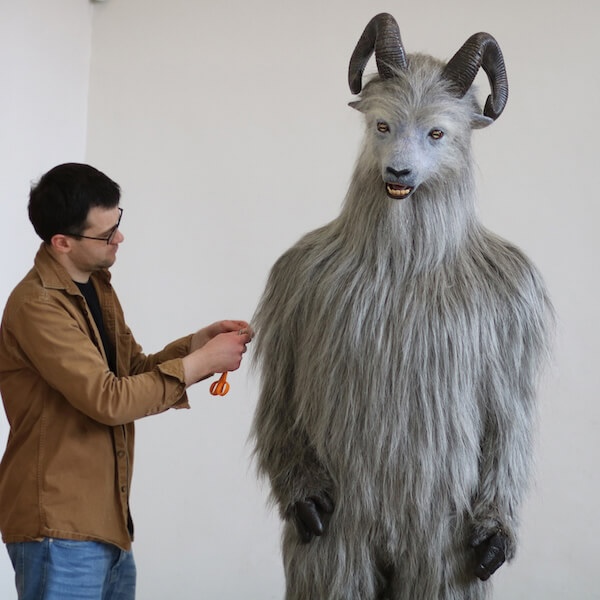
The Vestiaire Collective project. What was the design process like? Were there special challenges using regular clothing fabric for puppets? Had your team ever done anything like this before?
We began with the central concept, which was rooted in Vestiaire Collective’s ethos of sustainability through choosing pre-loved fashion and extending the life of clothing. From the outset, we knew the puppets should be constructed from second-hand garments so that the materials themselves reflected the message behind the campaign.
The design and material selection evolved together. We started by developing lots of 2D character designs alongside collecting and experimenting with different fabric samples to establish the personality and look of each puppet. For example, we knew one character would be made from denim jeans, so we sourced a wide variety of second-hand denim garments to find the right weights, colours and textures that would work best.
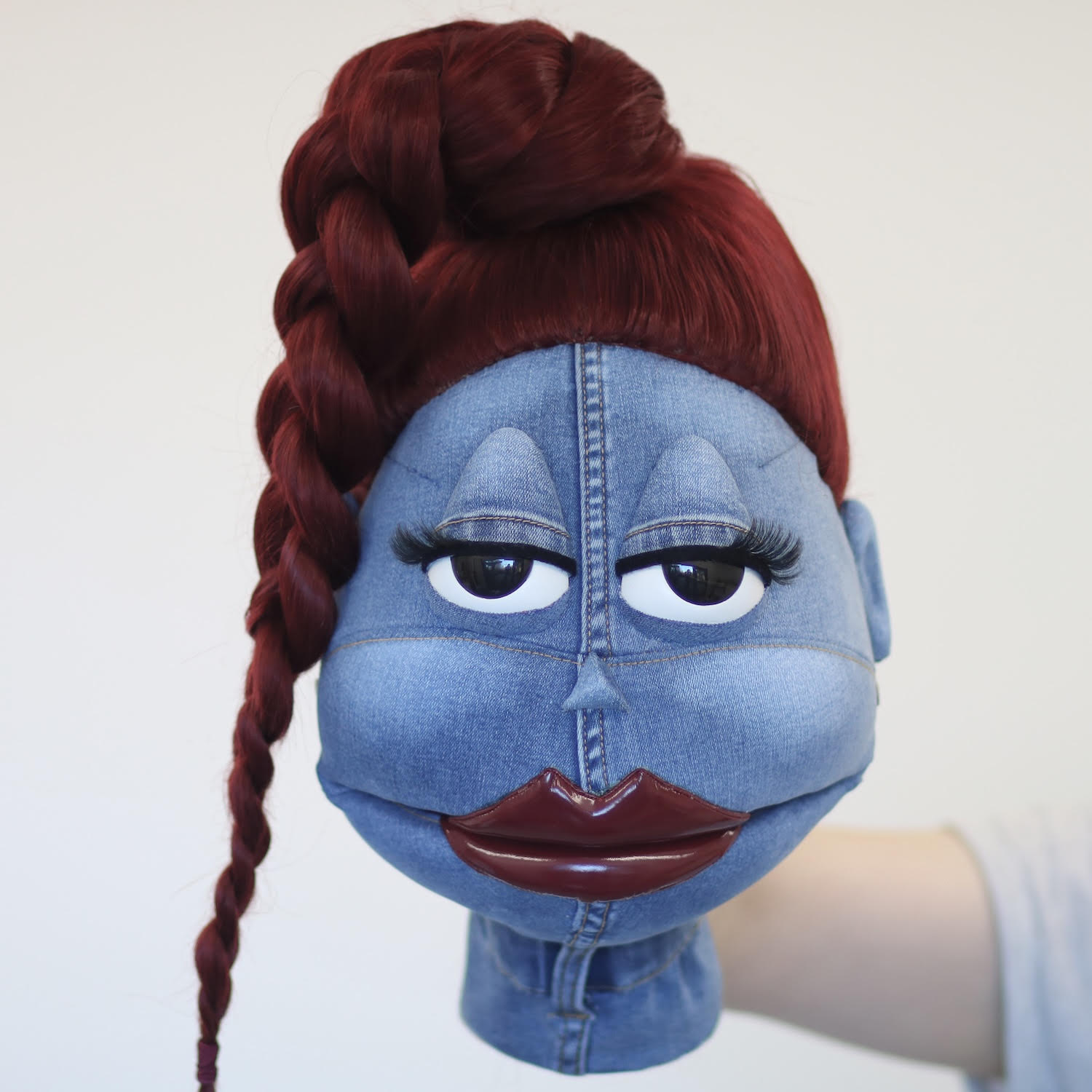
One of the biggest challenges was that the fabrics used in clothing aren’t necessarily designed for puppet making. Most puppets are built around a foam structure that provides their shape, and stretch fabrics are generally much easier to fit smoothly over a sculpted form. Materials such as denim, leather and woven cotton have very little stretch, so every pattern had to be carefully designed with the unique qualities of each fabric in mind.
We also made a conscious decision to celebrate the original garments rather than disguise them. Visible jean seams, topstitching, pockets, zips and shirt details all became part of the characters’ visual language. Those familiar features helped tell the story of the materials’ previous lives, giving each puppet its own history and reinforcing the campaign’s message about creativity, reuse and sustainability.
While we’d used a wide variety of fabrics in our work before, creating an entire cast of puppets from pre-loved clothing presented a unique set of creative and technical challenges. Finding ways to preserve the character of the original garments while also creating expressive, functional puppets made the process especially rewarding.
What sort of fabrics do you typically use for puppets? Are there special puppet fabrics? How much sewing is involved with puppet making? Do you use special machines, or just regular sewing machines? Do you have people on your team who just do the sewing parts, or is it a skill that everyone has?
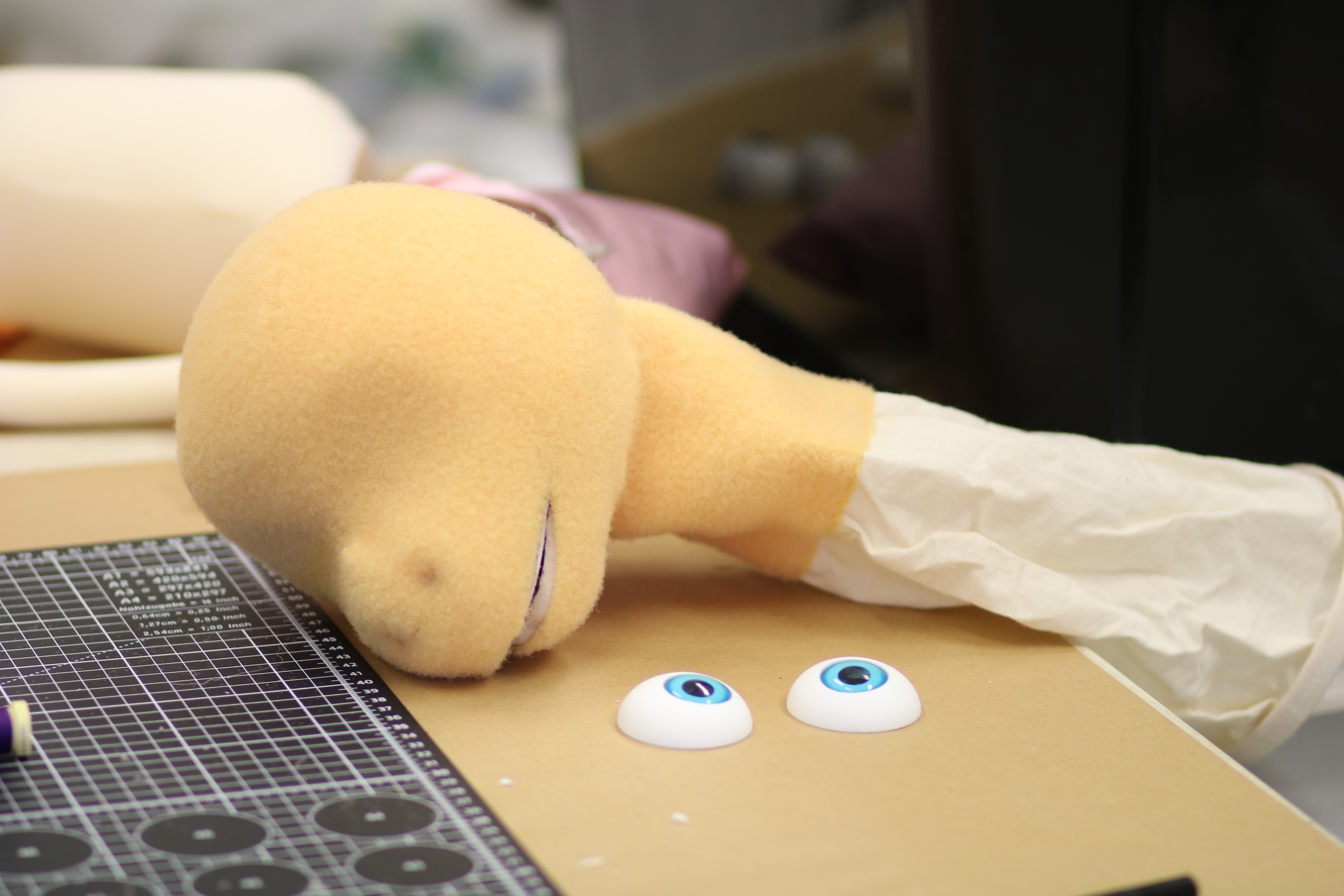
Puppets can be made from an enormous variety of materials, but a typical hand-and-rod puppet – the kind most often seen on television – is usually covered in a stretchy nylon fleece. These fabrics are specially manufactured for the puppetry industry and are favoured because they’re both highly flexible and have a dense, fuzzy surface.
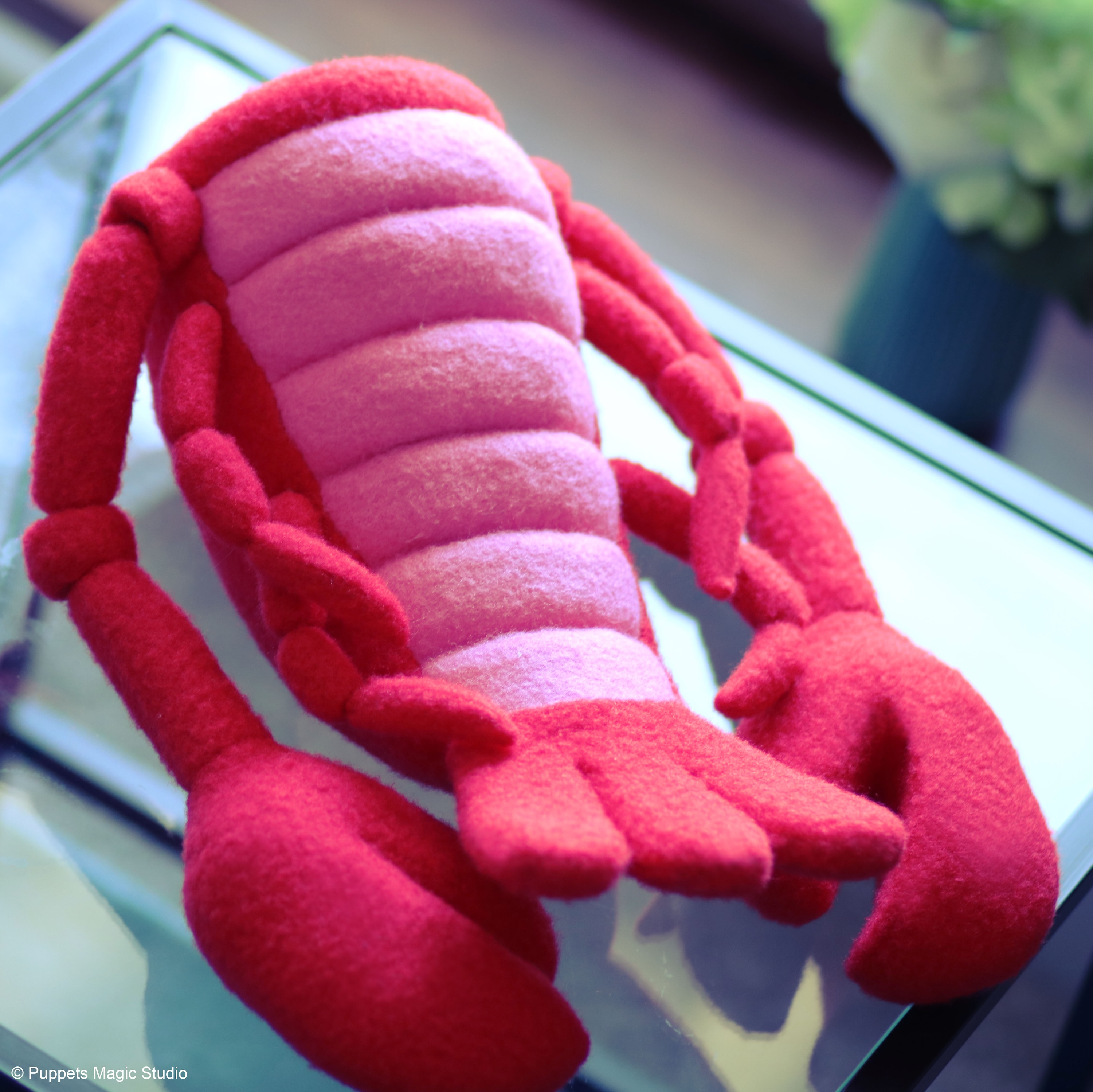
One of the advantages of this fleece is that, when it’s carefully hand stitched, the fibres can be teased and brushed over the seam afterwards, making the joins almost disappear. Creating a seamless finish helps maintain the illusion that the puppet is a living character, rather than an object made from separate pieces.
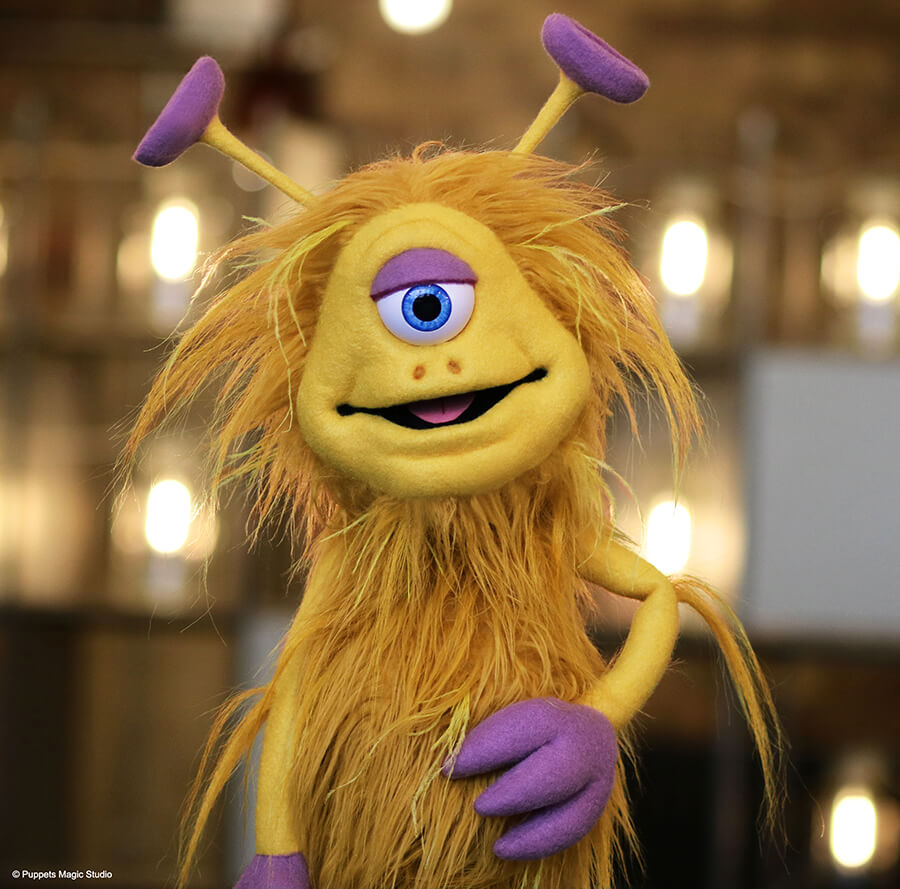
For the type of puppets we build, sewing is one of the most important skills. While sewing machines certainly have their place, much of the puppet itself is stitched by hand, as this gives far greater precision and control when fitting fabric over complex sculpted forms. We use standard sewing machines for many tasks, and overlockers are mainly reserved for making costumes rather than constructing the puppets themselves.
Textiles are such a fundamental part of our work that sewing is a skill shared across much of the team, although we also have specialist makers whose expertise lies in textile construction and hand sewing. Puppet making is an incredibly collaborative process, with each maker bringing their own craft skills to create a finished character.
If one were to commission a puppet, how long does it usually take your team to make it? Is the design process the longest part, or the actual making?
The timeline really depends on the complexity of the puppet, but as a general guide, a bespoke build usually takes at least four weeks. That said, working in television and film often means working to much tighter schedules, so we’re used to delivering projects within challenging deadlines when production requires it.
The design process can vary just as much. Sometimes a client comes to us with a fully developed character design that’s ready to be translated into a puppet, allowing us to move straight into fabrication. On other projects, we’re involved from the very beginning and are asked to develop a character from little more than an initial concept or brief.
In those cases, the design phase can take longer than the actual build, as we’re exploring the character’s personality, proportions, materials and how it will perform on screen. Other times, the design is already resolved and the focus is entirely on making the puppet.
That’s one of the things I enjoy most about working in puppetry – no two projects are ever quite the same. Every commission brings its own creative challenges, whether that’s designing a new character from scratch or finding the best way to bring an existing design to life.
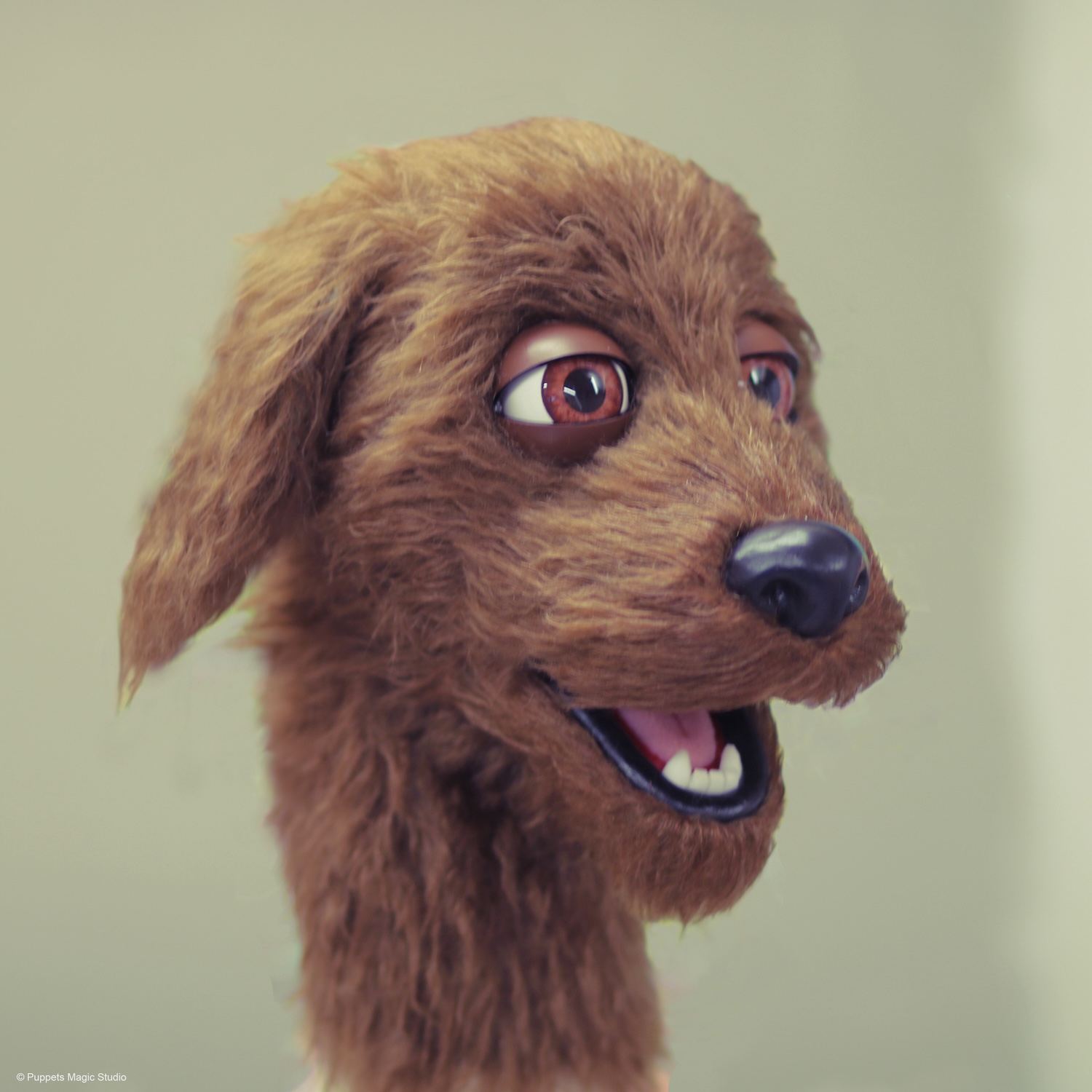
After puppets have been made and used, are they ever repurposed, or do parts of puppets get used for other puppets? Do you ever have to repair puppets?
After a puppet has been used on a production it usually remains with the production company. We don’t always know what happens to them afterwards, but sometimes they’re displayed in an office, particularly if the character has become an important part of a campaign or production.
One memorable exception was a television programme we worked on for ITV many years ago. During a major office relocation, they asked whether we’d like the puppets back as they were required to clear out. It’s quite unusual, but it was nice to have a reminder of a project we really enjoyed being part of.
We rarely dismantle a finished puppet. The only time we might reuse parts is if it was an early prototype that was no longer needed. Because puppets are practical effects that are performed by puppeteers, they’re subject to the same kind of wear and tear as any well-used costume or prop. For productions that run over a longer period, regular maintenance and repairs are often needed to keep the puppet performing well and looking its best on camera.
Is there a link between fashion, sewing and puppetry?
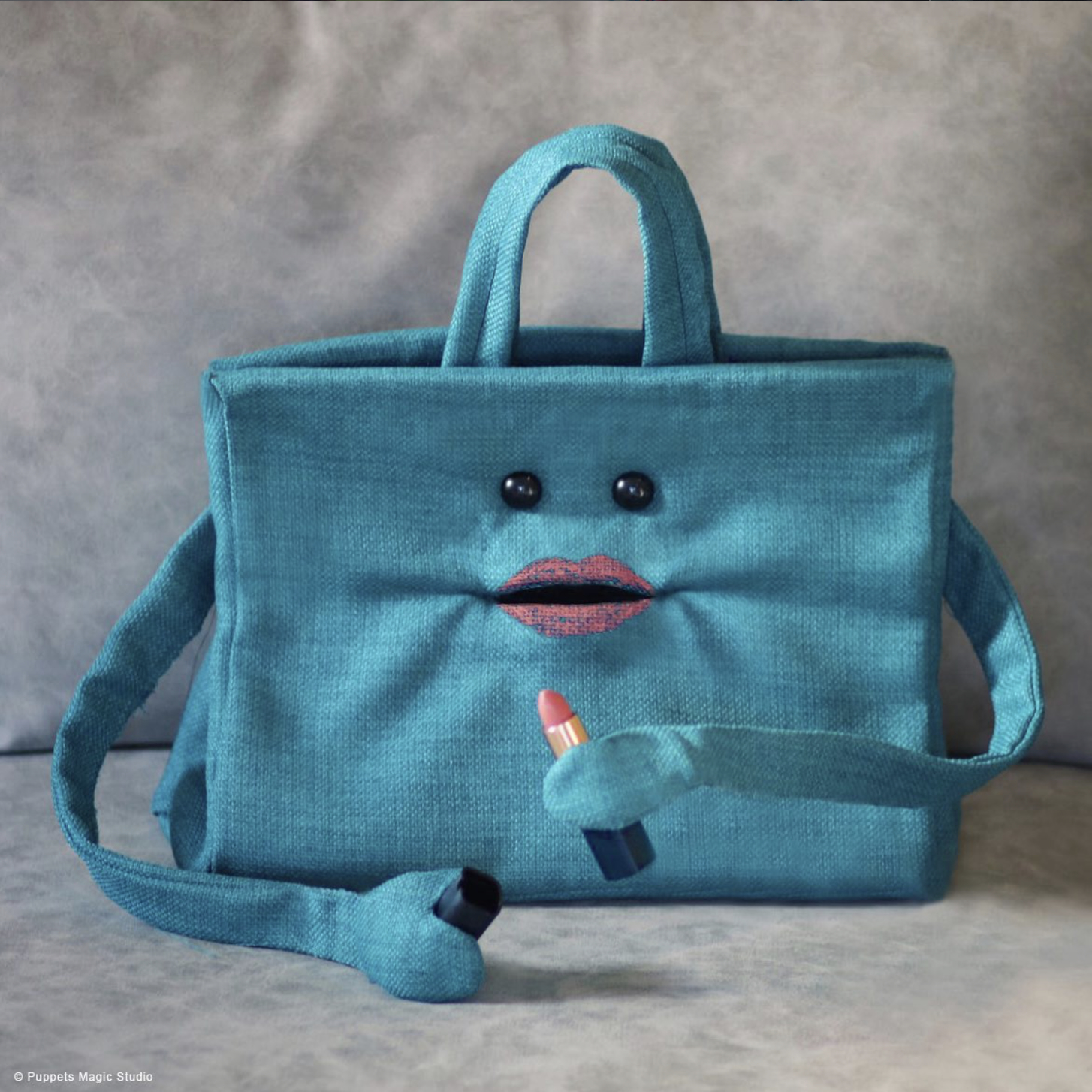
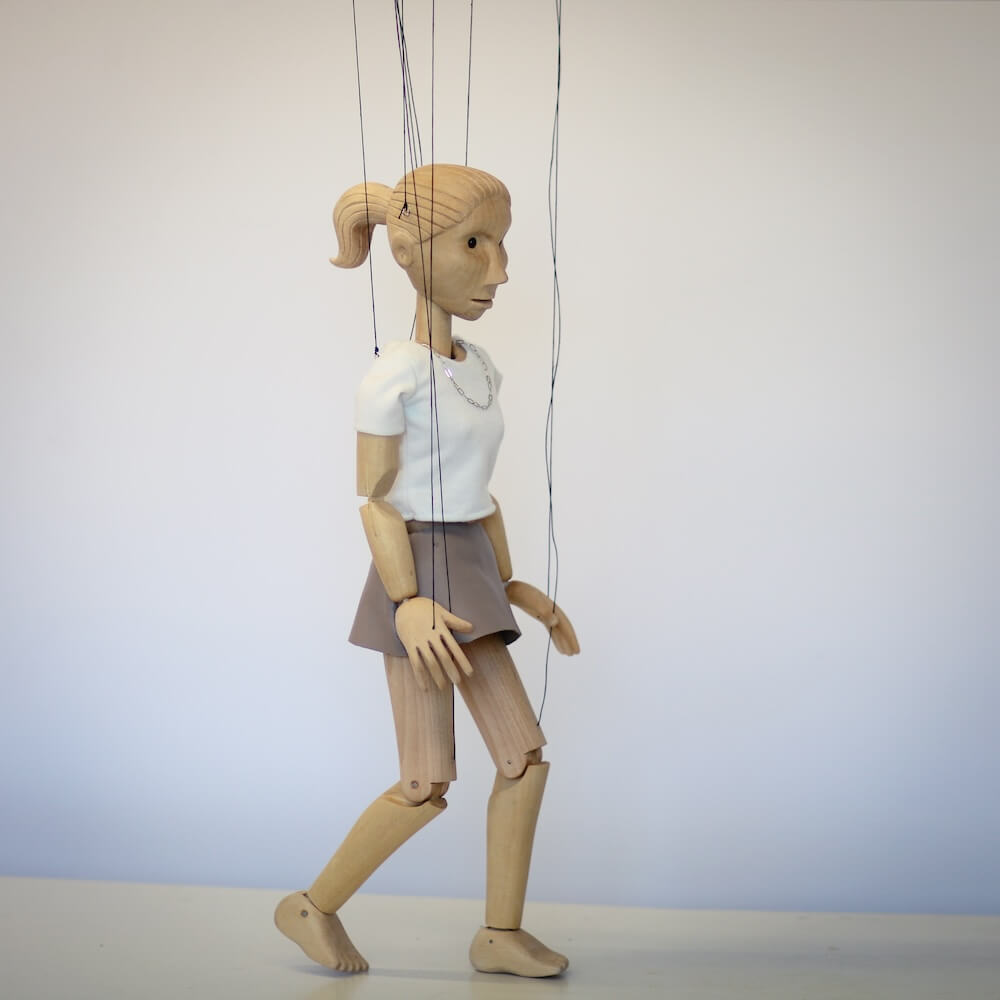
I think there is a surprising crossover between fashion, sewing, and puppetry. Fashion plays a vital role in puppet design, as a puppet’s costume is often one of the first things an audience notice. It immediately offers clues about the character’s personality or role in the story. Just as people use clothing to express their identity, a puppet’s wardrobe also communicates who they are.
From a making perspective, the creative process of building a puppet has many similarities to designing and constructing clothing. Pattern drafting is a key example of this connection. Just as fashion designers draft patterns to create garments that fit the human body, puppet makers often develop patterns for fabric skins, costumes, and soft structures that must fit the puppet’s form precisely. Both processes require an understanding of shape, proportion, and three-dimensional construction, translating a flat pattern into an object that functions effectively in real life.
One of the most important considerations in both disciplines is movement – how the puppet performs and how comfortable it is to operate. In the same way that a fashion designer thinks about how a garment will fit, drape, and move with the body, a puppet maker must consider how the puppet will move in performance and how it will feel for the puppeteer to wear or manipulate. In both disciplines, thoughtful design is about balancing aesthetics with functionality, ensuring that the final piece is not only visually engaging but also works effectively in motion.
Does your studio ever have open days, or puppet workshops, or accept interns?
Although we’d like to, we’re often unable to have any studio visits just because the nature of working in film means that there are usually NDAs attached, so we need to keep our projects under wraps. But we sometimes accept interns depending on our workload at the time.
If you’re interested in learning more about our work, please visit our website. Our Instagram is here.
Have you got a comment or question for Daniel? Please leave it below.
Discover more from The Craft of Clothes
Subscribe to get the latest posts sent to your email.
Thanks for that interesting story
Many thanks for reading, Helen. How interesting would his studio be to visit!
Fascinating!
Isn’t it?! A whole new world.
What a fun interview! I’m sure I have seen many of these puppets in action, on screen, over the years.
Ensuring that the Humpty face didn’t end up creepy-looking (from your pattern) gives some insight into the skills involved in creating a cloth character!
I’m sure you must have, as his studio has produced puppets for many northern hemisphere clients. Your comment made me look up puppet making in Australia – it looks like theatre productions used them the most here 🙂